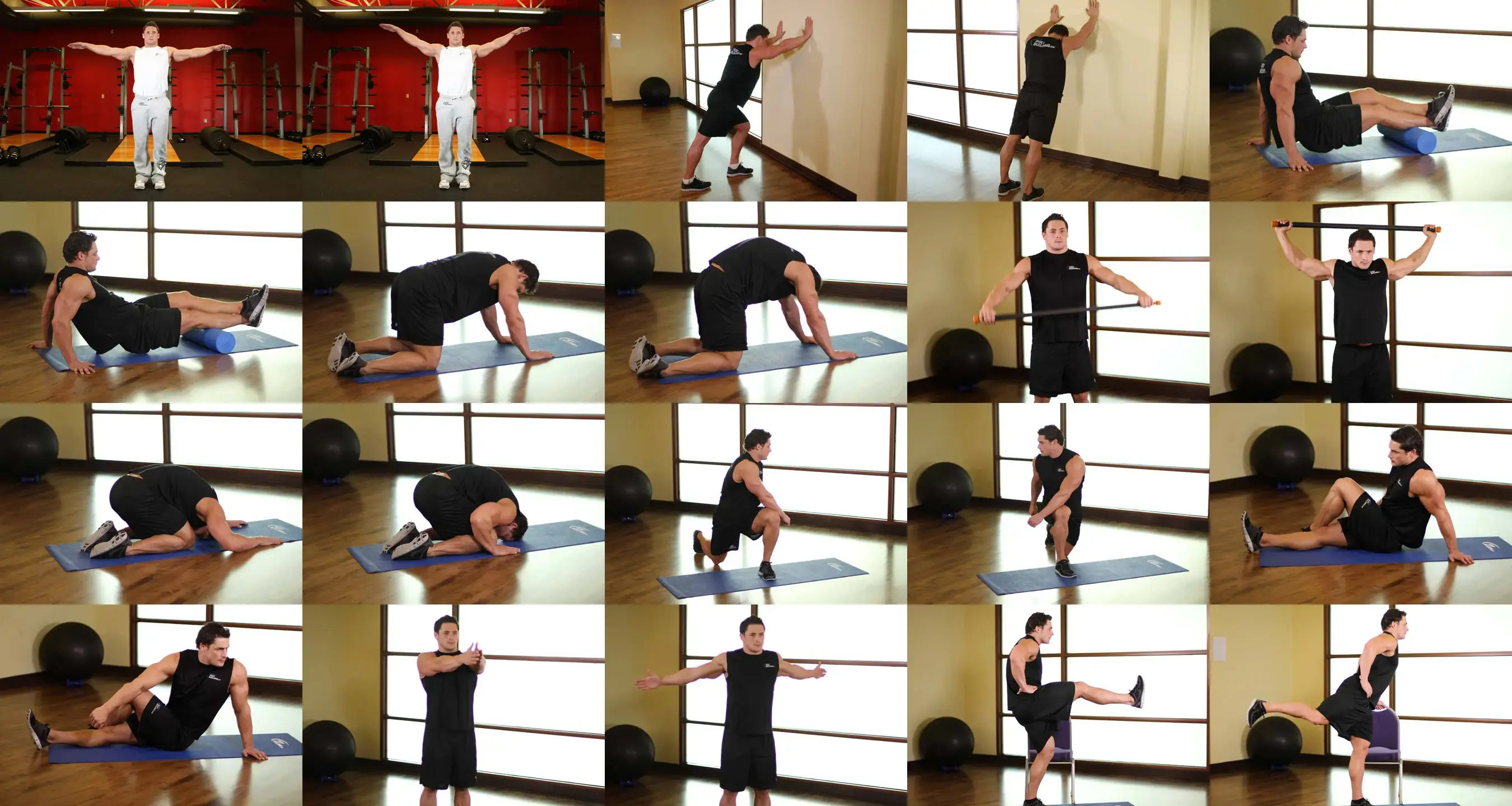
Setup and loading
Stand about an arm's length from the wall with room to step one foot well back. Intensity depends on how far your back foot is from the wall and how far you shift your hips forward; aim for a clear but tolerable pull, never sharp pain.
How to do the wall calf stretch step by step
- Face the wall and place your palms on it at shoulder height with your arms slightly bent.
- Step one leg back, keeping that foot straight with the toes pointing at the wall.
- Bend your front knee and keep your back leg straight with the heel pressed firmly into the floor.
- Slowly shift your hips toward the wall until you feel tension in the upper calf of the back leg.
- Hold for 20 to 40 seconds, breathing slowly and deeply, relaxing a little more on each exhale.
- Bend the back knee slightly to target the soleus for another 20 to 30 seconds, then switch legs.
Form cues
- Back heel glued to the floor
- Back toes pointing at the wall
- Hips forward, not off to the side
- Straight line from head to heel
Common mistakes
- Lifting your back heel: the stretch disappears; shorten your stance until the heel stays down.
- Turning your back foot out: the arch collapses and tension drops; point your toes at the wall.
- Bouncing to go deeper: it triggers the stretch reflex; hold the position still.
- Bending at the waist and sticking your butt out: it breaks the line; drive your hips forward with abs tight.
How to make it easier or harder
If it feels too intense, move your back foot closer to the wall or do a seated stretch with a towel around your foot. To go further, stand on a step and let your heel drop below it, or place your toes up against the wall for a toe-elevated stretch.
Sets and reps for your goal
Mobility
2-3 x 20-40 s per side2-3 sets of 30-60 seconds or 8-10 slow reps. Daily or before training.
Work in a pain-free range with slow breathing. A little often is better than a lot once in a while.
A guide for healthy adults. Adjust the load to your level and see a professional if you have an injury.
Check your form
Film yourself from the side or ask someone to watch, then tick what you get right.
Frequently asked questions
How long should you hold a calf stretch?
About 20 to 40 seconds per leg, repeated 2 or 3 times, is enough for most people. For lasting flexibility gains, stretching consistently every day matters more than holding each rep for a very long time.
Should I stretch my calves before or after running?
Before a run, dynamic mobility such as ankle rocks or leg swings usually works better. Static wall stretches fit best after your run or later in the day, when the muscle is warm.
Sports it suits
Gear for this exercise
- Exercise matThick (8-10 mm) for floor work.
As an Amazon Associate, Muscle Atlas earns from qualifying purchases.
Variations and similar exercises
Ankle Circles
Standing Soleus and Achilles Stretch
Standing Calf Raise
Hurdle Hops
Fast Skipping
Barbell Seated Calf Raise
Leg Press Calf Press