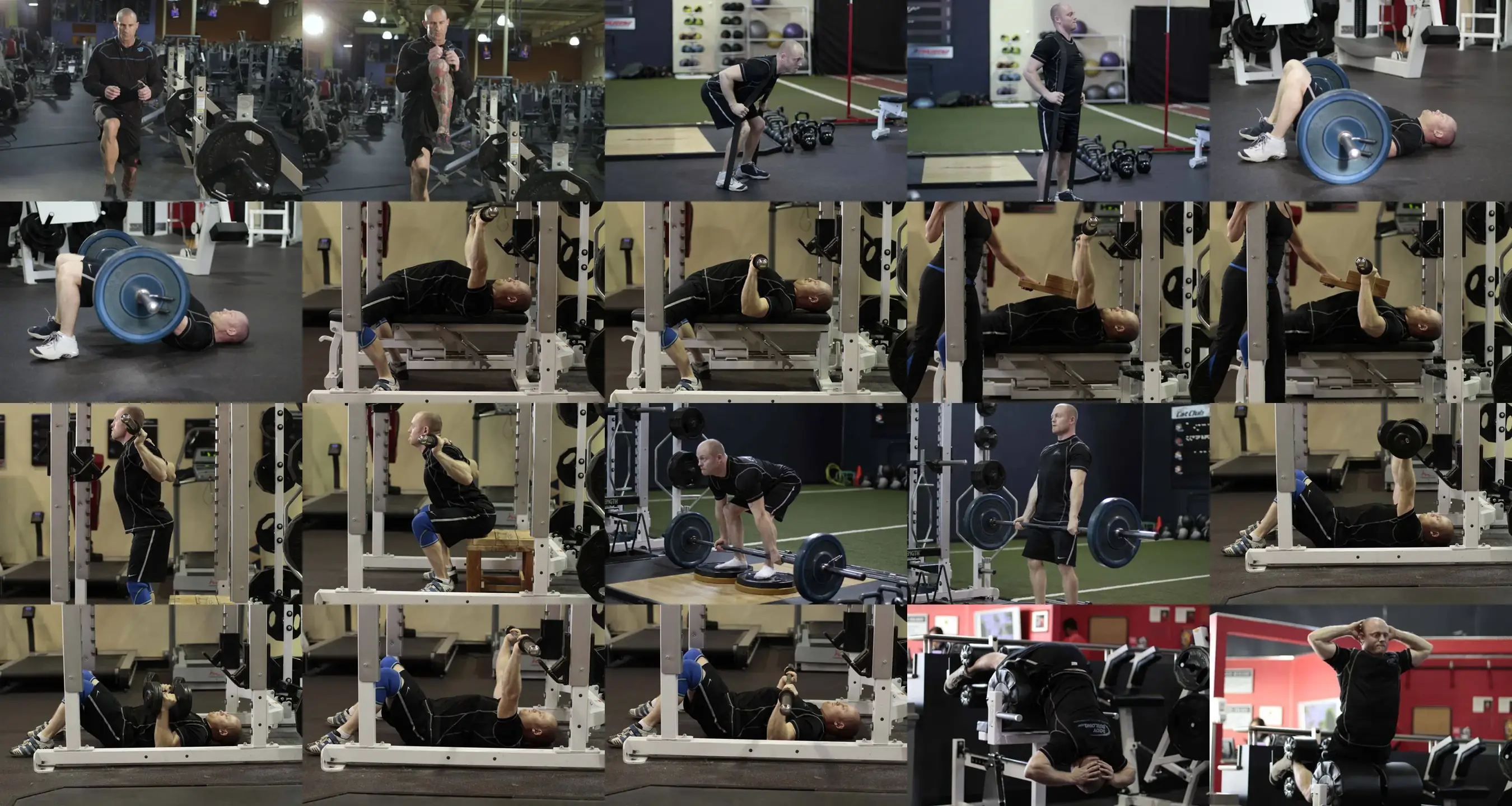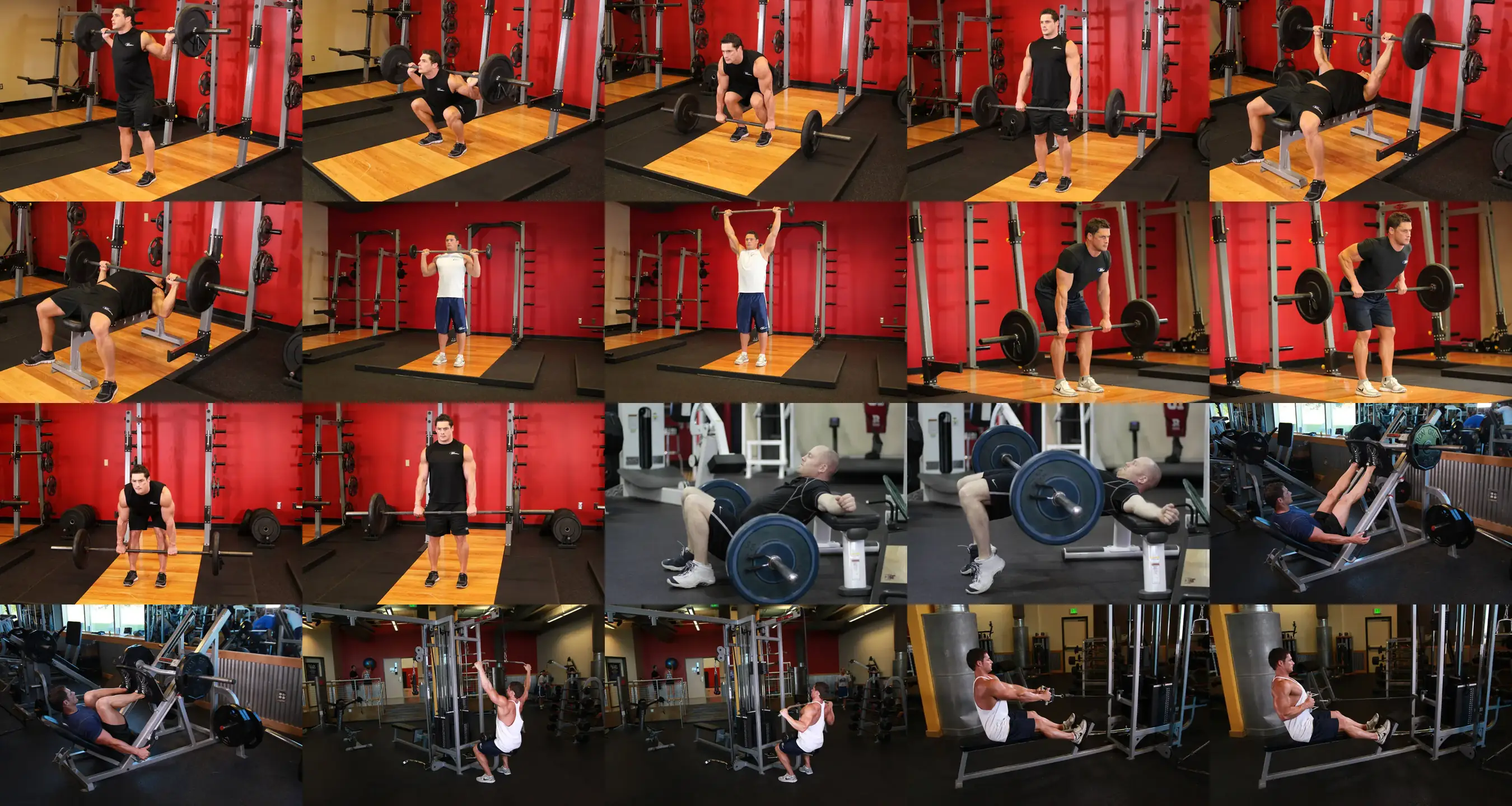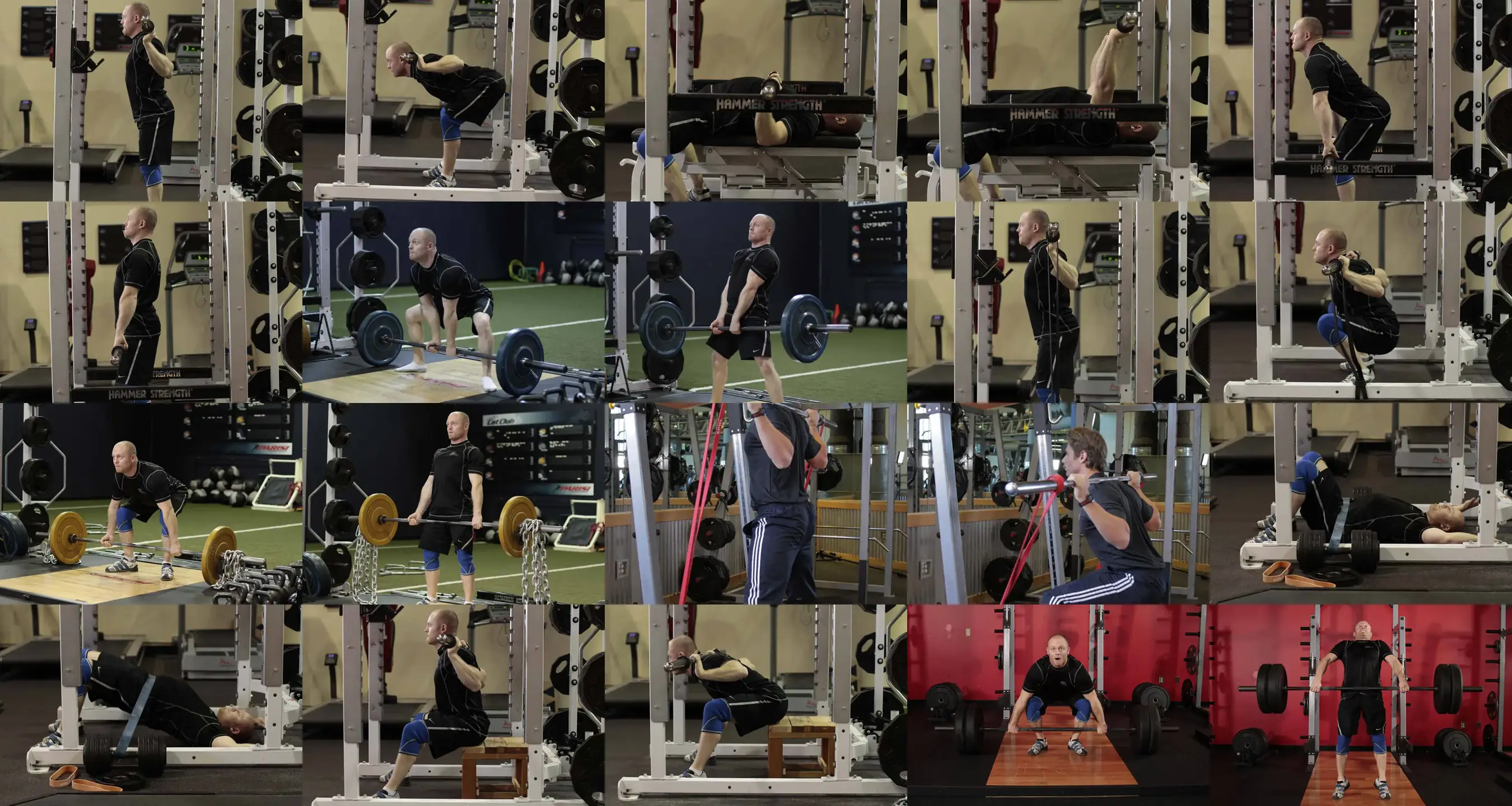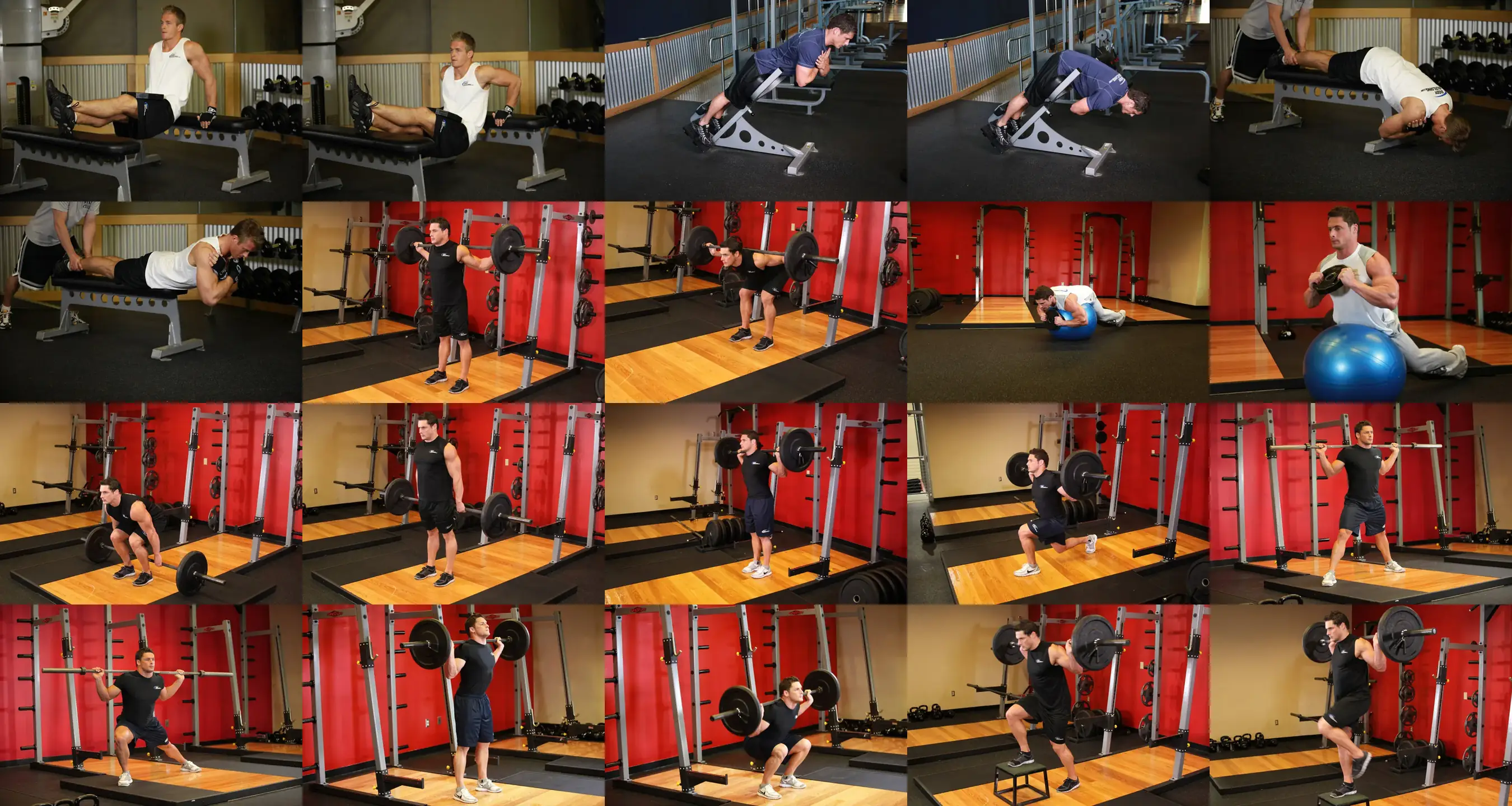
Setup and loading
Set the bar in the rack at chest height and position it low on your traps as in a squat. Start with the empty bar: this lift punishes too much weight, and a neutral spine is the priority.
How to do the stiff-legged barbell good morning step by step
- Unrack the bar resting low on your traps and set your feet hip width apart.
- Softly lock your knees without hyperextending them, then inhale and brace your core.
- Push your hips back and tip your torso forward with a neutral spine and eyes on the floor.
- Lower until your torso is nearly parallel to the floor or you feel strong hamstring tension.
- Exhale and drive your hips forward to stand back up, squeezing your glutes.
- Breathe at the top, brace again, and repeat with the same range.
Form cues
- Knees nearly straight but not snapped back
- Hips go back, not down
- Neutral spine from head to pelvis
- Stand up by driving your hips forward
Common mistakes
- Rounding your back: it loads your lumbar discs; only lower as far as you stay neutral.
- Too much weight: form breaks fast; use the empty bar or very light loads.
- Bending your knees: it becomes a standard good morning; keep them nearly straight.
- Looking at the ceiling: it strains your neck; keep your head in line with your torso.
How to make it easier or harder
To make it easier, do bent-knee good mornings or use a broomstick. To progress, add load gradually, pause at the bottom, or move to the Romanian deadlift.
Sets and reps for your goal
Hypertrophy
3-4 x 8-12 · rest 60-90 s3-4 sets of 6-12 reps (up to 15-20 on isolation exercises) at 65-80% of your max. Rest 1 to 2 minutes.
Get close to failure (0-3 reps in reserve) and control the lowering for 2-3 seconds. Accumulate 10-20 sets per muscle per week.
Max Strength
4-5 x 3-6 · rest 2-3 min3-6 sets of 1-6 reps at 80-90% of your max (1RM). Rest 2 to 5 minutes.
Leave 1-3 reps in reserve. If your technique breaks down, lower the weight: strength is built with good reps.
A guide for healthy adults. Adjust the load to your level and see a professional if you have an injury.
Check your form
Film yourself from the side or ask someone to watch, then tick what you get right.
Frequently asked questions
What is the difference between a stiff-legged and a regular good morning?
In a regular good morning your knees bend slightly, sharing the load between glutes and hamstrings. With stiff legs your knees stay nearly straight and your hamstrings take a bigger stretch, so you use less weight.
How much weight should I use for good mornings?
Far less than your squat. Start with the empty bar and add weight slowly as long as your back stays neutral on every rep. For most people, about 20 to 40 percent of their squat is a reasonable range.
Sports it suits
Gear for this exercise
- Olympic barbell and platesTo keep progressing on the big lifts with heavy loads.
As an Amazon Associate, Muscle Atlas earns from qualifying purchases.