Setup and loading
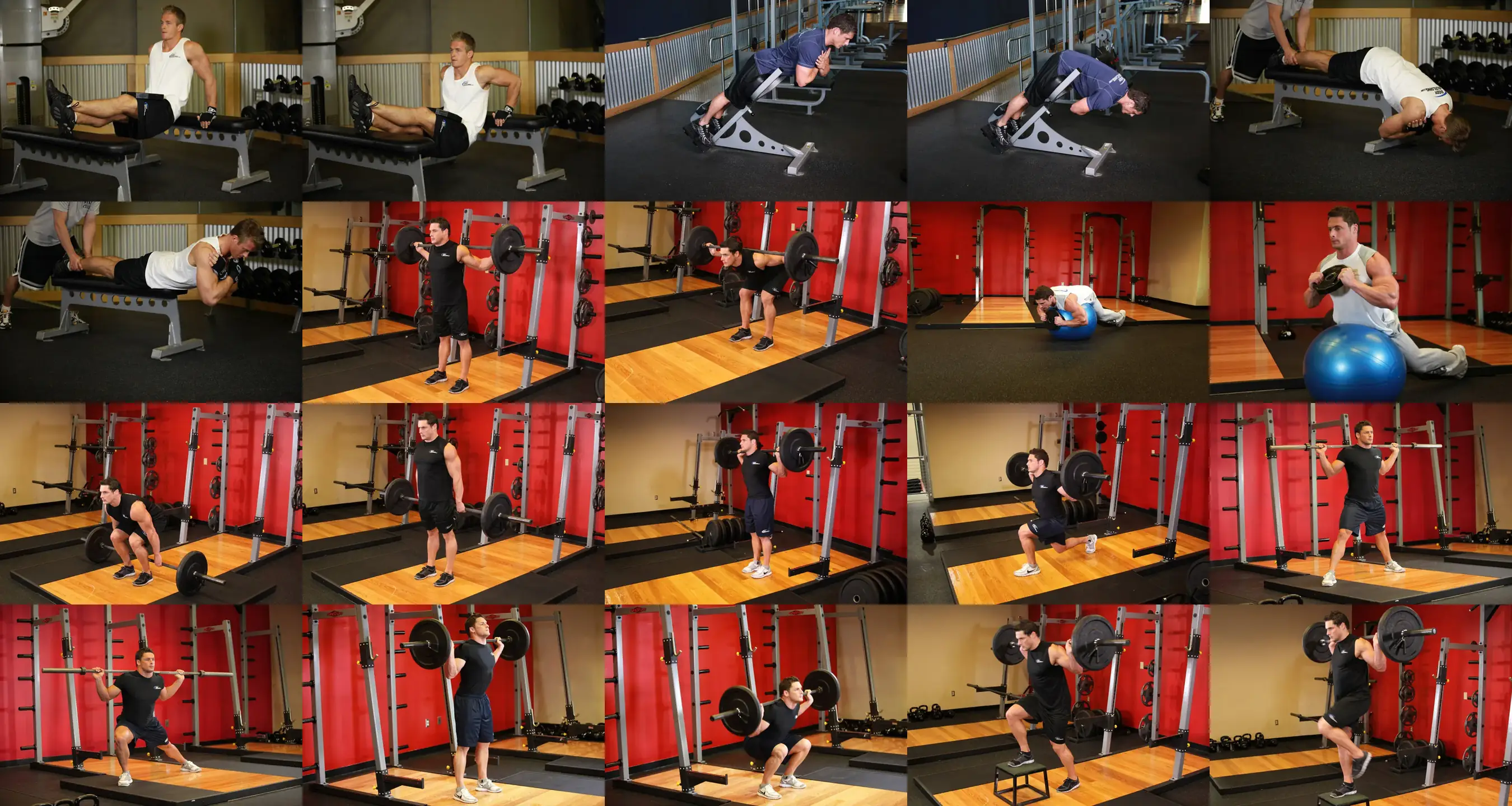
Lie face down with the bench edge right at your hip crease and have your partner firmly hold your ankles or calves. Start with body weight and arms crossed; hold a plate to your chest once you can do 15 controlled reps.
How to do the back extension without a bench step by step
- Lie face down on a tall bench with your hips at the edge and your torso hanging off.
- Have your partner pin your ankles or calves firmly to the bench.
- Cross your arms over your chest and let your torso lower with a neutral spine until nearly vertical.
- Exhale and raise your torso by extending your hips until your body forms a straight line.
- Squeeze your glutes for a second at the top without arching your lower back past that line.
- Inhale and lower slowly, controlling the descent until you feel a hamstring stretch.
Form cues
- Rise to a straight line, no higher
- Squeeze your glutes at the top of every rep
- Hinge your torso from your hips
- Lower slowly with a neutral spine
Common mistakes
- Overarching at the top: it compresses your spine; stop at a straight line.
- A partner holding loosely: you can slip; confirm a firm grip before starting.
- Bench edge under your stomach: it limits hip motion; set it at your hip crease.
- Using momentum: you lose lower-back control; keep a slow, steady pace.
How to make it easier or harder
To make it easier, do floor supermans or glute bridges. To progress, hold a plate to your chest, pause for three seconds at the top, or use a hyperextension bench with added weight.
Sets and reps for your goal
Hypertrophy
3-4 x 8-12 · rest 60-90 s3-4 sets of 6-12 reps (up to 15-20 on isolation exercises) at 65-80% of your max. Rest 1 to 2 minutes.
Get close to failure (0-3 reps in reserve) and control the lowering for 2-3 seconds. Accumulate 10-20 sets per muscle per week.
Max Strength
4-5 x 3-6 · rest 2-3 min3-6 sets of 1-6 reps at 80-90% of your max (1RM). Rest 2 to 5 minutes.
Leave 1-3 reps in reserve. If your technique breaks down, lower the weight: strength is built with good reps.
A guide for healthy adults. Adjust the load to your level and see a professional if you have an injury.
Check your form
Film yourself from the side or ask someone to watch, then tick what you get right.
Frequently asked questions
How do you do back extensions without a machine?
Lie face down on a tall bench or sturdy table with your hips at the edge and have someone hold your legs. If you train alone, hook your feet under heavy furniture or do supermans on the floor instead.
Are back extensions good for your lower back?
Done with control and without overarching, they strengthen your spinal erectors, glutes, and hamstrings, which helps in daily life and other lifts. If you have a lower-back injury, check with a healthcare professional first.
Sports it suits
Gear for this exercise
- Exercise matThick (8-10 mm) for floor work.
As an Amazon Associate, Muscle Atlas earns from qualifying purchases.