Setup and loading
Load the bar with full size plates so it sits about 9 inches off the floor, positioned over your midfoot roughly an inch from your shins. Start with a weight you can lift with a neutral back on every rep and add small jumps from session to session.
How to do the conventional deadlift step by step
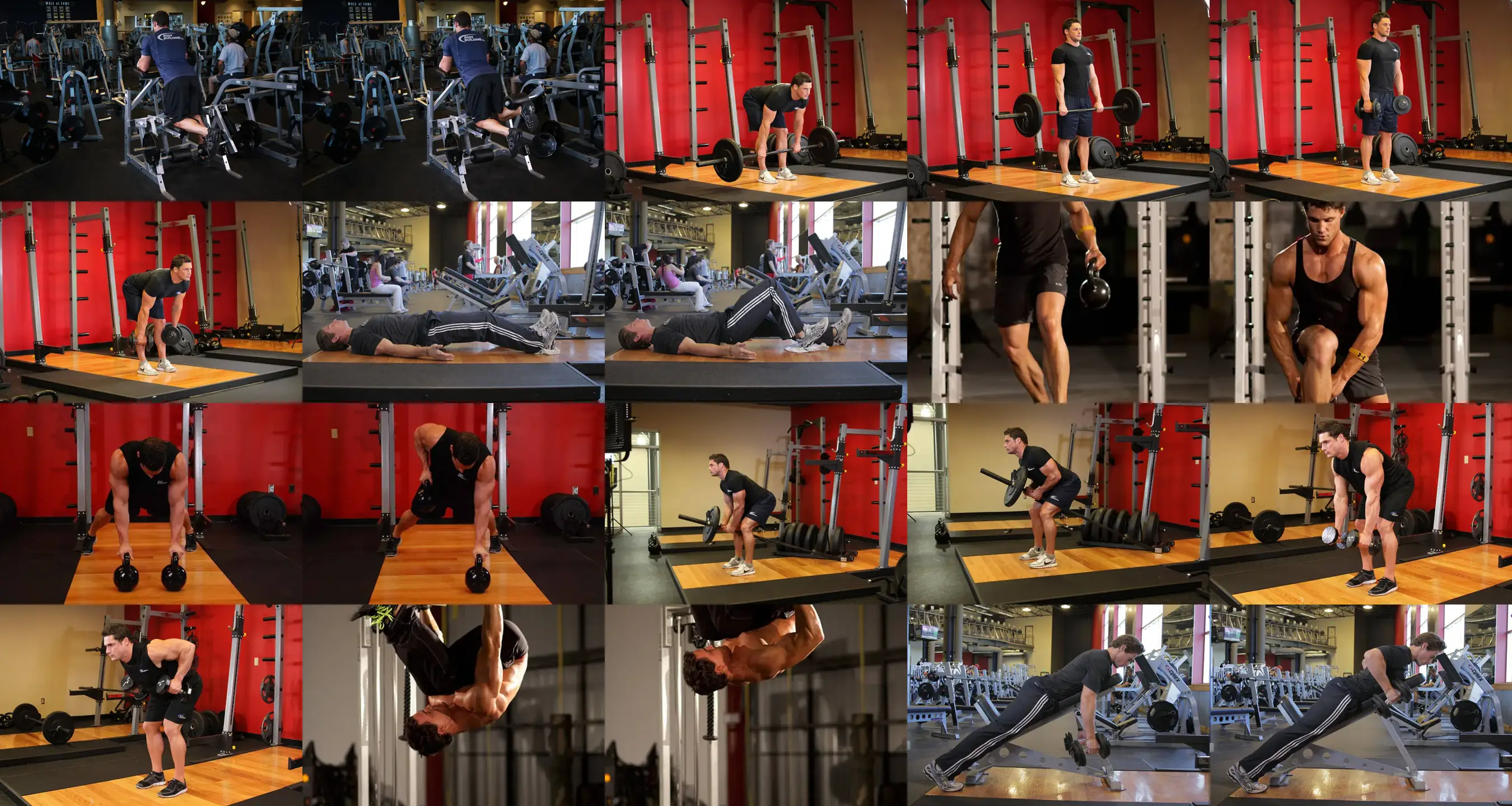
- Stand with feet hip width apart and the bar over your midfoot, toes turned out slightly.
- Hinge down and grip the bar just outside your legs, arms straight and long like ropes.
- Drop your hips until your shins touch the bar, lift your chest, breathe into your belly and brace.
- Pull your lats tight as if bending the bar around your legs, then push the floor away to break it off the ground.
- Once the bar passes your knees, drive your hips forward and stand tall with your glutes squeezed.
- Lower by reversing the path, hips back first and then knees, and exhale as the bar touches down.
Form cues
- Bar stays in contact with your legs
- Neutral spine from start to finish
- Push the floor, do not yank with arms
- Finish with glutes, not by leaning back
Common mistakes
- Rounding your back off the floor: stresses spinal discs; reduce the load and set your lats first.
- Hips rising before the chest: shifts work to your lower back; push with legs so hips and chest rise together.
- Bar drifting away from your body: lengthens the lever on your spine; drag it up your shins and thighs.
- Leaning back at lockout: compresses your lower back; stand tall with glutes tight and ribs down.
How to make it easier or harder
To learn the pattern, start with kettlebell deadlifts or block pulls with the bar raised to shorten the range. Once it feels solid, progress to deficit deadlifts standing on a plate or paused deadlifts just below the knee to strengthen your position off the floor.
Sets and reps for your goal
Max Strength
3-5 x 2-5 · rest 3-4 min3-6 sets of 1-6 reps at 80-90% of your max (1RM). Rest 2 to 5 minutes.
Leave 1-3 reps in reserve. If your technique breaks down, lower the weight: strength is built with good reps.
Power
4-6 x 2-3 at 40-60% · explosive pull · rest 2-3 min3-6 sets of 1-5 reps with light or moderate loads (30-60% of your max on the main lifts), or with a ball or your bodyweight. Rest 2 to 3 minutes.
Every rep at the highest possible speed. As soon as you notice it moving slower (a 10-20% velocity loss), end the set. Train power fresh, never fatigued.
A guide for healthy adults. Adjust the load to your level and see a professional if you have an injury.
Check your form
Film yourself from the side or ask someone to watch, then tick what you get right.
Frequently asked questions
Are deadlifts bad for your back?
Not with good technique and appropriate loading. Deadlifts strengthen the muscles that support your spine. The risk comes from rounding your back under heavy weights or adding load faster than your form can handle.
What is the difference between conventional and sumo deadlifts?
Conventional uses a hip width stance with hands outside the legs. Sumo uses a very wide stance with hands inside the legs, which keeps your torso more upright and puts more work on the quads and adductors.
Sports it suits
Gear for this exercise
- Olympic barbell and platesTo keep progressing on the big lifts with heavy loads.
As an Amazon Associate, Muscle Atlas earns from qualifying purchases.