Setup and loading
Use a 4 to 8 pound ball and throw at a sturdy wall, a partner or an open space. If your lower back arches hard as the ball goes back or the throw comes out slow, go lighter.
How to do the standing two-arm overhead throw step by step
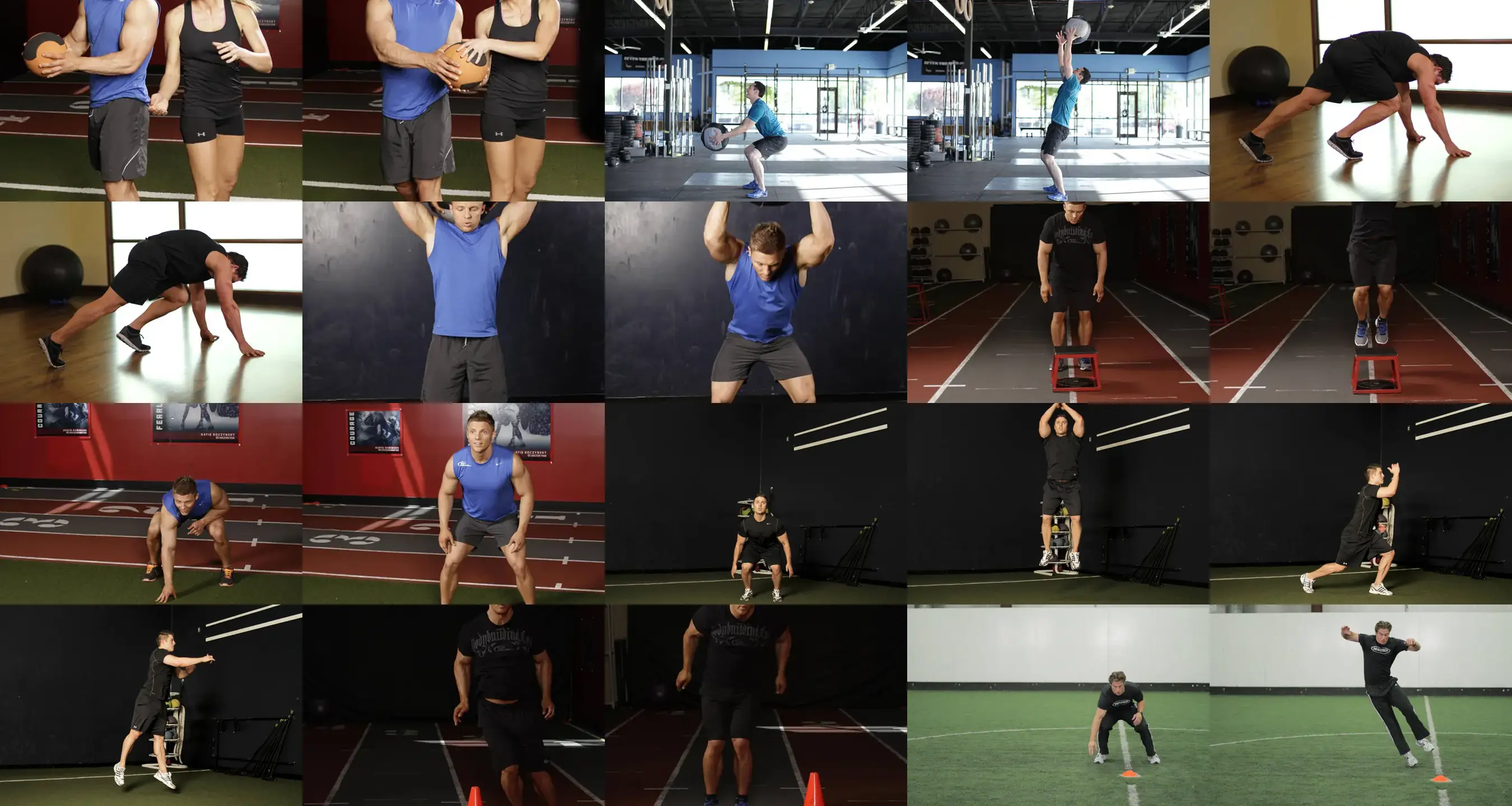
- Stand with feet shoulder width apart or one foot slightly ahead, holding the ball in both hands.
- Bring the ball up and behind your head with elbows slightly bent, breathing in.
- Bend your knees a little and arch slightly back with your abs engaged, without collapsing your lower back.
- Start the throw with a small leg drive and a strong forward flexion of your trunk.
- Extend your arms and release the ball in front of your head with force, exhaling explosively.
- Reset, retrieve the ball and repeat 6 to 10 times.
Form cues
- Controlled arch, ribs down
- Trunk first, arms second
- Release in front of your head
- Elbows shoulder width
Common mistakes
- Overarching your lower back: it compresses your spine; keep abs engaged and the arch small.
- Throwing with just your arms: you lose power; start from your legs and trunk.
- Releasing late: the ball heads into the floor; let go as your hands pass in front of your head.
- Flared elbows: they stress the shoulder; keep them close to shoulder width.
How to make it easier or harder
As a regression, throw from your knees or seated to isolate your trunk. To progress, add a step into the throw, chain it with a catch as in the catch and overhead throw, or use a slightly heavier ball.
Sets and reps for your goal
Power
4-6 x 2-5 · full rest3-6 sets of 1-5 reps with light or moderate loads (30-60% of your max on the main lifts), or with a ball or your bodyweight. Rest 2 to 3 minutes.
Every rep at the highest possible speed. As soon as you notice it moving slower (a 10-20% velocity loss), end the set. Train power fresh, never fatigued.
A guide for healthy adults. Adjust the load to your level and see a professional if you have an injury.
Check your form
Film yourself from the side or ask someone to watch, then tick what you get right.
Frequently asked questions
How is this different from the catch and overhead throw?
Here you start with the ball still behind your head, so you create power from a standstill. In the catch version you use the incoming ball's momentum to load and throw faster.
Do overhead throws help your soccer throw in?
Yes, they mimic the throw in and train your lats, abs and shoulders. With practice, they improve throwing distance and power.
Sports it suits
Gear for this exercise
- Medicine ball3-6 kg (6-13 lb) for power throws.
As an Amazon Associate, Muscle Atlas earns from qualifying purchases.