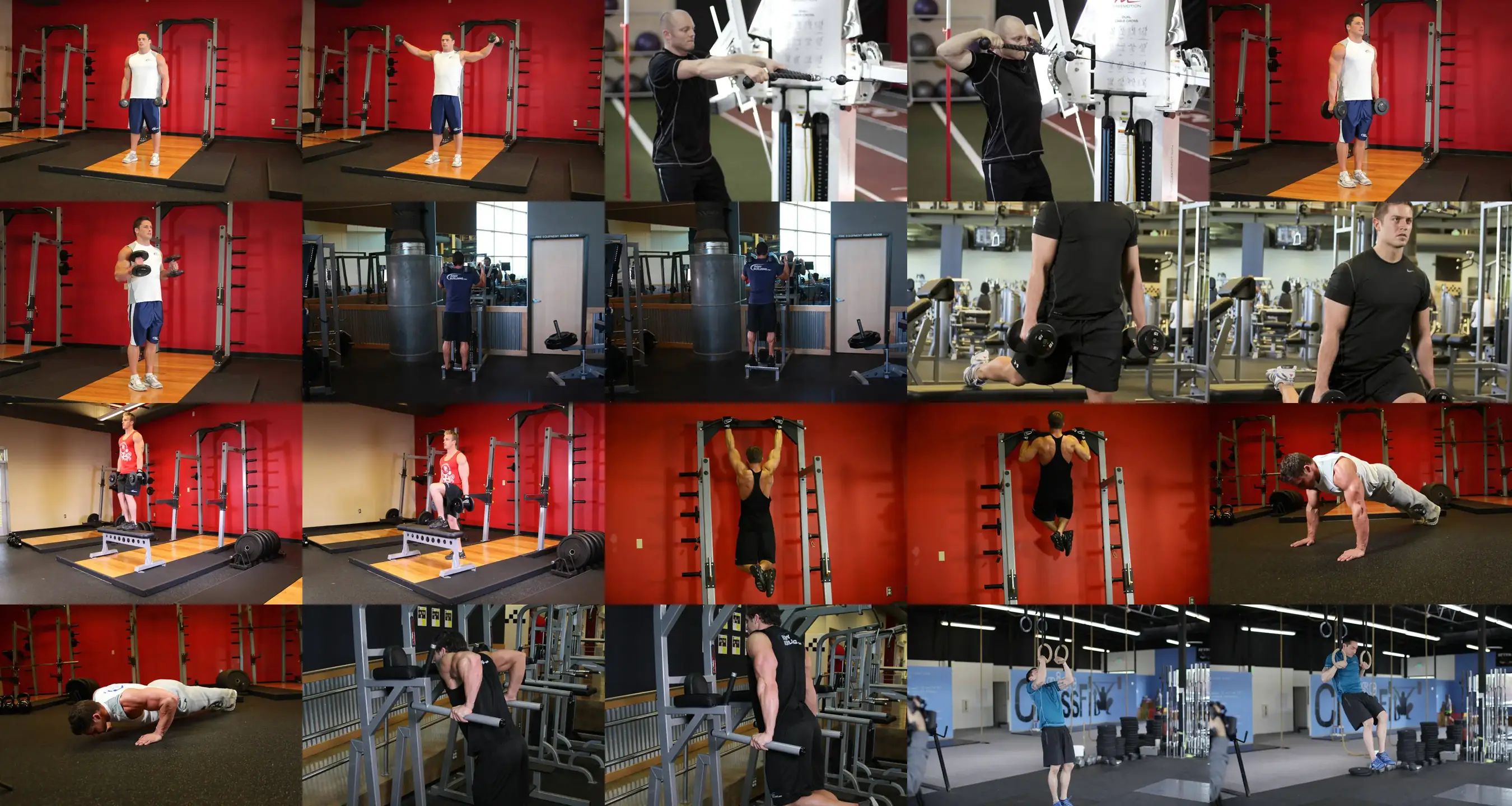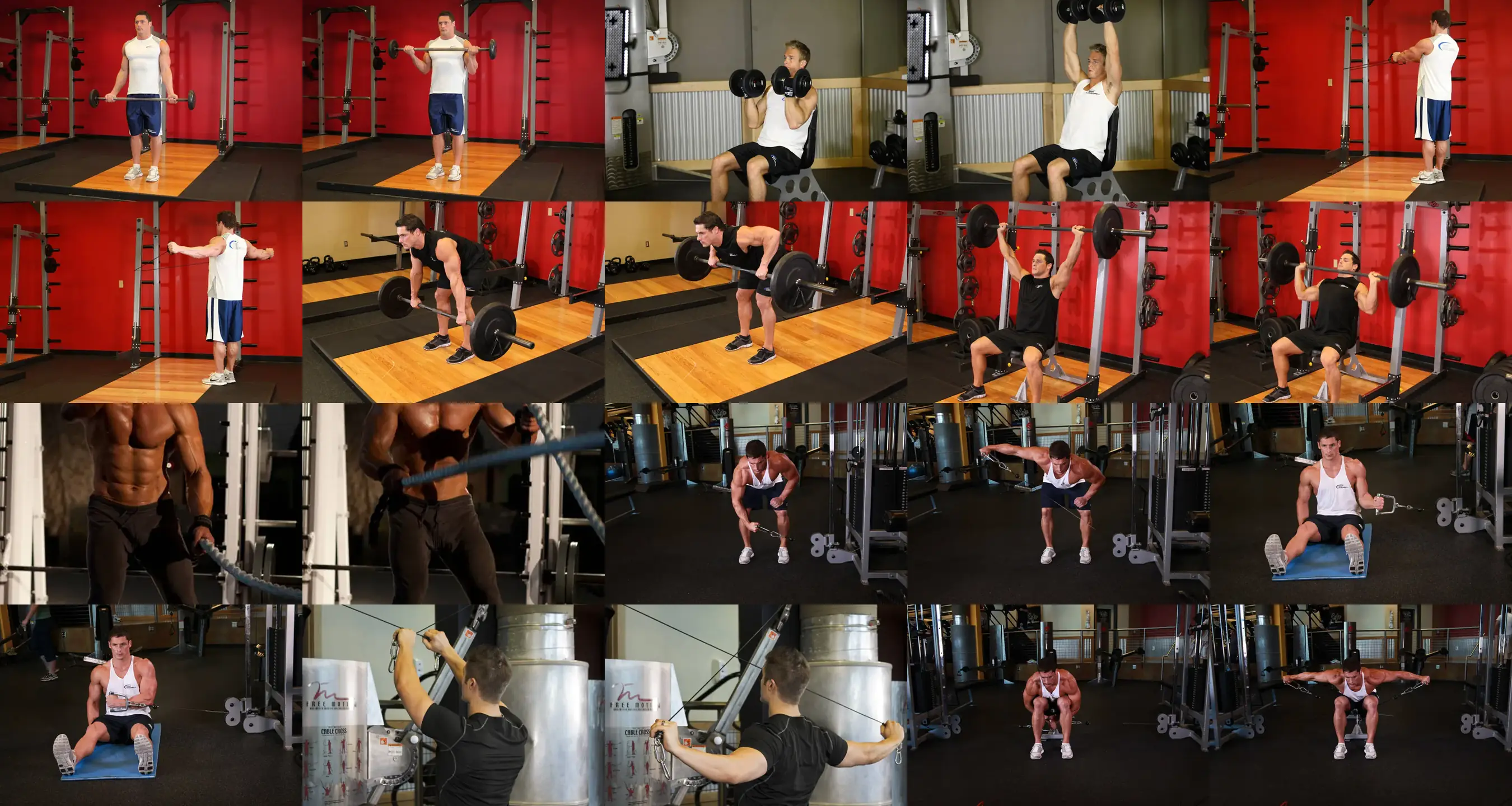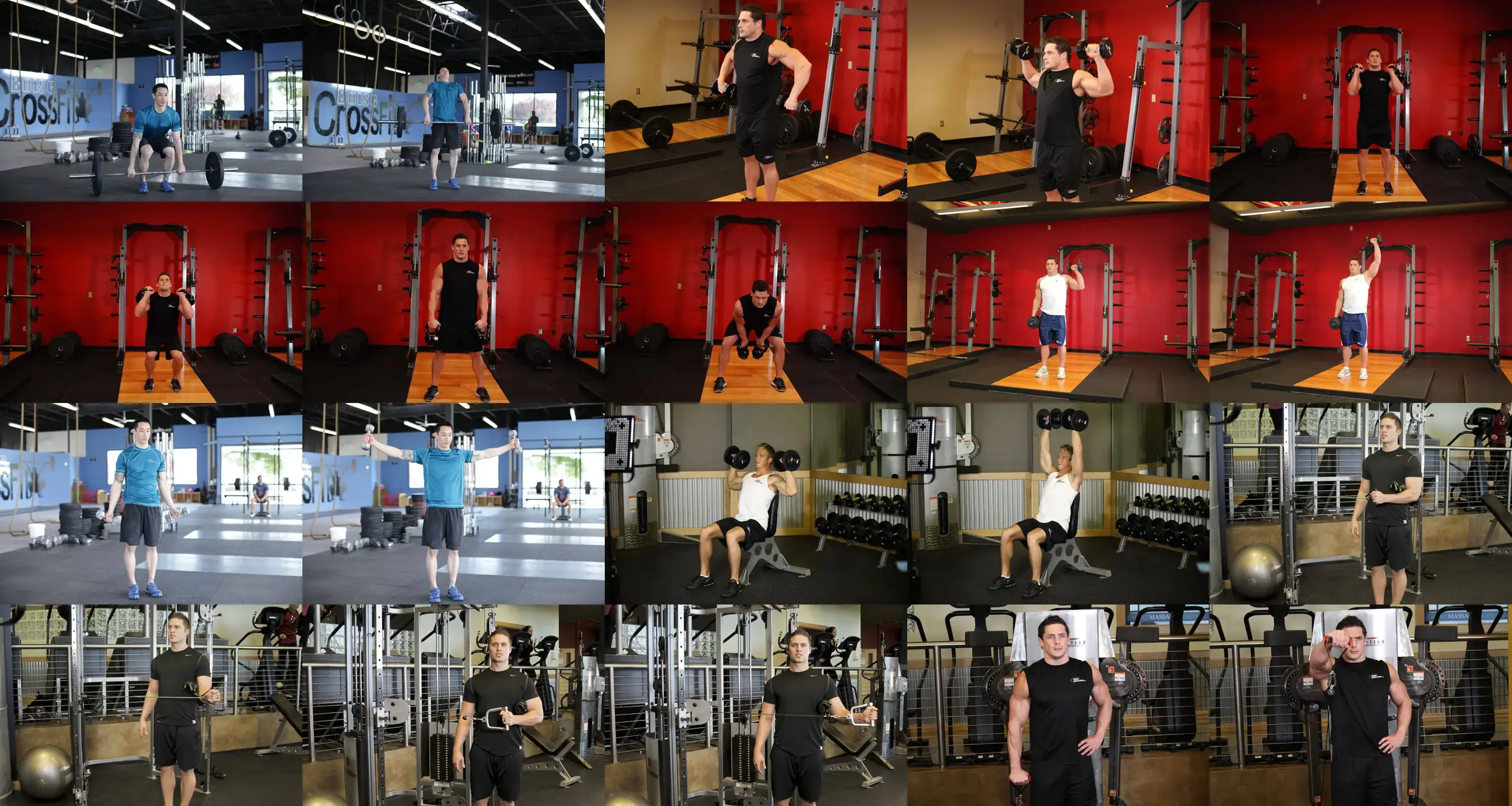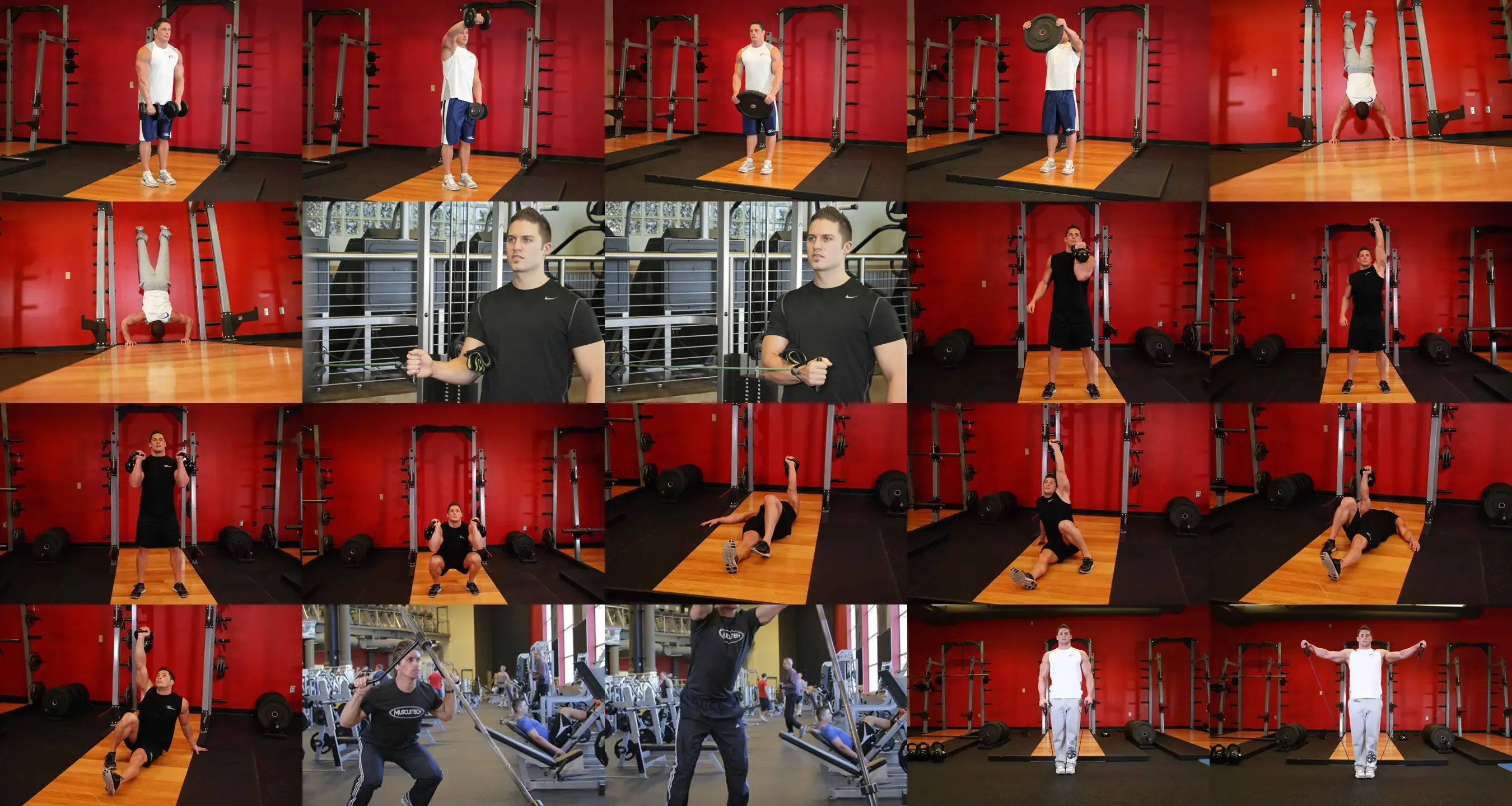
Setup and loading
Unrack the bar at upper chest height with a grip slightly wider than your shoulders and forearms vertical. Pick a weight you can press without leaning back or using leg drive; use sets of 3 to 6 for strength and 6 to 12 for size.
How to do the standing military press step by step
- Unrack the bar so it rests on your upper chest, with elbows slightly in front of the bar.
- Set your feet hip-width apart, squeeze your glutes and abs, and take a big breath in.
- Press the bar straight up, moving your face back slightly so the bar clears your chin.
- Once the bar passes your forehead, push your head through and lock your elbows with the bar over midfoot.
- At the top, shrug your shoulders slightly toward your ears and exhale.
- Lower the bar under control along the same path to your collarbones, breathing in before the next rep.
Form cues
- Glutes tight and ribs down for the whole press
- Bar travels straight, your head moves out of the way
- Finish with ears in front of your arms
- Forearms vertical in the starting position
Common mistakes
- Excessive back arch: it loads the lower back; squeeze your glutes and drop the weight if needed.
- Bar drifting forward: you lose leverage; keep it close to your face and get under it at the top.
- Elbows flared at the start: it weakens the press; bring them slightly in front of the bar.
- Unintended leg drive: it turns into a push press; keep your knees locked throughout the set.
How to make it easier or harder
For an easier version, try a seated dumbbell shoulder press or a Smith machine press. To progress, use a paused press at the collarbones, a single-arm kettlebell press, or the push press to handle heavier loads.
Sets and reps for your goal
Max Strength
4 x 4-63-6 sets of 1-6 reps at 80-90% of your max (1RM). Rest 2 to 5 minutes.
Leave 1-3 reps in reserve. If your technique breaks down, lower the weight: strength is built with good reps.
Hypertrophy
3 x 8-103-4 sets of 6-12 reps (up to 15-20 on isolation exercises) at 65-80% of your max. Rest 1 to 2 minutes.
Get close to failure (0-3 reps in reserve) and control the lowering for 2-3 seconds. Accumulate 10-20 sets per muscle per week.
Power
4-5 x 3 at 30-50% · explosive press · rest 2 min3-6 sets of 1-5 reps with light or moderate loads (30-60% of your max on the main lifts), or with a ball or your bodyweight. Rest 2 to 3 minutes.
Every rep at the highest possible speed. As soon as you notice it moving slower (a 10-20% velocity loss), end the set. Train power fresh, never fatigued.
A guide for healthy adults. Adjust the load to your level and see a professional if you have an injury.
Check your form
Film yourself from the side or ask someone to watch, then tick what you get right.
Frequently asked questions
Is the standing or seated military press better?
Standing works your core and overall stability more and carries over better to sports. Seated lets you isolate the shoulders and often handle a bit more weight. Both are useful, so choose based on your goal and how well you control your lower back.
Why does my lower back hurt during the military press?
It is usually from arching your back to make up for limited shoulder mobility or too much weight. Squeeze your glutes, keep your ribs down, and reduce the load. If it continues, switch to a seated version with back support and check with a professional.
Sports it suits
Gear for this exercise
- Olympic barbell and platesTo keep progressing on the big lifts with heavy loads.
As an Amazon Associate, Muscle Atlas earns from qualifying purchases.