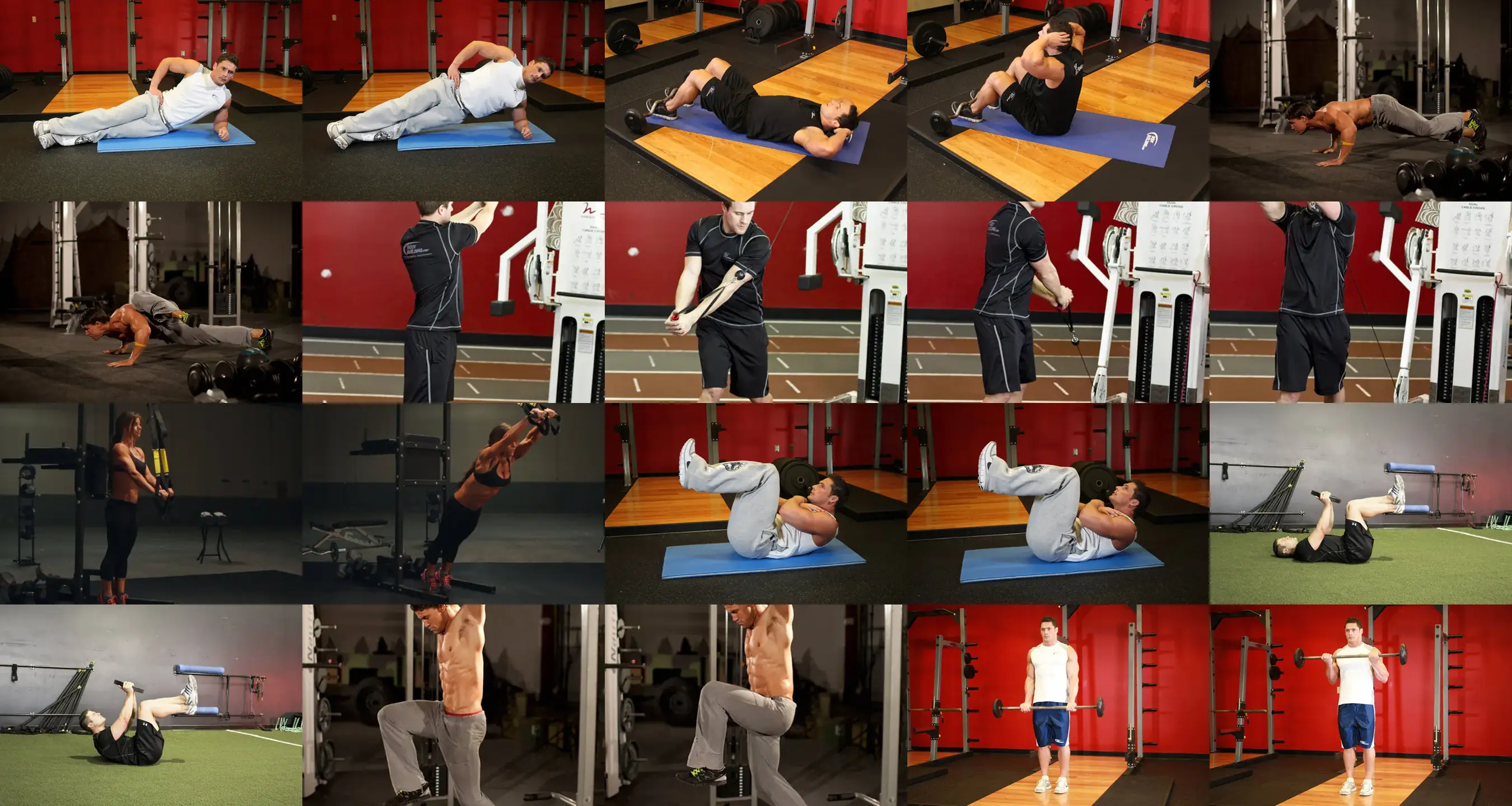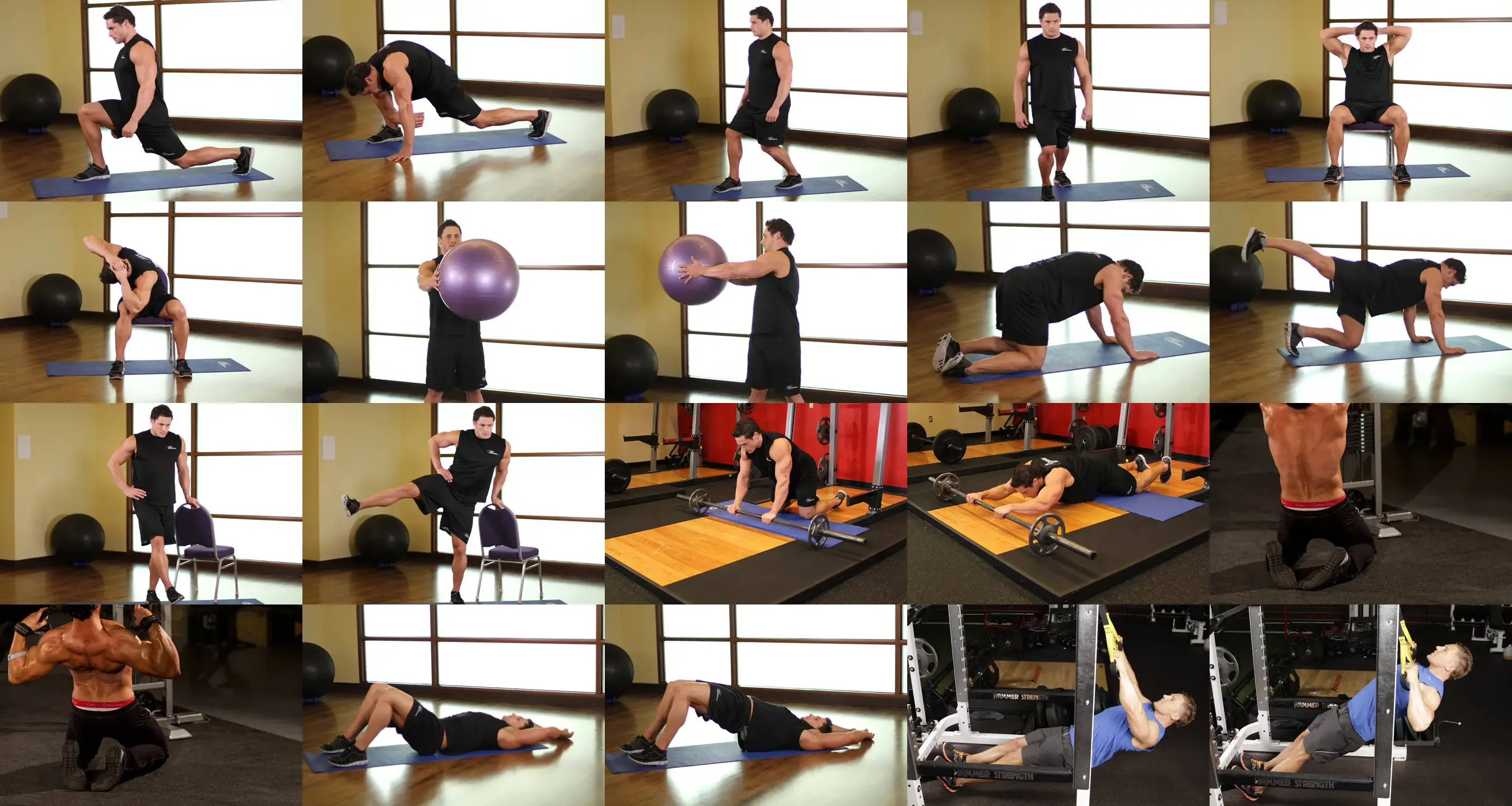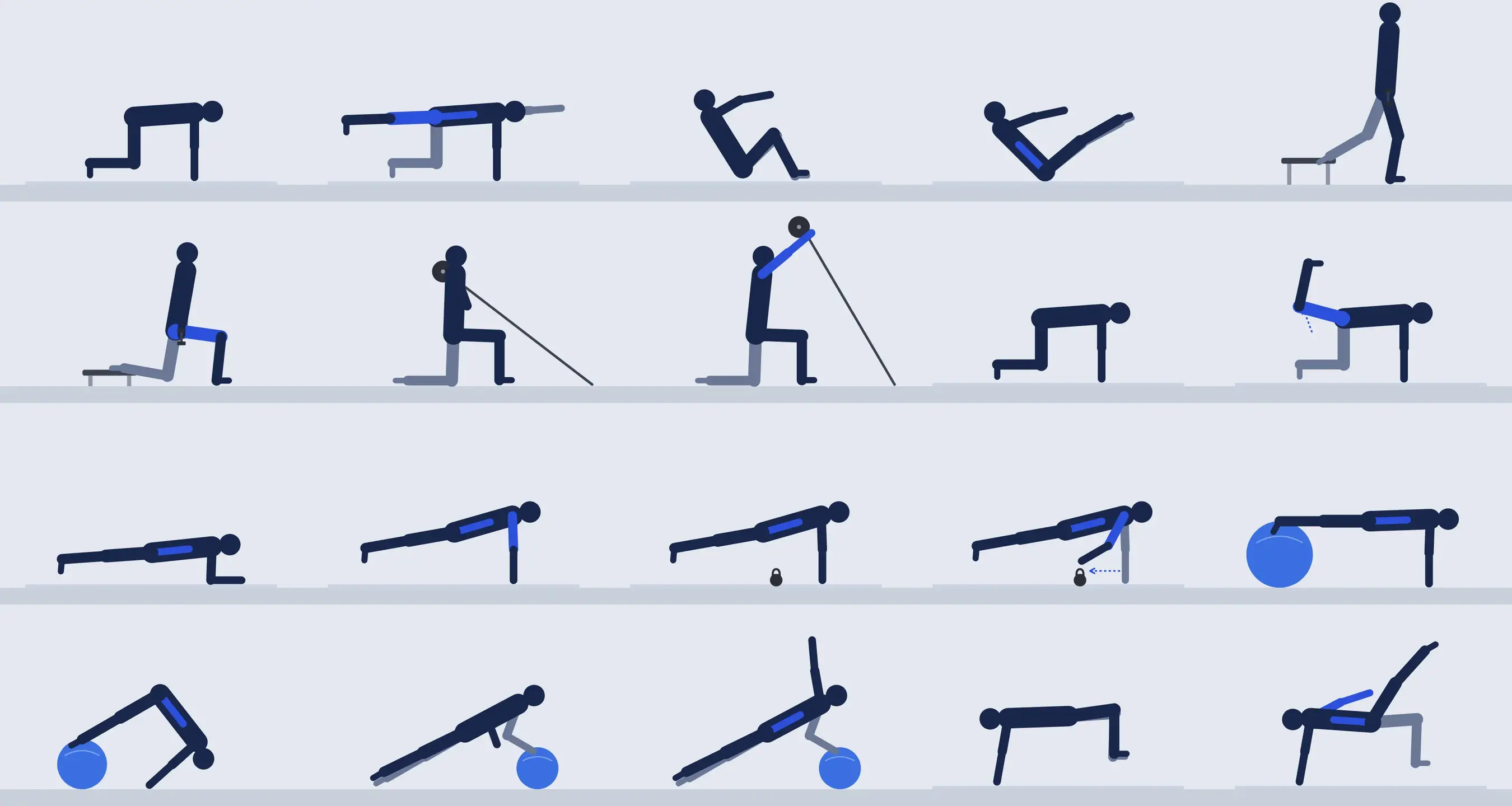
Setup and loading
Set up in a plank on a mat with feet slightly apart for stability. Adjust difficulty with foot width, tempo, and reps; you can start from your knees.
How to do the plank up-down step by step
- Start in a forearm plank with elbows under shoulders and a straight line from head to heels.
- Set your feet hip width apart, squeeze glutes and abs, and keep breathing steadily.
- Place your right hand under your right shoulder and press, then place your left hand until your arms are straight.
- Keep your hips still and level throughout the transition, without swaying side to side.
- Lower back down onto your right forearm, then your left, one at a time.
- Alternate the leading arm each rep and do 8 to 12 per side.
Form cues
- Hips still, like a glass of water on your back
- Hand under shoulder
- Glutes and abs squeezed
- Feet slightly apart for stability
Common mistakes
- Swaying the hips during the switch: loses the anti-rotation work; widen your feet and slow down.
- Piking the hips up: makes it easier and less effective; hold a straight line.
- Sagging lower back: loads your spine; squeeze glutes and tuck the pelvis.
- Hands far from shoulders: overloads wrists and shoulders; place them underneath.
How to make it easier or harder
To regress, do it from your knees or hold a high plank with alternating shoulder taps. To progress, bring your feet together, speed up without losing control, wear a weighted vest, or add a push-up at the top.
Sets and reps for your goal
Core & Stability
3 x 20-30 s3-4 sets of 20-45 seconds or 8-12 slow reps. Rest 45 to 60 seconds.
Neutral spine, tight abs and controlled breathing. Progress in time or leverage before adding weight.
Endurance
3 x 40 s2-4 sets of 15-30 reps or 30-60 seconds at 40-60% of your max. Rest 30 to 60 seconds.
Steady pace and clean technique to the end. Circuits help you build volume with little rest.
A guide for healthy adults. Adjust the load to your level and see a professional if you have an injury.
Check your form
Film yourself from the side or ask someone to watch, then tick what you get right.
Frequently asked questions
What does the plank up-down work?
It works your core, especially the abs and obliques resisting rotation, plus triceps, shoulders, and chest as you push. It is more dynamic than a static plank and also builds shoulder stability.
How many plank up-downs should I do?
Start with 2 or 3 sets of 6 to 10 reps, alternating the leading arm. You can also go by time, 30 to 45 seconds. Always prioritize keeping your hips still over hitting a number.
Sports it suits
Gear for this exercise
- Exercise matThick (8-10 mm) for floor work.
As an Amazon Associate, Muscle Atlas earns from qualifying purchases.