Setup and loading
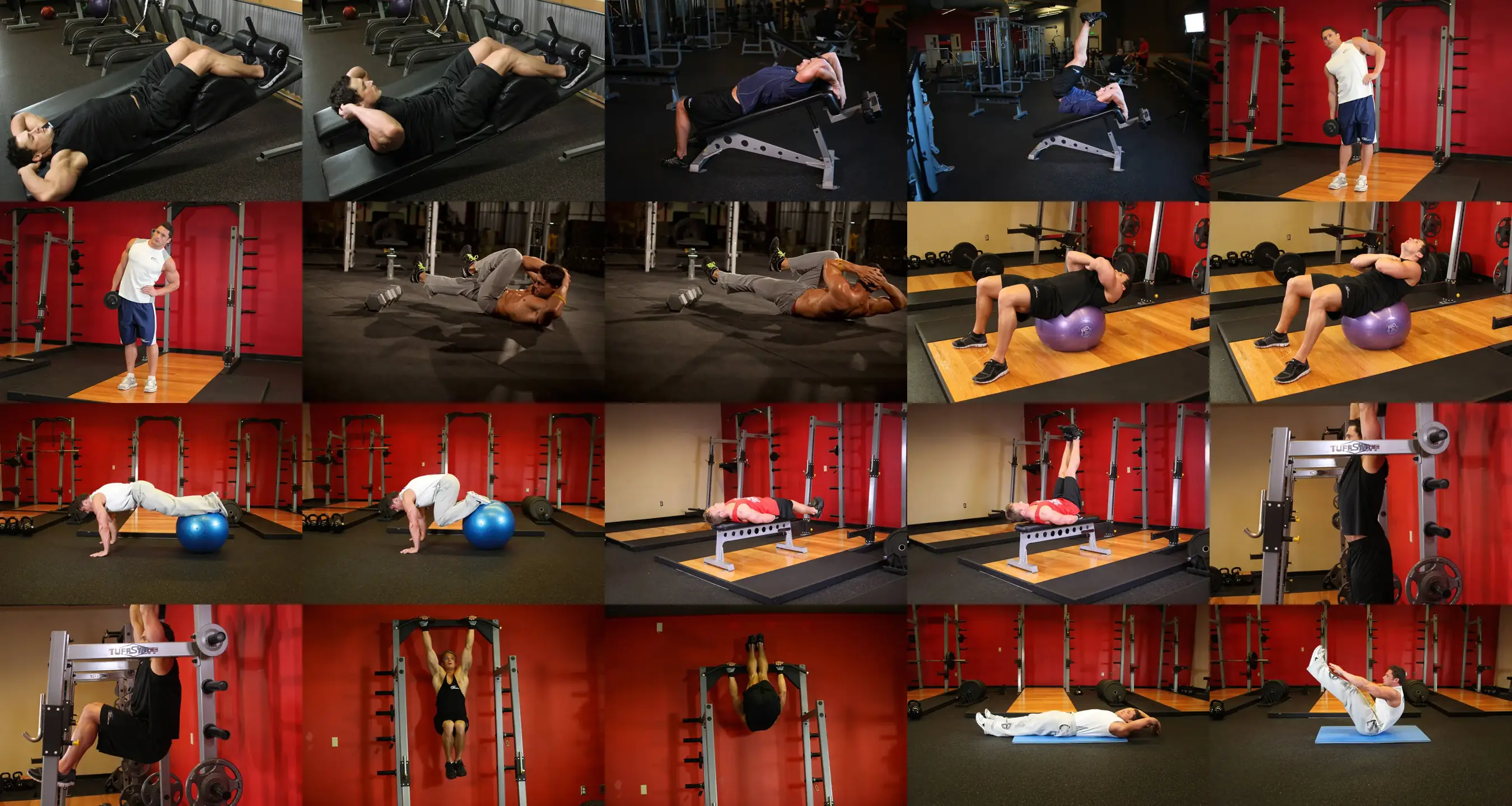
Set the bench to a decline of 15 to 30 degrees and hook your feet under the rollers. The steeper the angle, the harder it gets; start shallow and increase the slope or hold a plate once you can do 15 clean reps.
How to do the decline bench crunch step by step
- Sit on the decline bench, hook your feet under the rollers and lie back with your spine on the pad.
- Cross your arms over your chest or rest your fingertips on your temples and breathe in.
- Exhale and curl your torso from the shoulders, lifting your upper back off the bench.
- Rise until your torso is about 30 to 45 degrees off the bench, without sitting all the way up.
- Squeeze your abs for a second at the top.
- Breathe in and lower slowly, resisting the slope, until your shoulders nearly touch the pad.
Form cues
- Curl your spine, do not sit straight up
- Fight the slope on the way down
- Feet hooked, but do not pull with them
- Chin away from chest
Common mistakes
- Sitting all the way up: shifts work to the hip flexors; stop around halfway.
- Dropping on the way down: wastes the most useful part; take two or three seconds to lower.
- Pulling on your head: strains your neck; cross your arms over your chest.
- Using too steep an angle: forces jerky reps; reduce the decline until you control it.
How to make it easier or harder
If the slope is too hard, go back to floor crunches or set the bench almost flat. To progress, hold a plate against your chest, increase the angle or stretch the lowering phase to four seconds.
Sets and reps for your goal
Core & Stability
3 x 8-15 or 20-45 s3-4 sets of 20-45 seconds or 8-12 slow reps. Rest 45 to 60 seconds.
Neutral spine, tight abs and controlled breathing. Progress in time or leverage before adding weight.
A guide for healthy adults. Adjust the load to your level and see a professional if you have an injury.
Check your form
Film yourself from the side or ask someone to watch, then tick what you get right.
Frequently asked questions
Are decline crunches better than regular crunches?
They are not better, they are harder. The slope increases load and range of motion for your abs, so they are a useful progression once floor crunches stop challenging you.
What angle should a decline bench be for crunches?
A decline of 15 to 30 degrees works for most people. Steeper angles add a lot of difficulty and head pressure, so increase them only once you control the lowering phase well.
Sports it suits
Gear for this exercise
- Exercise matThick (8-10 mm) for floor work.
As an Amazon Associate, Muscle Atlas earns from qualifying purchases.