Setup and loading
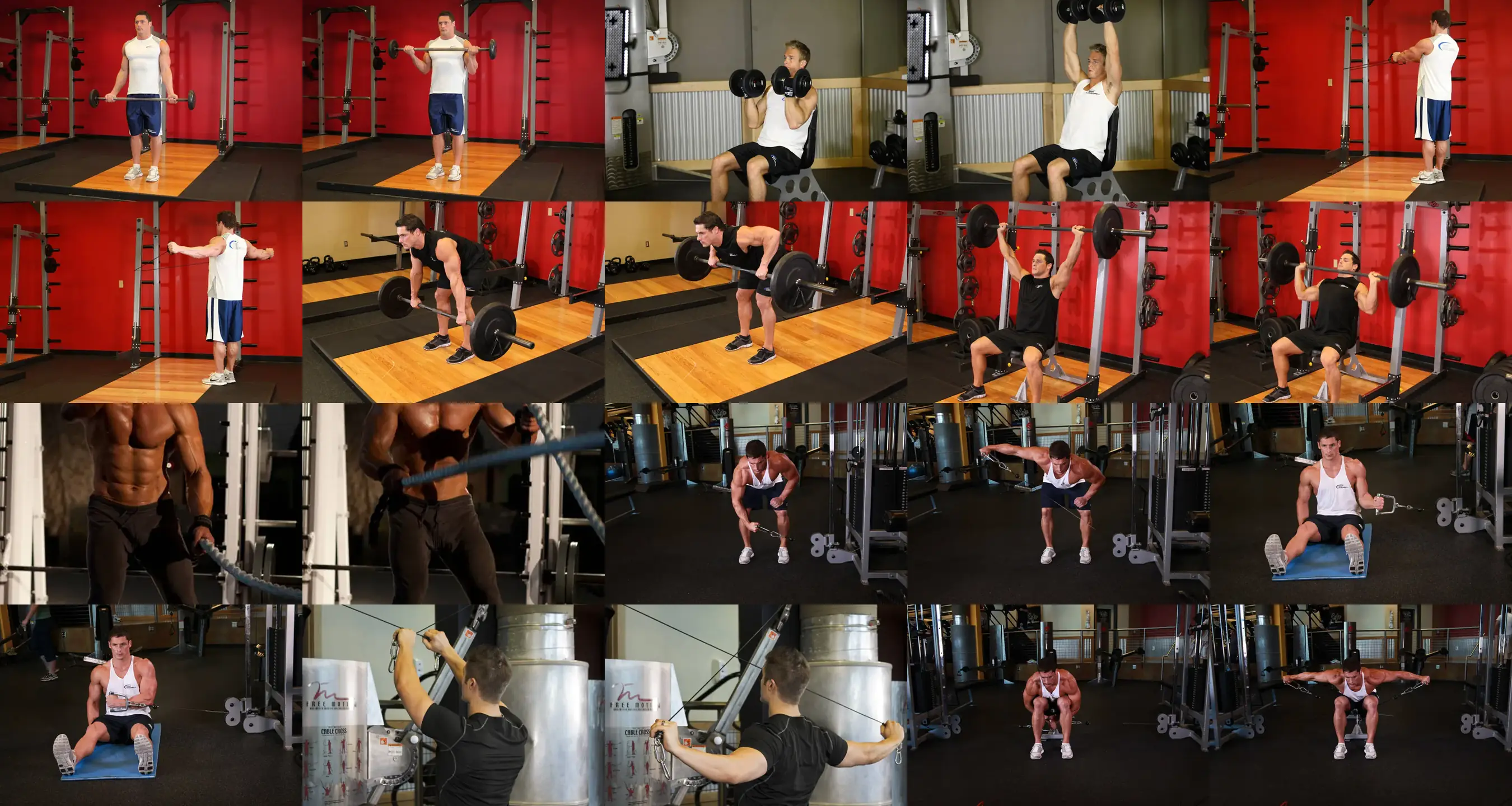
Grip the bar overhand with hands wider than your shoulders and hinge your torso to about 45 degrees or lower. Use much less weight than your regular barbell row, since the rear delts are small, and choose a load you can lift without jerking your back.
How to do the barbell rear delt row step by step
- Grab the bar overhand wider than shoulder width and stand with it in front of your thighs.
- Soften your knees and hinge from the hips with a neutral spine, letting the bar hang.
- Exhale and pull the bar toward your upper chest, flaring your elbows out to about 70 to 80 degrees.
- At the top, squeeze the backs of your shoulders and pinch your shoulder blades without shrugging.
- Inhale and lower the bar slowly until your arms are straight, without rounding your back.
- Hold the same torso angle every rep and return the bar to the floor or rack when done.
Form cues
- Elbows flared out wide
- Bar to your upper chest
- Flat back, fixed torso
- Squeeze behind your shoulders
Common mistakes
- Tucking the elbows: the lats take over; flare them and pull to the upper chest.
- Standing up to lift the bar: that is momentum; lighten the load and hold the angle.
- Rounding the back: it loads the lower spine; lift your chest and hinge at the hips.
- Using your regular row weight: it is too heavy; start at about 50 to 60 percent.
How to make it easier or harder
As a regression, do it chest supported on an incline bench with dumbbells, which removes lower back demand. To progress, add weight, pause for one second at the top, or use a three second lowering tempo.
Sets and reps for your goal
Hypertrophy
3-4 x 8-12 · rest 60-90 s3-4 sets of 6-12 reps (up to 15-20 on isolation exercises) at 65-80% of your max. Rest 1 to 2 minutes.
Get close to failure (0-3 reps in reserve) and control the lowering for 2-3 seconds. Accumulate 10-20 sets per muscle per week.
Max Strength
4-5 x 3-6 · rest 2-3 min3-6 sets of 1-6 reps at 80-90% of your max (1RM). Rest 2 to 5 minutes.
Leave 1-3 reps in reserve. If your technique breaks down, lower the weight: strength is built with good reps.
A guide for healthy adults. Adjust the load to your level and see a professional if you have an injury.
Check your form
Film yourself from the side or ask someone to watch, then tick what you get right.
Frequently asked questions
How is this different from a regular barbell row?
In a regular row the elbows stay close and the bar goes to your belly button, with more lat work. In the rear delt row the elbows flare and the bar comes to your chest, so the rear shoulders and upper back do more.
How far should I bend over for rear delt rows?
Usually between 45 degrees and nearly parallel to the floor. The more horizontal you are, the more rear delt work, but also the more demand on your lower back. Choose the angle you can hold with a neutral spine for the whole set.
Sports it suits
Gear for this exercise
- Olympic barbell and platesTo keep progressing on the big lifts with heavy loads.
As an Amazon Associate, Muscle Atlas earns from qualifying purchases.