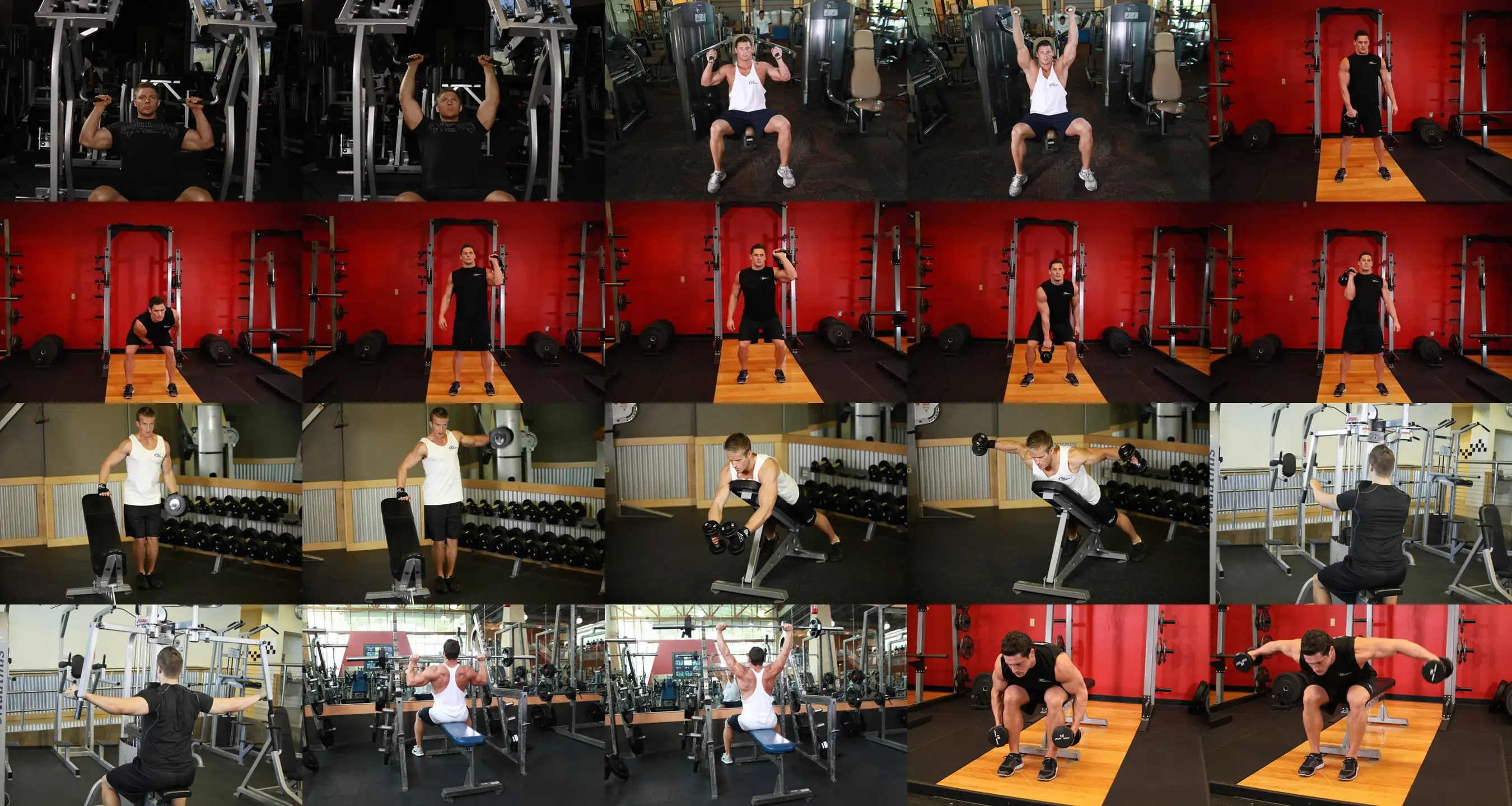
Setup and loading
Sit on the edge of a flat bench with feet together and the dumbbells on the floor beside your heels. Choose light dumbbells held with palms facing each other that you can lift to shoulder height for 12 to 20 reps without raising your torso.
How to do the seated bent-over rear delt raise step by step
- Sit on the edge of the bench and pick up the dumbbells, palms facing each other, behind your calves.
- Lean forward until your chest is close to your thighs, back flat and neck neutral.
- With elbows slightly bent, exhale and raise your arms out to the sides in an arc.
- Stop when your arms line up with your shoulders and squeeze for a second.
- Inhale and lower slowly until the dumbbells return beside your calves.
- Hold the same lean every rep and sit up only when the set is finished.
Form cues
- Chest close to your thighs
- Flat back, neutral neck
- Wide arc, fixed elbows
- Squeeze behind your shoulders
Common mistakes
- Raising your torso as you lift: momentum does the work; hold the lean and lighten the load.
- Rounding your back: it loads the spine; lift your chest before leaning over.
- Bending the elbows like a row: the lats join in; keep a fixed angle.
- Shrugging: the upper traps dominate; keep your shoulders away from your ears.
How to make it easier or harder
As a regression, use an incline bench and rest your chest so you do not have to hold your torso, or use a band. To progress, add weight carefully, hold at the top, or move to cable rear delt flyes.
Sets and reps for your goal
Hypertrophy
3 x 10-15 · rest 60 s3-4 sets of 6-12 reps (up to 15-20 on isolation exercises) at 65-80% of your max. Rest 1 to 2 minutes.
Get close to failure (0-3 reps in reserve) and control the lowering for 2-3 seconds. Accumulate 10-20 sets per muscle per week.
A guide for healthy adults. Adjust the load to your level and see a professional if you have an injury.
Check your form
Film yourself from the side or ask someone to watch, then tick what you get right.
Frequently asked questions
What is the difference between seated and standing rear delt raises?
Seated reduces leg and hip momentum and lets your chest rest almost on your thighs, which makes the lean easier to hold. Standing requires holding a hip hinge, which demands more from your lower back.
Why can't I feel my rear delts during raises?
Usually the weight is too heavy, the elbows bend, or you squeeze your shoulder blades too much, shifting work to the mid back. Try less weight, nearly straight arms, and think about reaching your hands out wide.
Sports it suits
Gear for this exercise
- Adjustable dumbbellsSave space and replace a whole dumbbell rack at home.
As an Amazon Associate, Muscle Atlas earns from qualifying purchases.