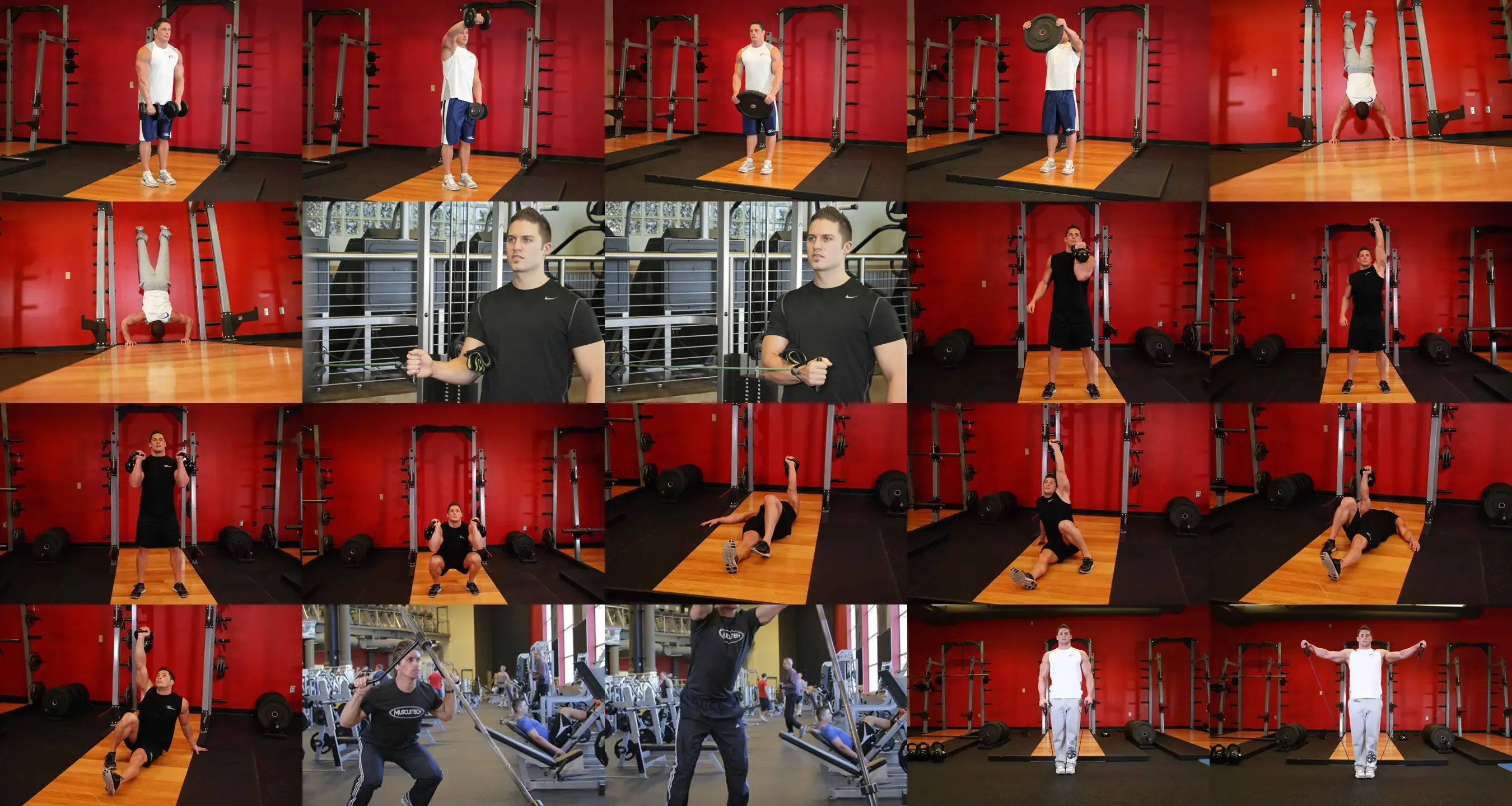
Setup and loading
Hold the plate by its edges at 3 and 9 o'clock in front of your thighs, feet hip width apart and knees soft. Start with a 10 or 25 pound plate and choose one you can lift without swinging your hips or arching your back.
How to do the plate front raise step by step
- Grab a plate by the sides, hands at 3 and 9 o'clock, and hold it in front of your thighs.
- Stand tall, squeeze glutes and abs, and keep a slight bend in your elbows.
- Exhale and raise the plate forward with nearly straight arms up to eye level.
- Hold one second at the top, squeezing the plate with your shoulders down.
- Inhale and lower slowly to your thighs without letting the plate pull you.
- Repeat with a still torso and firm wrists.
Form cues
- Hands at 3 and 9 o'clock
- Squeeze the plate like a wheel
- Lift to eye level
- Glutes tight, no arching
Common mistakes
- Arching your back to lift: the lower back compensates; squeeze glutes and use a lighter plate.
- Swinging to start: momentum takes work off the shoulders; begin from a dead stop.
- Bending the elbows a lot: the lever shortens; keep your arms nearly straight.
- Lifting overhead: more trap load with no benefit; stop at eye level.
How to make it easier or harder
As a regression, use a lighter plate or switch to alternating dumbbell front raises. To progress, use a heavier plate, hold at the top, or turn the plate like a steering wheel at the top to add core work.
Sets and reps for your goal
Hypertrophy
3 x 10-15 · rest 60 s3-4 sets of 6-12 reps (up to 15-20 on isolation exercises) at 65-80% of your max. Rest 1 to 2 minutes.
Get close to failure (0-3 reps in reserve) and control the lowering for 2-3 seconds. Accumulate 10-20 sets per muscle per week.
A guide for healthy adults. Adjust the load to your level and see a professional if you have an injury.
Check your form
Film yourself from the side or ask someone to watch, then tick what you get right.
Frequently asked questions
What plate should I use for front raises?
Many people start with a 10 pound plate and progress to 25, 35, or 45. Choose one you can lift 10 to 12 times without arching your back. Plates with built in handles are easier to grip.
How is it different from dumbbell front raises?
The plate is held with both hands together in a neutral grip, which adds stability and often allows a bit more load. It also demands more grip strength and makes both shoulders work in sync.
Sports it suits
Gear for this exercise
- Olympic barbell and platesTo keep progressing on the big lifts with heavy loads.
As an Amazon Associate, Muscle Atlas earns from qualifying purchases.