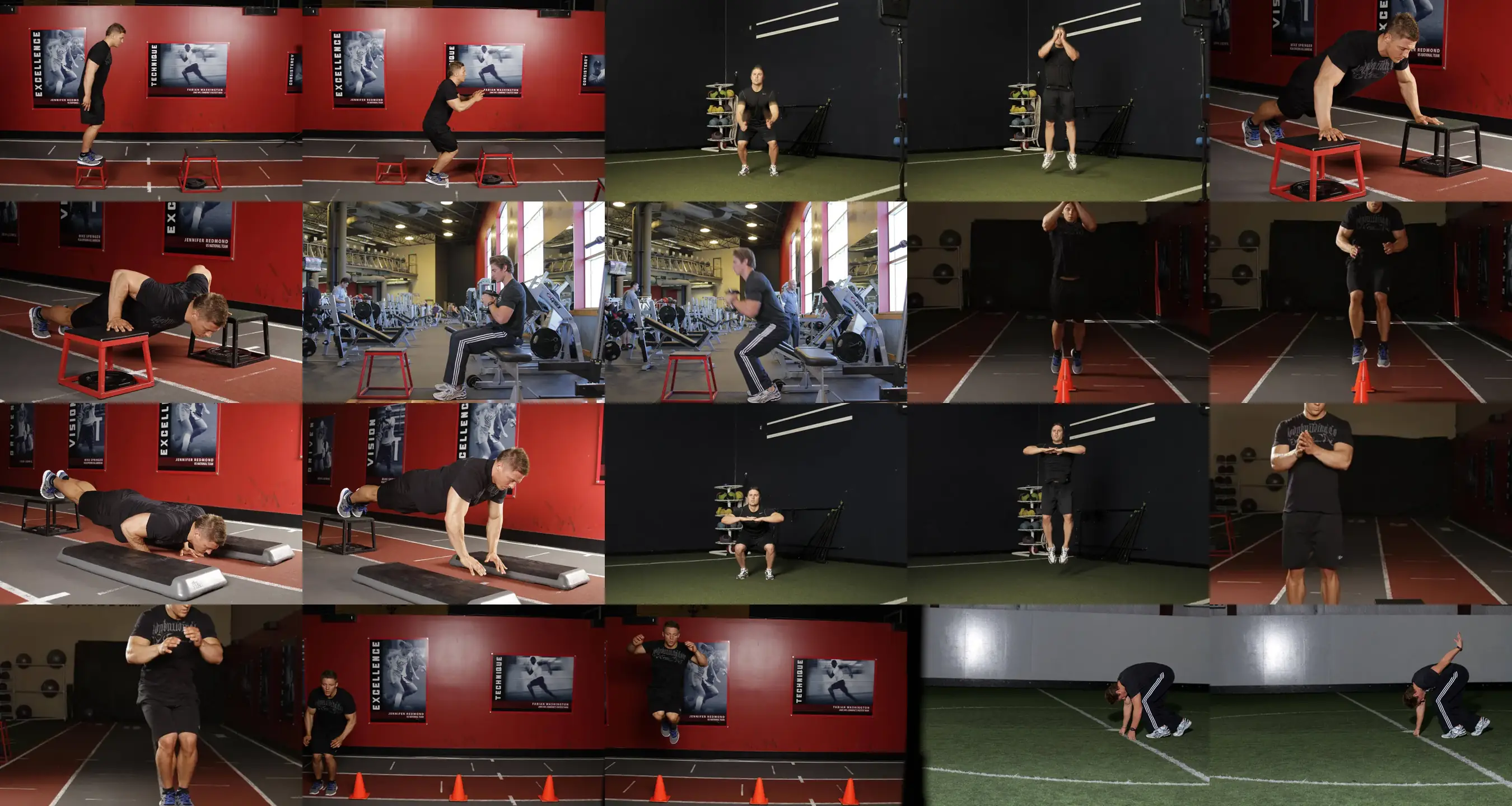
Setup and loading
You need no equipment, just a start line and 10 to 20 yards of track or grass. Adjust difficulty with distance and reps, always with full rest so every start is top quality.
How to do the linear 3-part start step by step
- Stand behind the line with one foot forward and the other about a foot length behind, knees slightly bent.
- Place the arm opposite the front foot ahead of your body and the other back, with weight over the front leg.
- Lean your whole body forward from the ankles, holding a straight line from head to back heel.
- When you feel about to fall, drive hard with both legs and bring the back knee through with a short step.
- Chain short, powerful steps, pushing the ground back and driving your arms hard, exhaling on the first contacts.
- Gradually rise to upright over 10 to 15 yards, decelerate, and walk back.
Form cues
- Push the ground behind you
- Lean from the ankles, not the waist
- Short, powerful steps early
- Aggressive arms opposite your legs
Common mistakes
- Popping up on the first step: you lose horizontal force; hold the lean for the first few yards.
- Overstriding the first step: your foot lands ahead and brakes; take a short step under your hips.
- Bending at the waist: it breaks the line of push; lean with a straight body.
- Arms crossing your body: it twists your torso; swing them front to back.
How to make it easier or harder
As a regression, practice falling starts into a first step, or wall A marches with a lean. To progress, start from a 3 point stance, have a partner give a start signal, or do starts with a light sled.
Sets and reps for your goal
Speed
4-6 x 10-30 m or 5-10 s · full rest4-8 reps of 10-40 meters (or 3-6 seconds). Full rest: 1 minute for every 10 meters.
Always at 95-100%. If your time gets more than 3-5% slower or your technique falls apart, stop: running tired trains endurance, not speed.
Plyometrics
3-5 x 3-6 jumps · rest 1-2 min3-6 sets of 3-8 jumps. In total, 60-100 contacts per session (40-60 if you're a beginner). Rest 1 to 2 minutes between sets.
Short, quiet ground contact. If the jump loses height or your foot sticks to the ground, stop: the set is no longer training reactivity. Two sessions per week, 48 h apart.
A guide for healthy adults. Adjust the load to your level and see a professional if you have an injury.
Check your form
Film yourself from the side or ask someone to watch, then tick what you get right.
Frequently asked questions
How do you improve your sprint start?
The key is holding a forward lean and taking short, powerful steps that push the ground back. Practicing short starts with full rest and building leg strength are the most effective ways to improve.
How many sprint starts should you do per session?
Six to ten starts of 10 to 20 yards is usually enough, with 1 to 2 minutes of rest. If your speed clearly drops, it is time to stop.
Sports it suits
Gear for this exercise
- Exercise matThick (8-10 mm) for floor work.
As an Amazon Associate, Muscle Atlas earns from qualifying purchases.