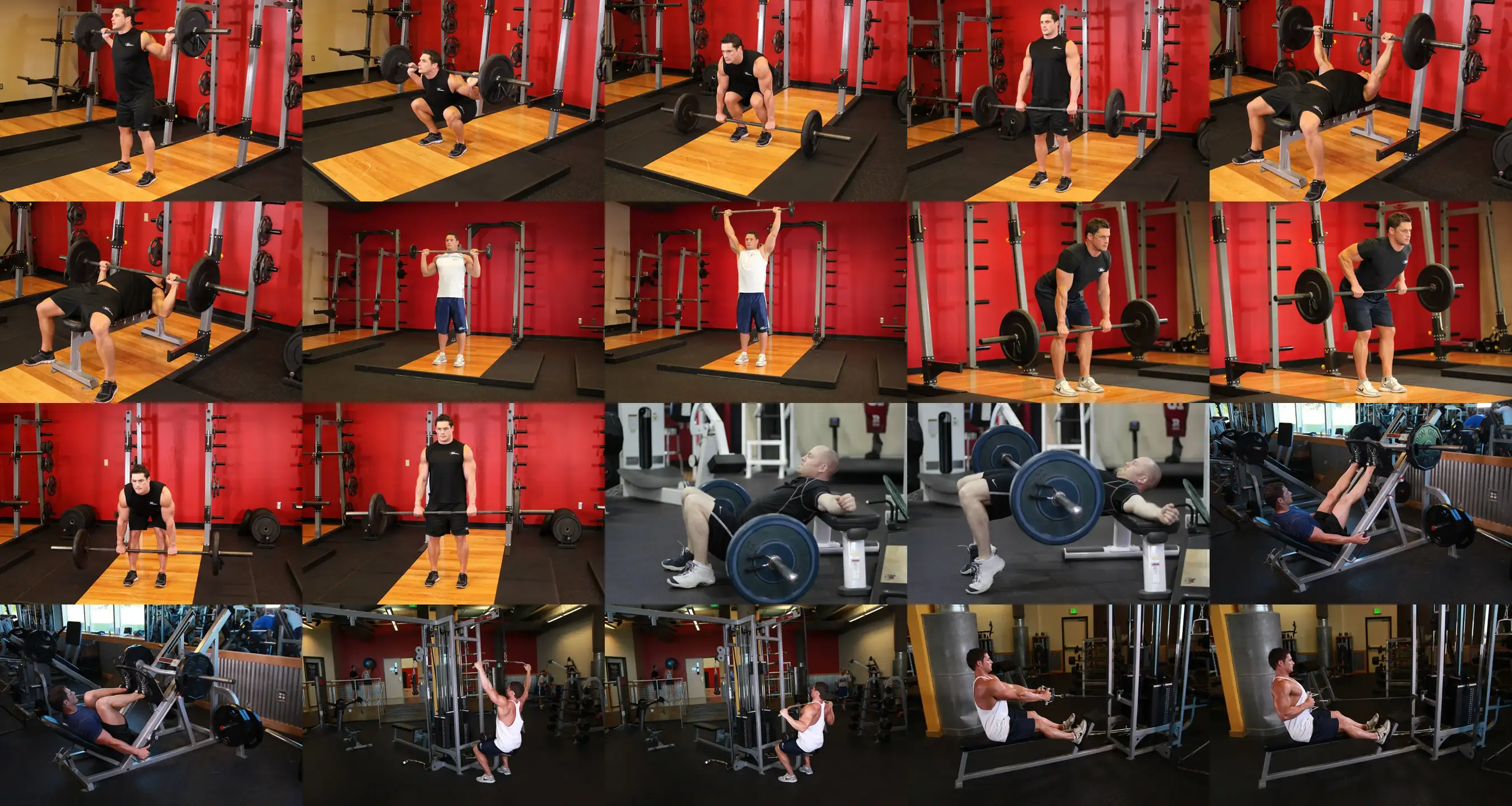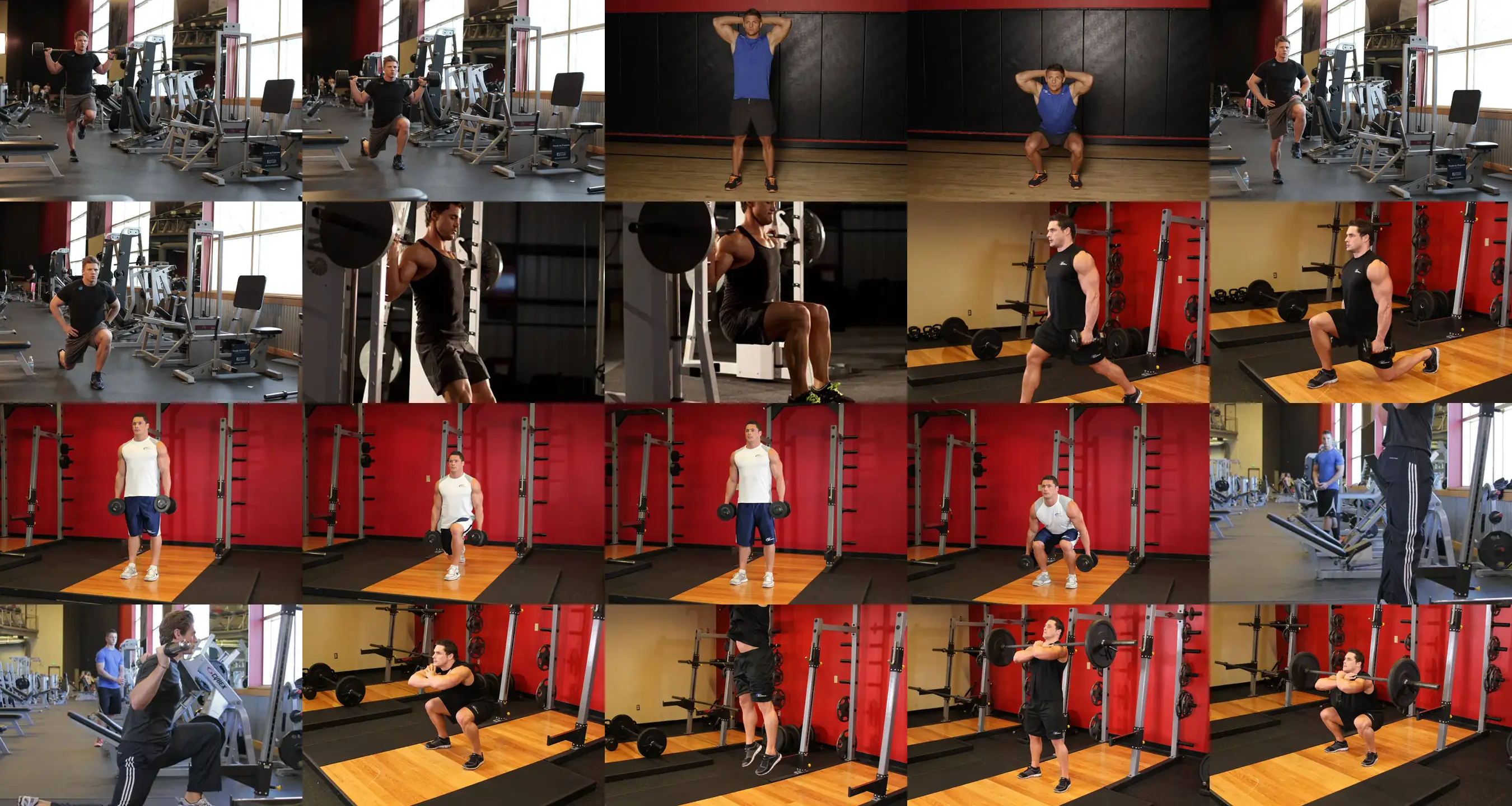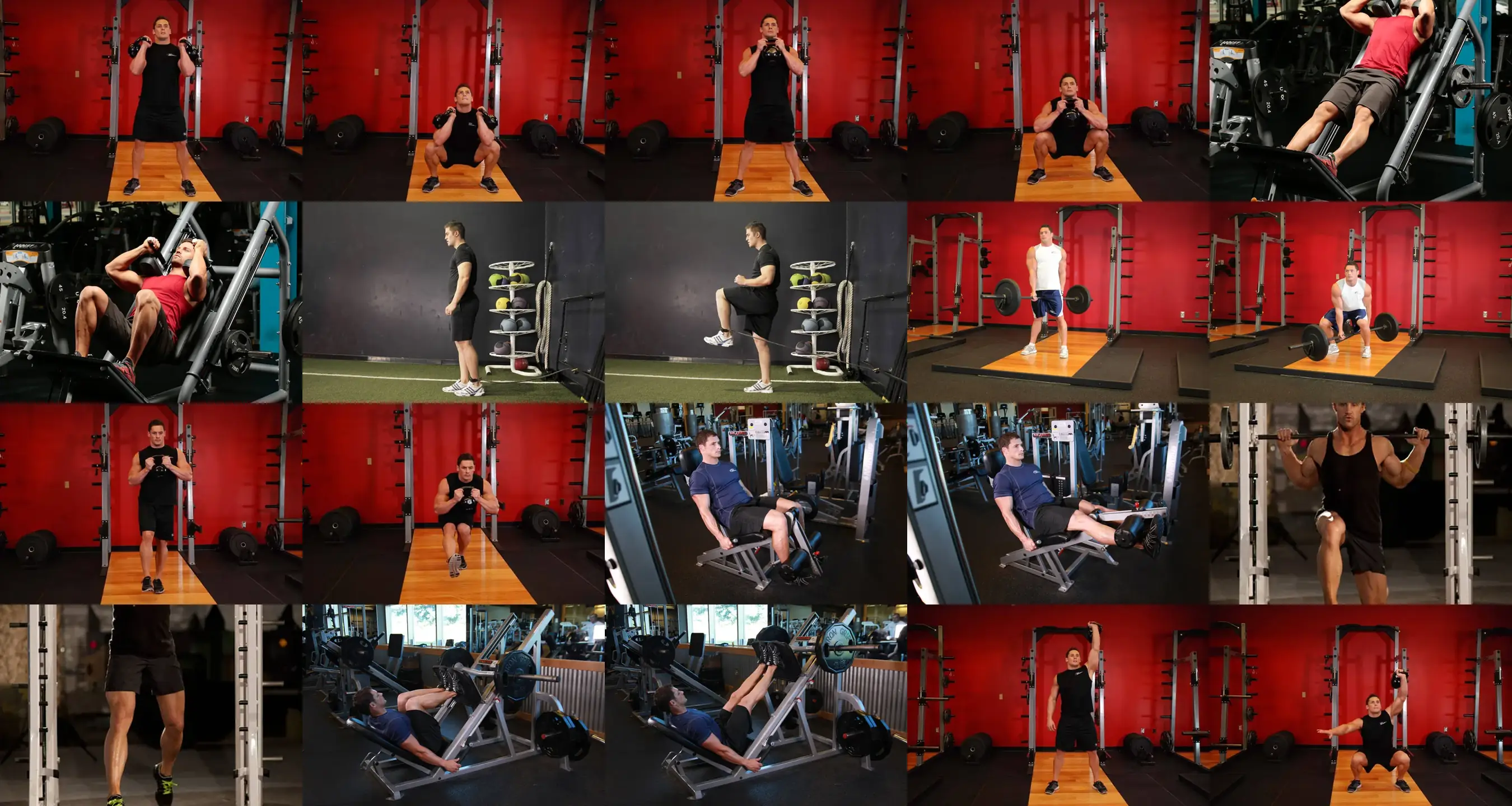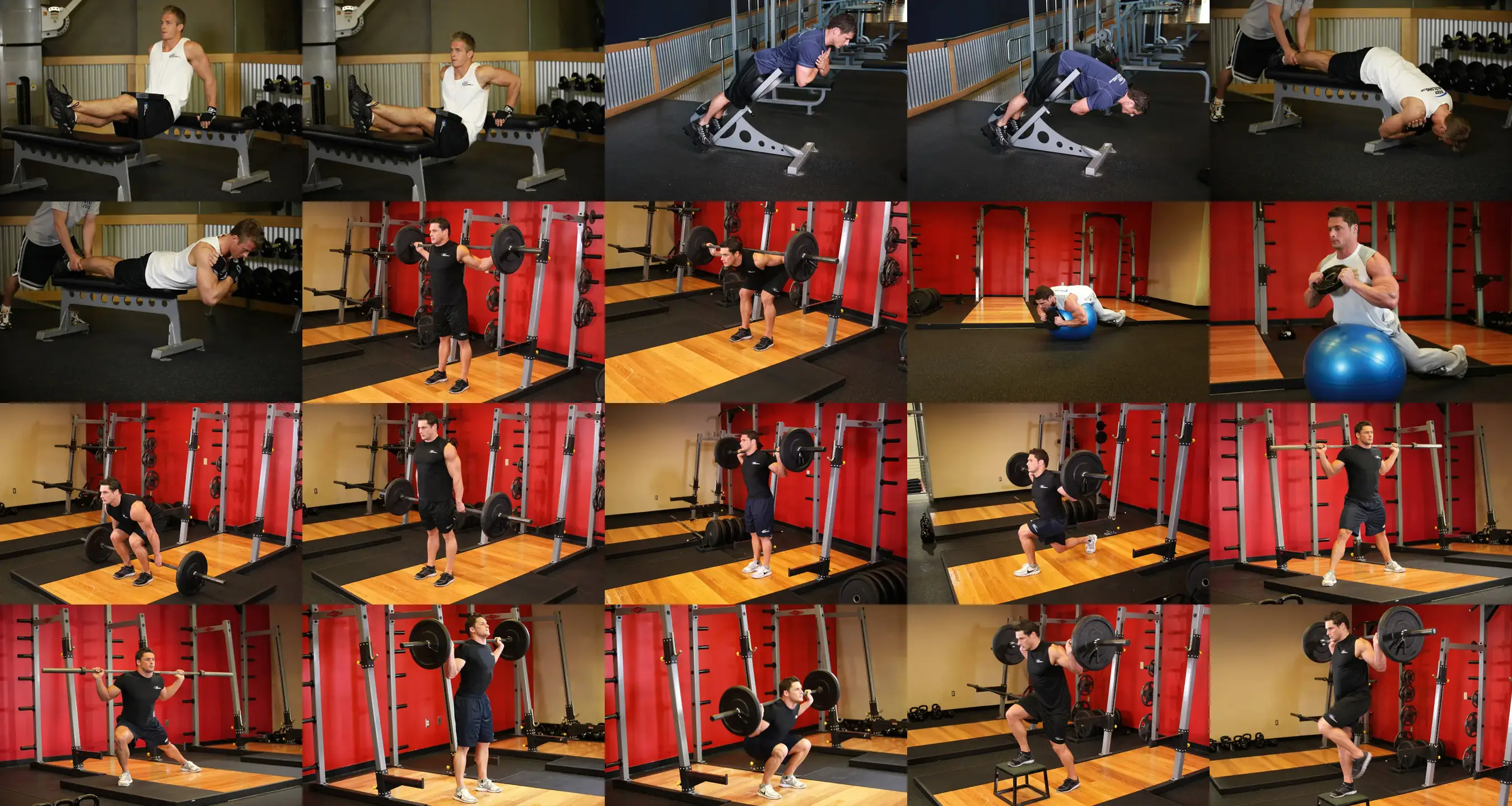
Setup and loading
Set the rack hooks at mid chest height and the safety bars just below your lowest position. Start with the empty bar and add weight gradually as long as you keep depth and a neutral back for 5 to 8 reps.
How to do the barbell squat step by step
- Step under the bar, rest it on your traps, and grip it slightly wider than your shoulders.
- Unrack the bar, take two steps back, and set your feet shoulder width apart with toes turned slightly out.
- Take a deep breath, brace your core, and start down by sending your hips back and knees out.
- Lower until your hips reach knee height or slightly below, keeping your chest up and heels down.
- Drive through your whole foot to stand, keeping your knees in line with your feet.
- Exhale as you near the top, take a fresh breath, and repeat.
Form cues
- Brace your core before every descent
- Knees track the direction of your toes
- Heels stay planted the whole time
- Chest up and spine neutral
Common mistakes
- Knees caving in: it stresses the knee; push them out as you stand.
- Heels lifting: weight shifts forward; spread the load across your whole foot.
- Rounding your back at the bottom: it loads your lower back; cut depth or improve mobility.
- No safety bars: you have no escape if you fail; always set them.
How to make it easier or harder
To make it easier, do goblet squats or light box squats. To progress, add load gradually, pause at the bottom, or move to the front squat.
Sets and reps for your goal
Hypertrophy
3-4 x 8-12 · rest 60-90 s3-4 sets of 6-12 reps (up to 15-20 on isolation exercises) at 65-80% of your max. Rest 1 to 2 minutes.
Get close to failure (0-3 reps in reserve) and control the lowering for 2-3 seconds. Accumulate 10-20 sets per muscle per week.
Max Strength
4-5 x 3-6 · rest 2-3 min3-6 sets of 1-6 reps at 80-90% of your max (1RM). Rest 2 to 5 minutes.
Leave 1-3 reps in reserve. If your technique breaks down, lower the weight: strength is built with good reps.
Power
4-6 x 2-4 at 30-60% · maximum speed on the way up · rest 2-3 min3-6 sets of 1-5 reps with light or moderate loads (30-60% of your max on the main lifts), or with a ball or your bodyweight. Rest 2 to 3 minutes.
Every rep at the highest possible speed. As soon as you notice it moving slower (a 10-20% velocity loss), end the set. Train power fresh, never fatigued.
A guide for healthy adults. Adjust the load to your level and see a professional if you have an injury.
Check your form
Film yourself from the side or ask someone to watch, then tick what you get right.
Frequently asked questions
How low should you squat?
Ideally, squat at least until your hips reach knee height, as long as your back stays neutral and your heels stay down. If your mobility allows, going deeper puts more emphasis on your glutes.
Are squats bad for your knees?
No. With good technique and sensible progression, squats tend to strengthen the structures around the knee. The key is keeping your knees in line with your toes and increasing load gradually.
Sports it suits
Gear for this exercise
- Olympic barbell and platesTo keep progressing on the big lifts with heavy loads.
As an Amazon Associate, Muscle Atlas earns from qualifying purchases.