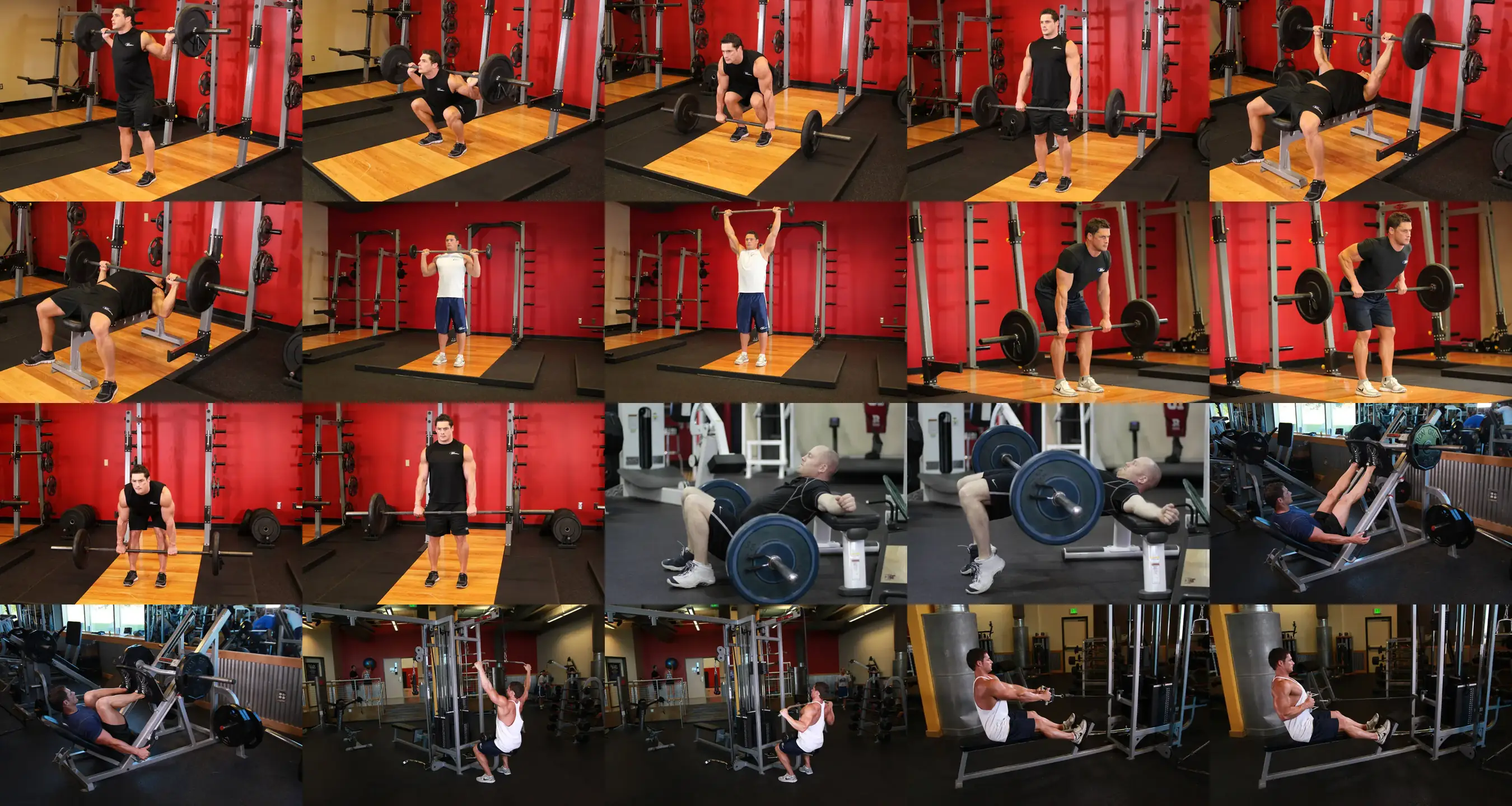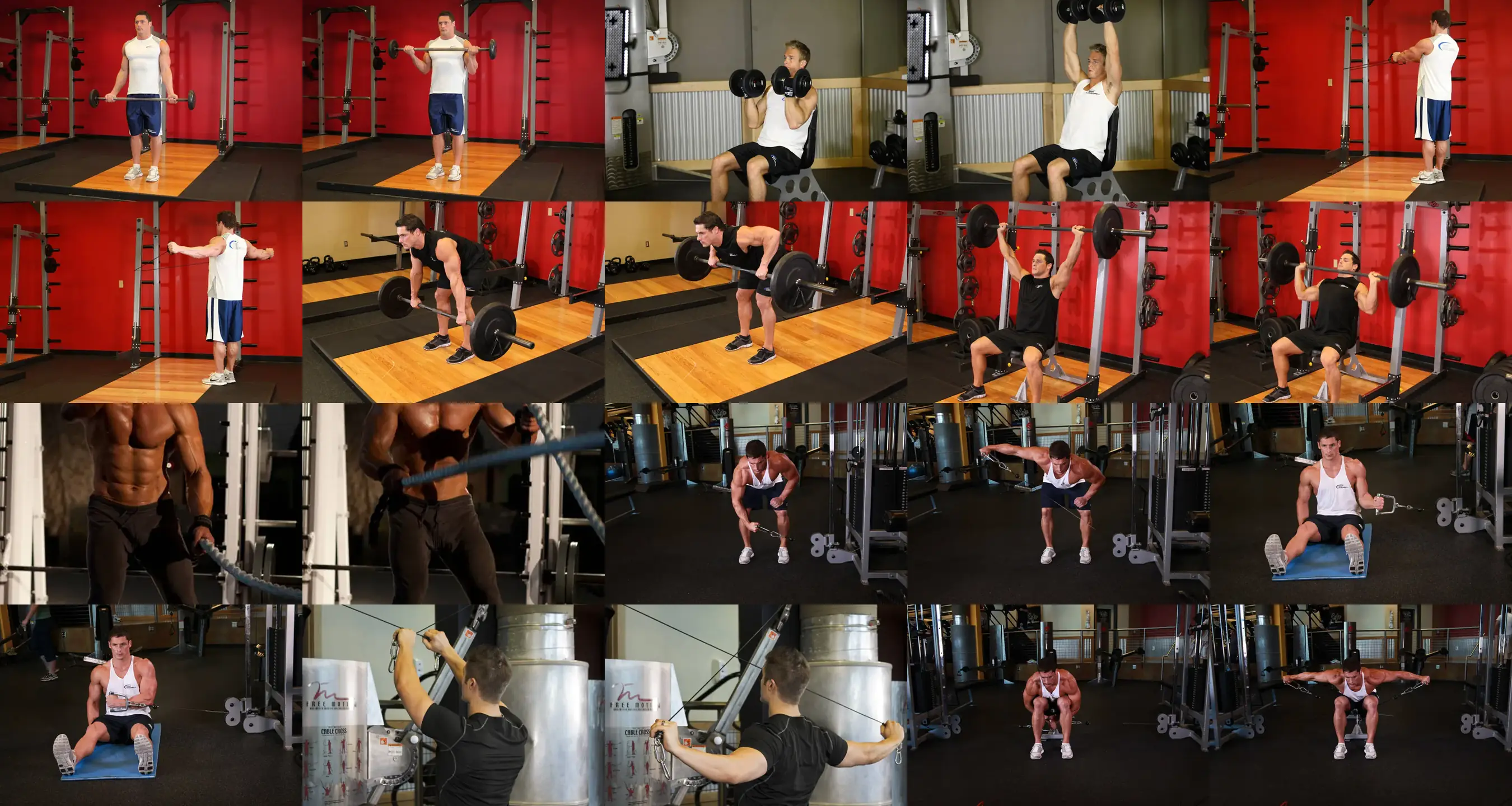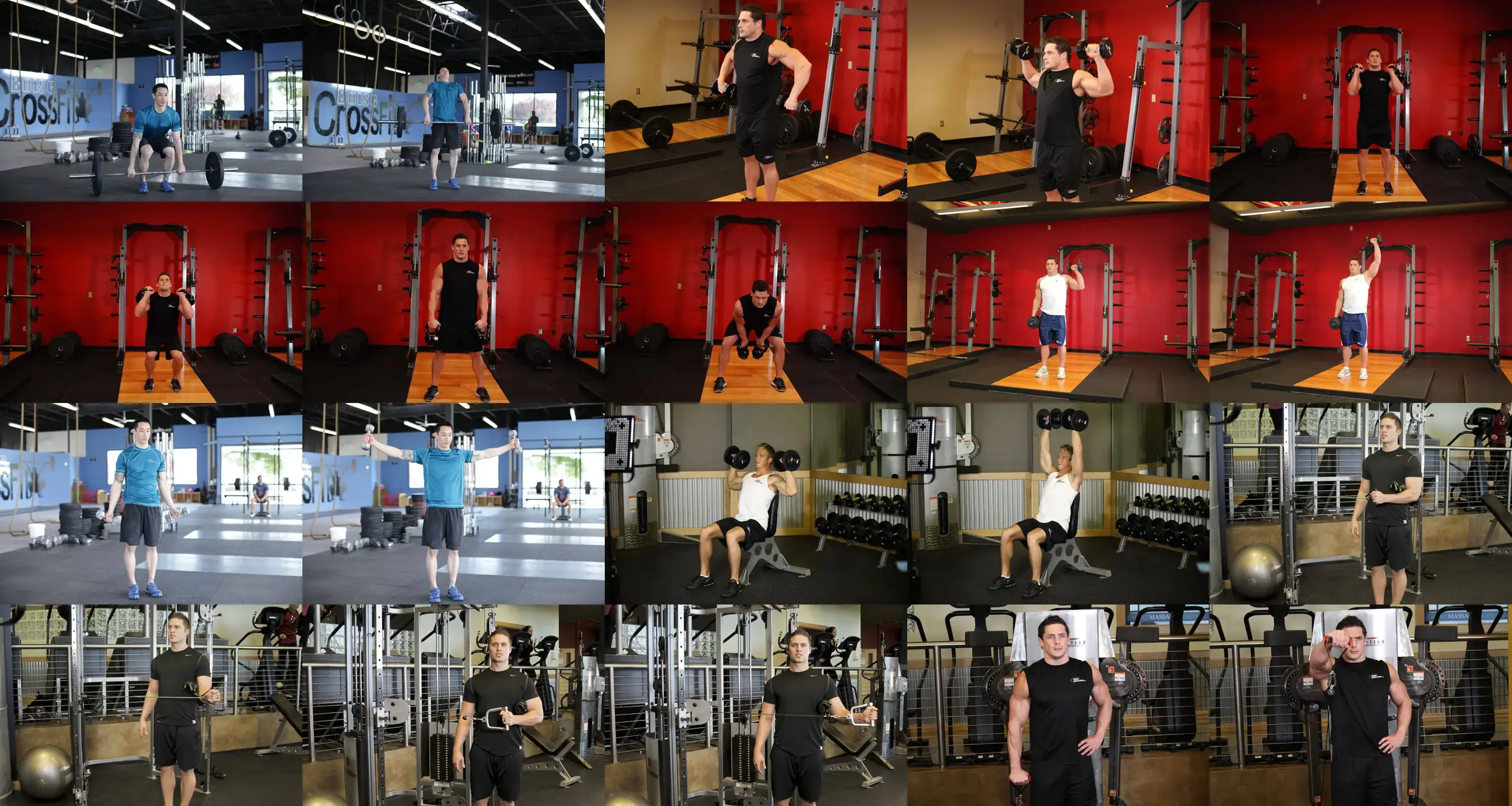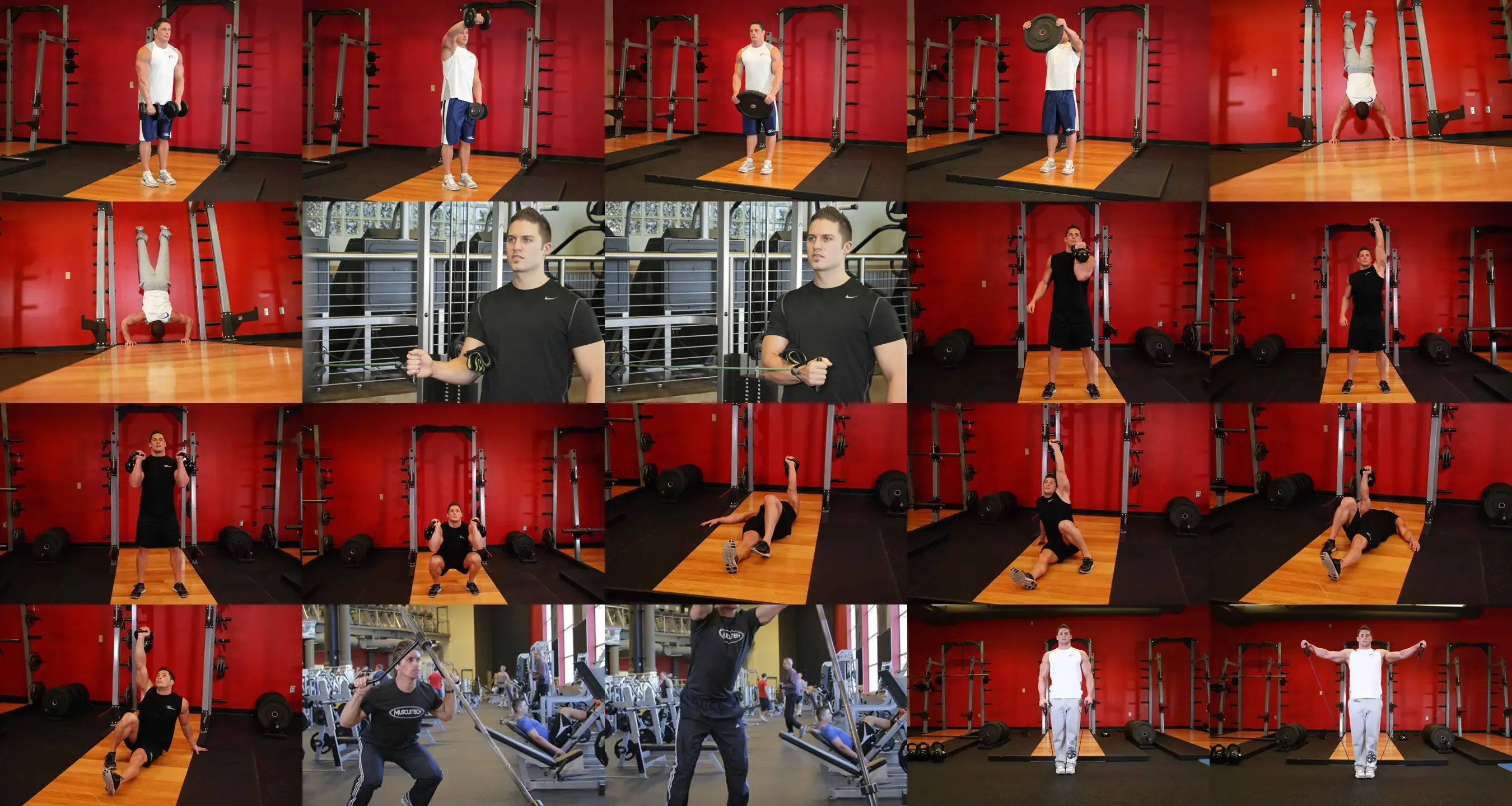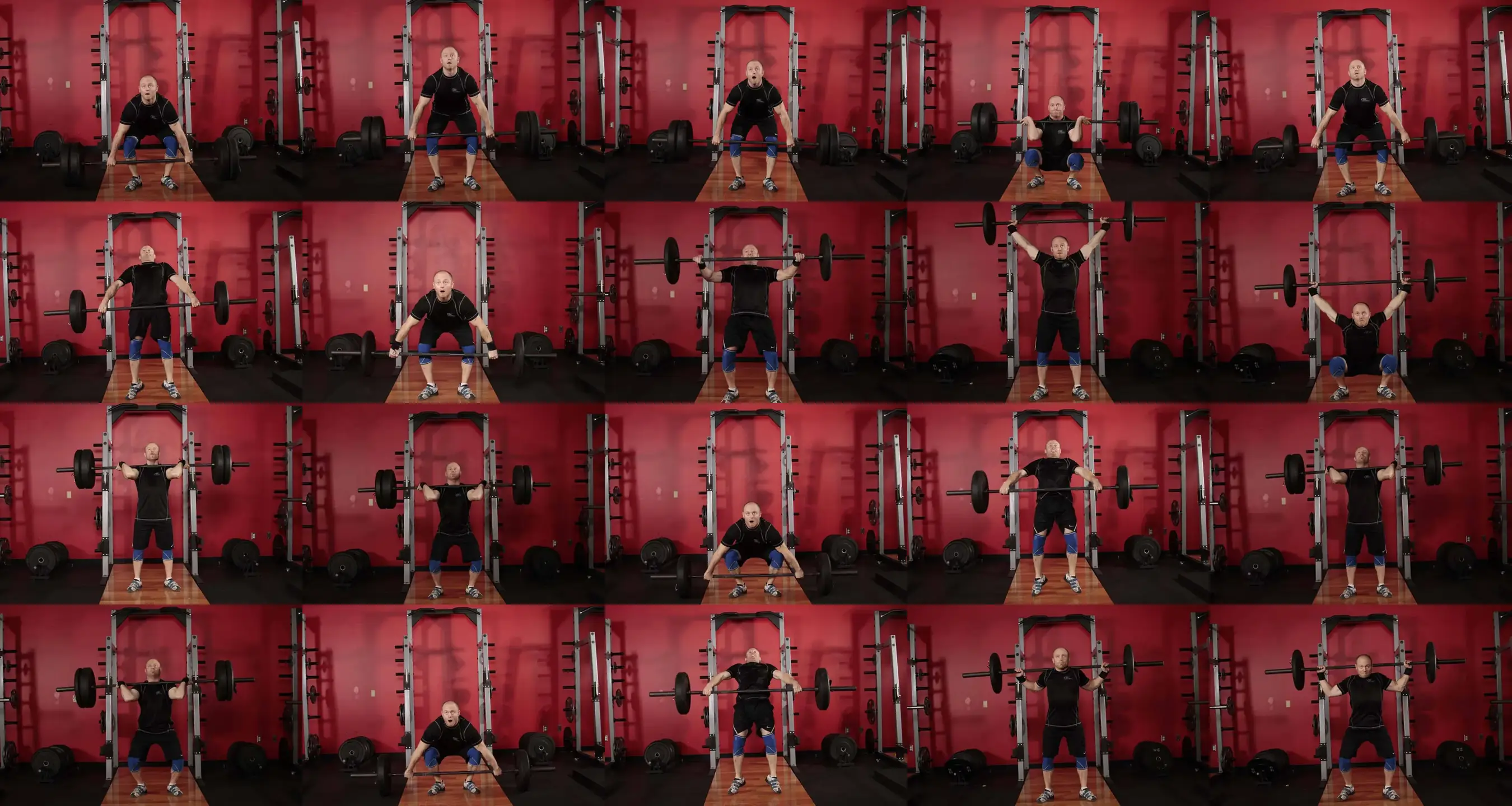
Setup and loading
Grip the bar slightly wider than your shoulders, resting it on your front delts with elbows a bit forward. Use more weight than your strict press, usually 110 to 130 percent, but only if your dip stays vertical.
How to do the push press step by step
- Unrack the bar onto your shoulders with a slightly wider than shoulder grip and feet hip width apart.
- Take a breath, brace your abs, and squeeze your glutes to lock your pelvis.
- Dip your knees a few inches straight down, keeping weight across your whole foot and torso upright.
- Drive explosively through your legs and use that momentum to press the bar up, moving your head back.
- Finish the press with your arms until locked out over the back of your neck, without rebending your knees.
- Exhale at the top and lower the bar to your shoulders, absorbing it with a slight knee bend.
Form cues
- Keep the dip short and vertical, no lean
- Your legs launch the bar, arms finish
- Move your head back, then push it through
- Keep glutes and abs tight the whole time
Common mistakes
- Dipping forward: the bar drives out front; keep weight across your whole foot.
- Pausing between legs and arms: you lose momentum; press right as your legs extend.
- Arching the lower back at lockout: it loads the spine; squeeze glutes and abs.
- Rebending to catch the bar: that makes it a jerk; finish with straight legs and arms.
How to make it easier or harder
To make it easier, practice the strict overhead press or dumbbell push press. To progress, add load, try behind the neck push presses, or move on to power jerks and split jerks.
Sets and reps for your goal
Power
4-6 x 2-5 · full rest3-6 sets of 1-5 reps with light or moderate loads (30-60% of your max on the main lifts), or with a ball or your bodyweight. Rest 2 to 3 minutes.
Every rep at the highest possible speed. As soon as you notice it moving slower (a 10-20% velocity loss), end the set. Train power fresh, never fatigued.
Max Strength
4-5 x 3-6 · rest 2-3 min3-6 sets of 1-6 reps at 80-90% of your max (1RM). Rest 2 to 5 minutes.
Leave 1-3 reps in reserve. If your technique breaks down, lower the weight: strength is built with good reps.
A guide for healthy adults. Adjust the load to your level and see a professional if you have an injury.
Check your form
Film yourself from the side or ask someone to watch, then tick what you get right.
Frequently asked questions
What is the difference between a push press and an overhead press?
In a strict overhead press your legs stay still and only shoulders and triceps press. In a push press a quick dip and drive launches the bar, letting you move more weight and train full body power.
How deep should the push press dip be?
Only a few inches, typically around 5 to 10 percent of your height. A dip that is too deep loses the elastic rebound and tends to tip your torso forward, which pushes the bar off course.
Sports it suits
Gear for this exercise
- Olympic barbell and platesTo keep progressing on the big lifts with heavy loads.
As an Amazon Associate, Muscle Atlas earns from qualifying purchases.