Setup and loading
It is done with bodyweight on a firm, slightly cushioned surface like a thin mat. Adjust difficulty with incline: hands on a bench is easier, while adding a clap or elevating your feet makes it harder.
How to do the plyometric push-up step by step
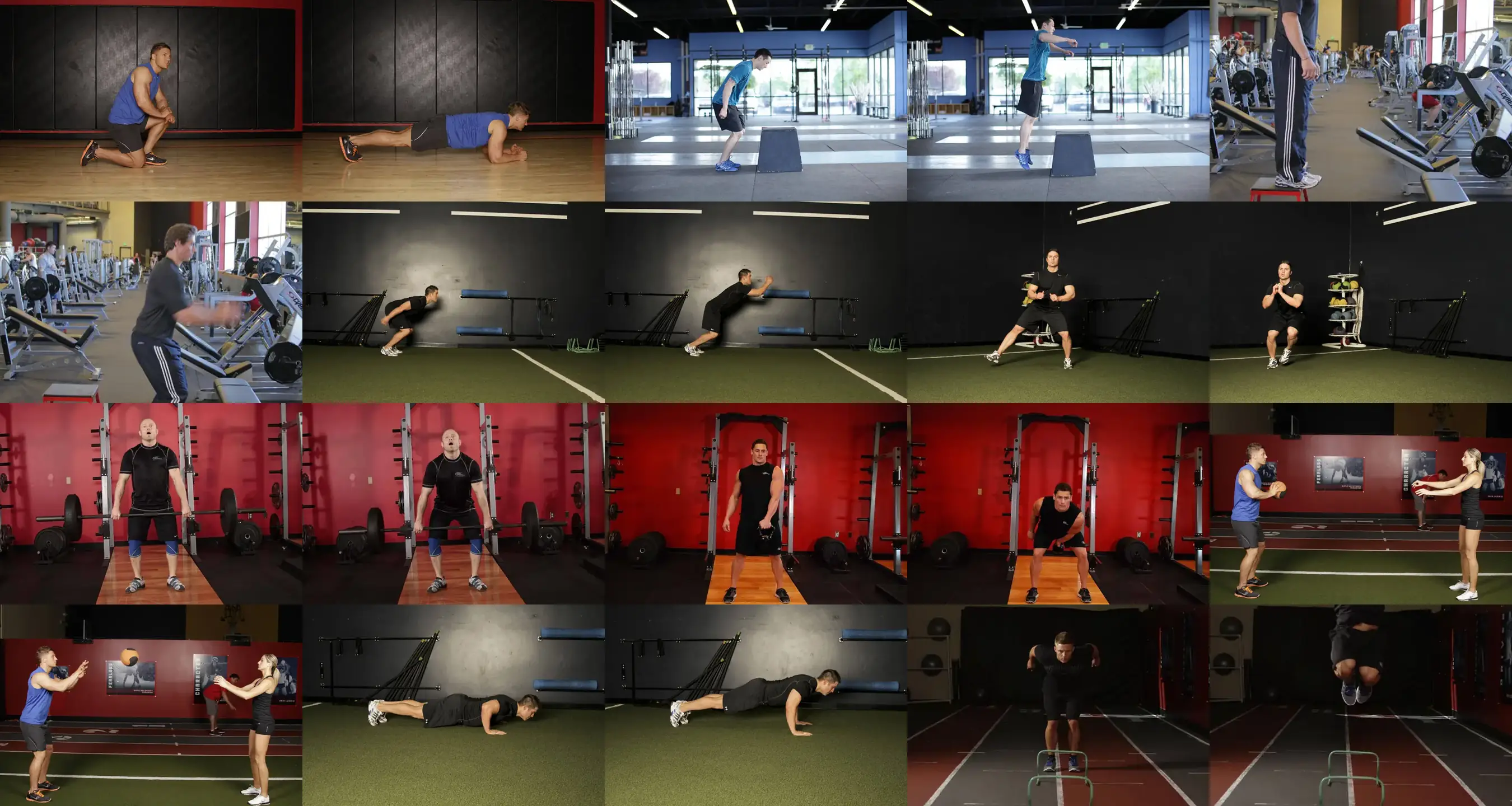
- Set up in a push-up position with hands slightly wider than your shoulders and body in a straight line.
- Squeeze your glutes and abs to keep your torso rigid throughout the movement.
- Inhale and lower under control until your chest is a few inches from the floor.
- Exhale and push the floor away with maximum force so your hands leave the ground.
- Land with hands in the same spot and elbows slightly bent to absorb the impact.
- Sink straight into the next rep, or pause briefly if you lose your body line.
Form cues
- Body rigid like a board in the air
- Push the floor away as fast as possible
- Land with soft elbows, never locked
- Hips in line with shoulders and heels
Common mistakes
- Landing with locked elbows: it jars the joints; catch your weight with elbows bent.
- Sagging hips: you leak power and load your back; squeeze glutes and abs.
- Doing too many reps: quality drops; use short sets of 4 to 8 with full rest.
- Only your hips leave the floor: that's not a real push; make sure your hands come up.
How to make it easier or harder
To make it easier, do them with hands on a bench or from your knees, or start with fast push-ups without leaving the floor. To progress, add a clap, land on plates or steps to the sides, or elevate your feet.
Sets and reps for your goal
Plyometrics
4 x 4-63-6 sets of 3-8 jumps. In total, 60-100 contacts per session (40-60 if you're a beginner). Rest 1 to 2 minutes between sets.
Short, quiet ground contact. If the jump loses height or your foot sticks to the ground, stop: the set is no longer training reactivity. Two sessions per week, 48 h apart.
Power
5 x 3 · maximum takeoff · rest 90 s3-6 sets of 1-5 reps with light or moderate loads (30-60% of your max on the main lifts), or with a ball or your bodyweight. Rest 2 to 3 minutes.
Every rep at the highest possible speed. As soon as you notice it moving slower (a 10-20% velocity loss), end the set. Train power fresh, never fatigued.
A guide for healthy adults. Adjust the load to your level and see a professional if you have an injury.
Check your form
Film yourself from the side or ask someone to watch, then tick what you get right.
Frequently asked questions
How many push-ups should I do before trying plyo push-ups?
A good benchmark is at least 15 strict push-ups with a straight body. That gives you enough strength to get airborne and, more importantly, to control the landing without wrist or shoulder discomfort.
How many sets and reps of plyo push-ups should I do?
For power, do 3 to 5 sets of 4 to 8 reps with 60 to 120 seconds of rest. Do them early in your workout while you are fresh, and stop when height or speed clearly drops.
Sports it suits
Gear for this exercise
- Exercise matThick (8-10 mm) for floor work.
As an Amazon Associate, Muscle Atlas earns from qualifying purchases.