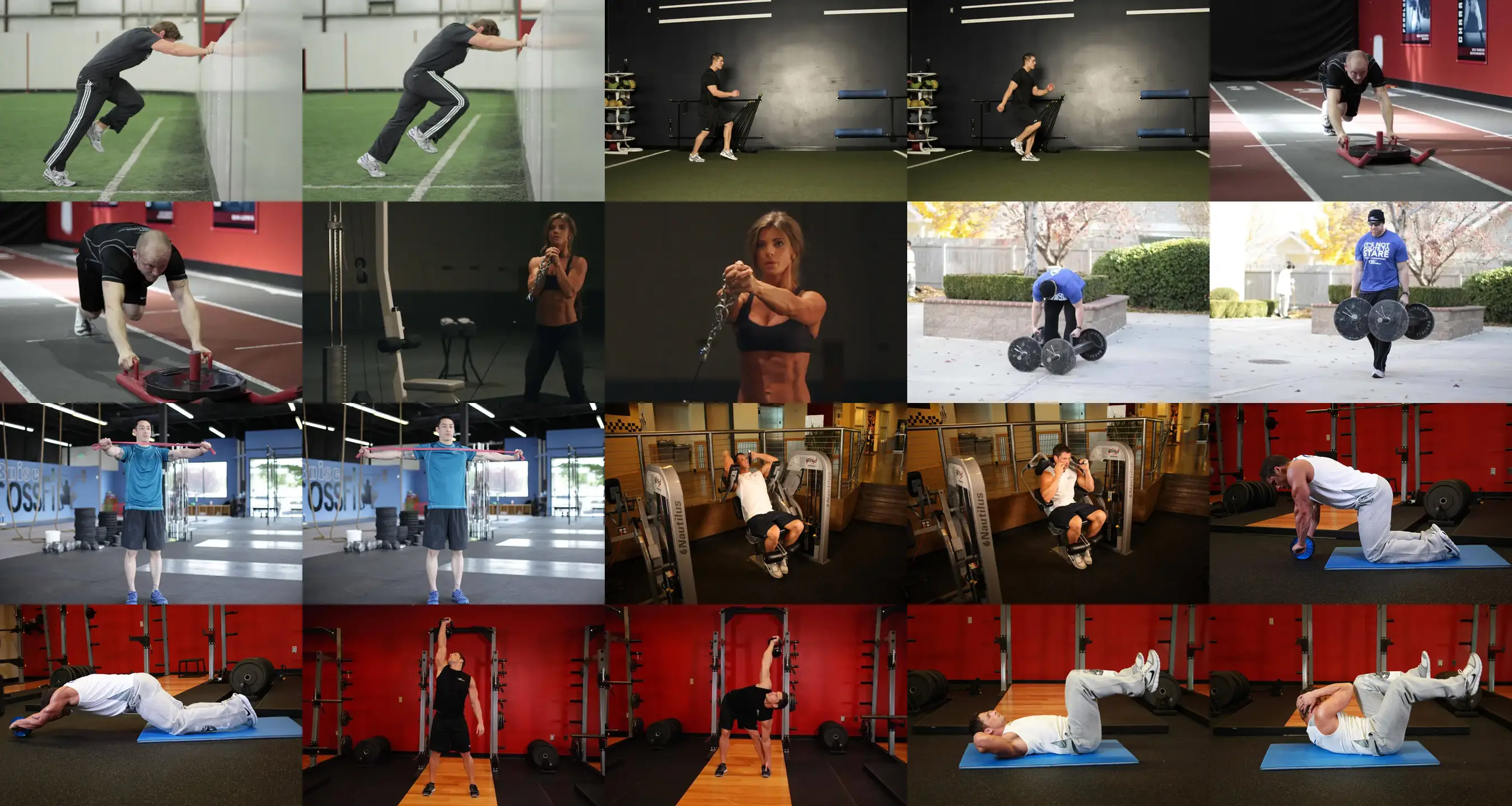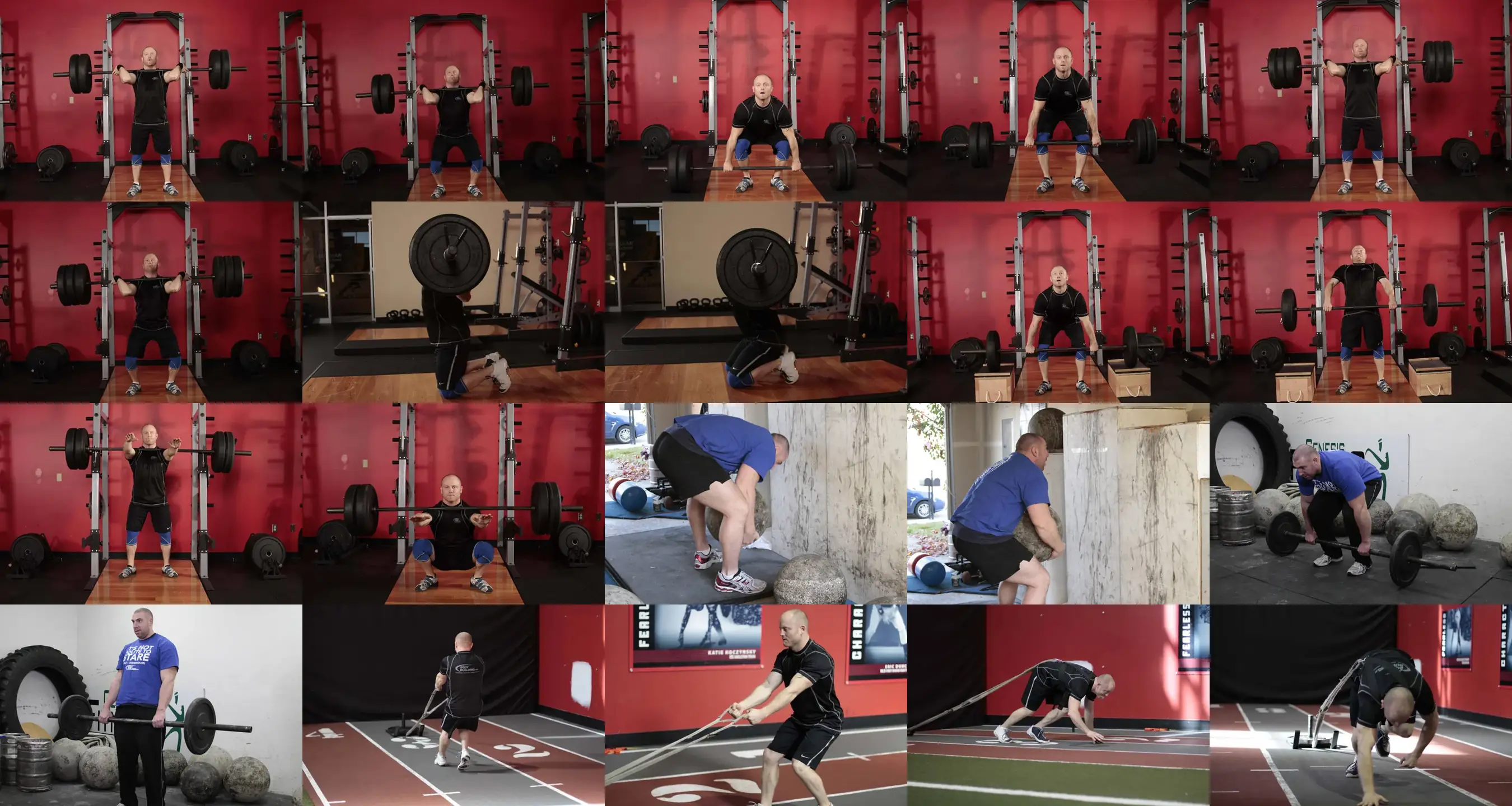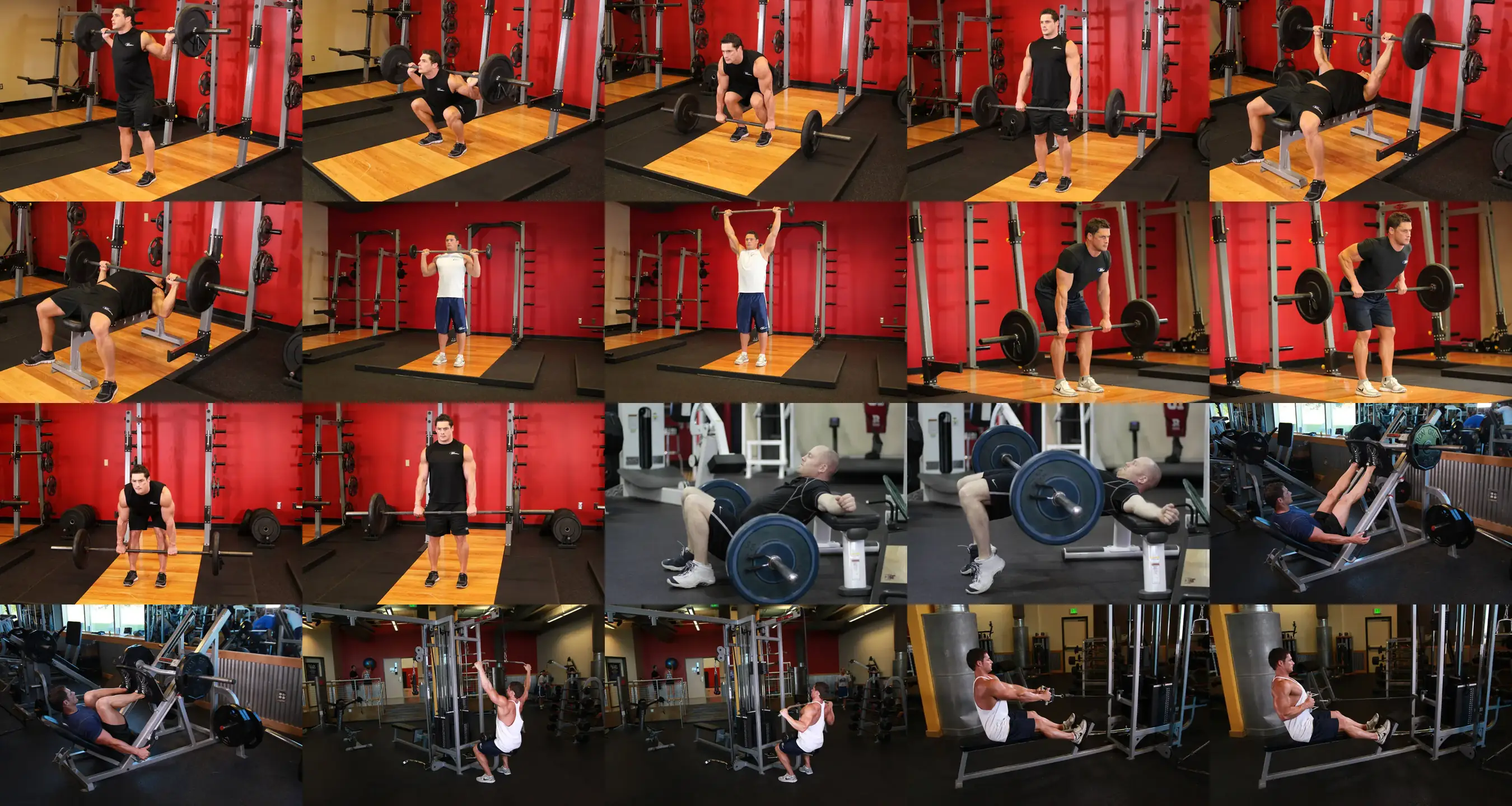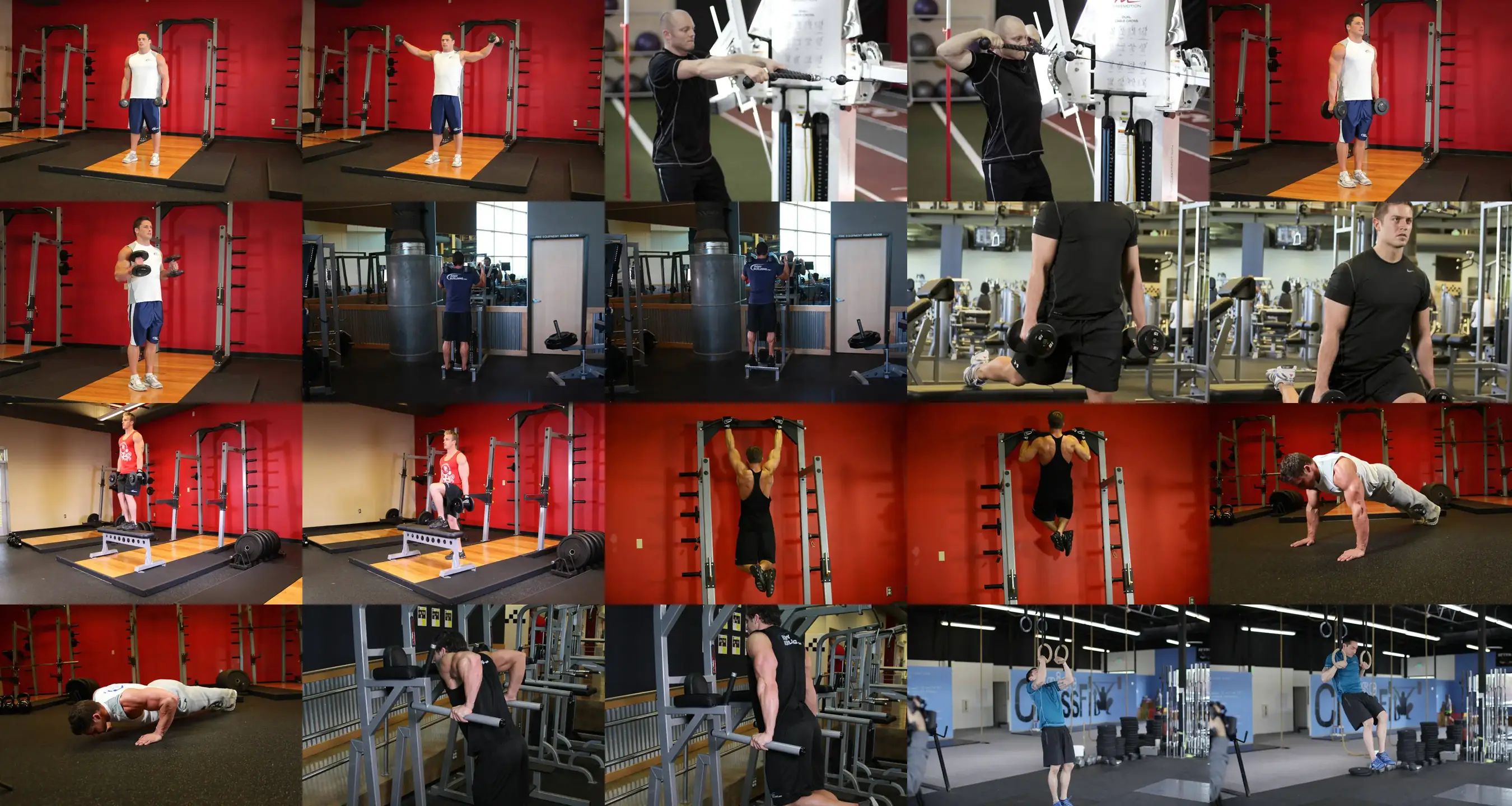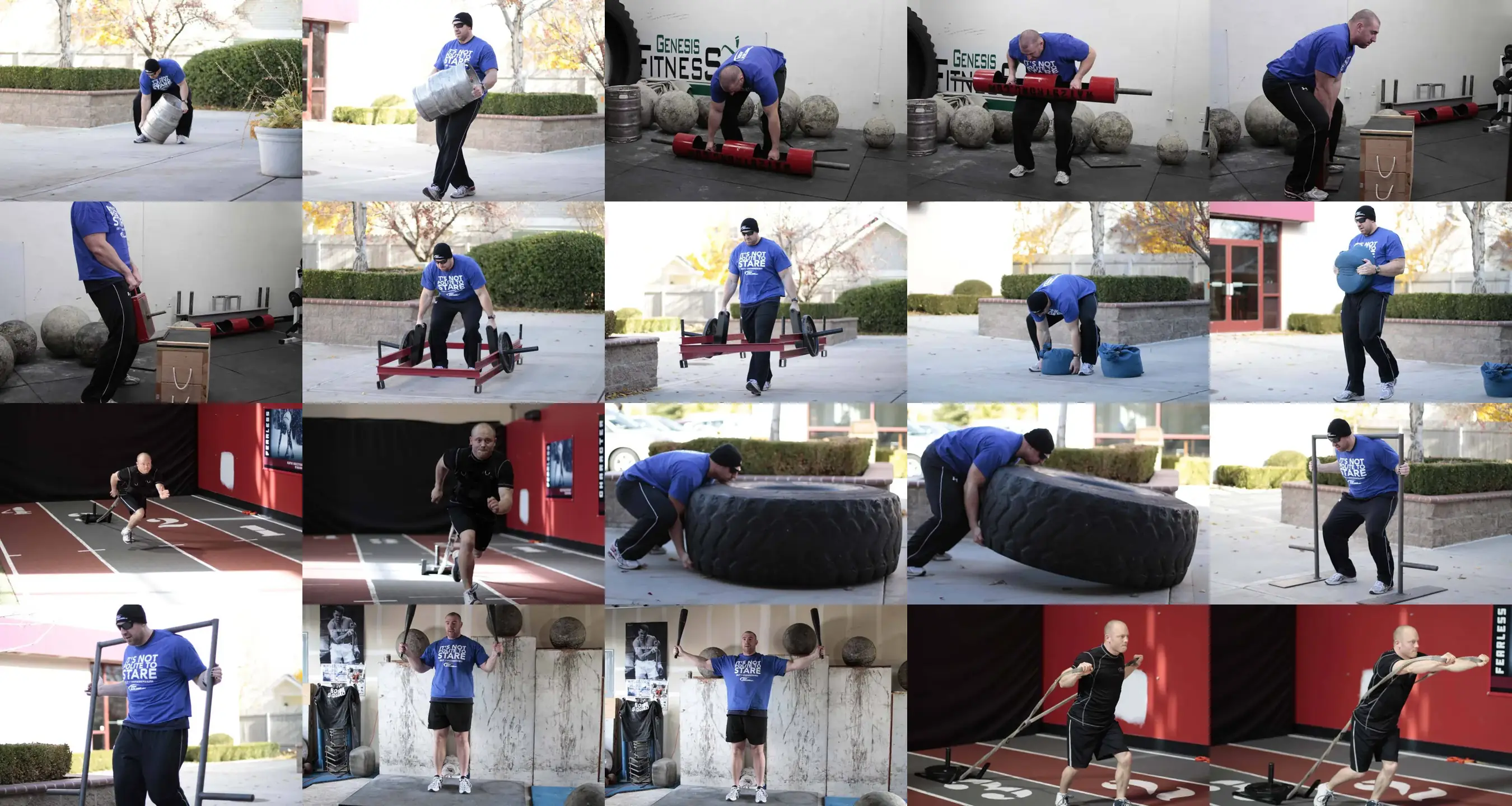
Setup and loading
Clip the strap to a shoulder harness or hip belt and use a surface where the sled slides well. For conditioning, pick a load you can move 20 to 40 meters at a good pace; for strength, go heavier over 10 to 20 meters.
How to do the harness sled drag step by step
- Adjust the harness or belt and clip the strap to the sled, leaving about two to three meters of slack.
- Walk forward until the strap goes tight, arms free and abs braced.
- Lean your whole body forward from the ankles, keeping your back flat and head in line with your torso.
- Take short, powerful steps on the balls of your feet, pushing the ground back with each leg.
- Pump your arms like you are running to help drive forward and breathe rhythmically without holding your breath.
- Hold the same lean and speed until you finish the distance, then rest before the next run.
Form cues
- Hold a steady lean from the ankles
- Push the ground behind you every step
- Take short, quick steps on the balls of your feet
- Drive your arms like you are sprinting
Common mistakes
- Standing too upright: the strap stalls you and you lose power; keep your body leaning forward.
- Taking long strides: you lose traction and drive; shorten your stride and speed up your turnover.
- Rounding your back: tension shifts to your lower back; brace your abs and keep your chest up.
- Overloading the sled: you shuffle and lose form; drop weight until you can walk smoothly.
How to make it easier or harder
To regress, drag an empty sled or do fast uphill walks. To progress, add weight, extend the distance, do short sprints with moderate load, or switch to backward drags to load your quads more.
Sets and reps for your goal
Max Strength
4-5 x 3-6 · rest 2-3 min3-6 sets of 1-6 reps at 80-90% of your max (1RM). Rest 2 to 5 minutes.
Leave 1-3 reps in reserve. If your technique breaks down, lower the weight: strength is built with good reps.
Endurance
2-4 x 15-25 or 30-60 s2-4 sets of 15-30 reps or 30-60 seconds at 40-60% of your max. Rest 30 to 60 seconds.
Steady pace and clean technique to the end. Circuits help you build volume with little rest.
A guide for healthy adults. Adjust the load to your level and see a professional if you have an injury.
Check your form
Film yourself from the side or ask someone to watch, then tick what you get right.
Frequently asked questions
Why doesn't sled dragging make you sore?
Sled dragging is almost entirely concentric, meaning your muscles shorten as you push and there is very little braking. The eccentric phase is most linked to delayed soreness, so sled work is usually easy to recover from.
Is a shoulder harness or hip belt better?
A shoulder harness spreads the pull across your torso and allows a deeper lean, great for heavy loads. A hip belt frees your torso and arms and feels better for sprints. Both work well.