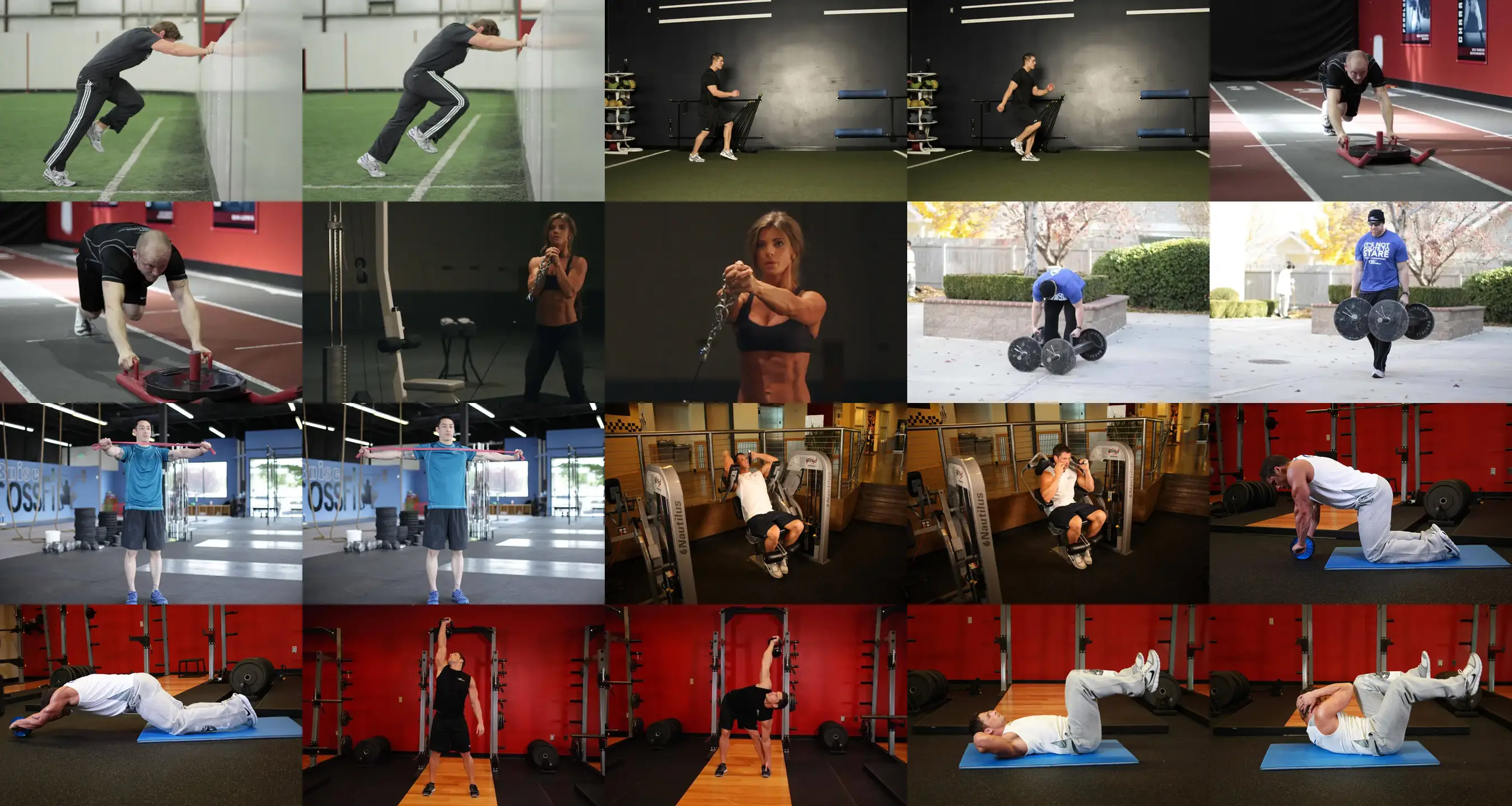
Setup and loading
Clip the sled to a belt or harness with a strap a few feet long and start with an empty or lightly loaded sled. Load and distance set the difficulty; pick one that lets you move without your knees touching down.
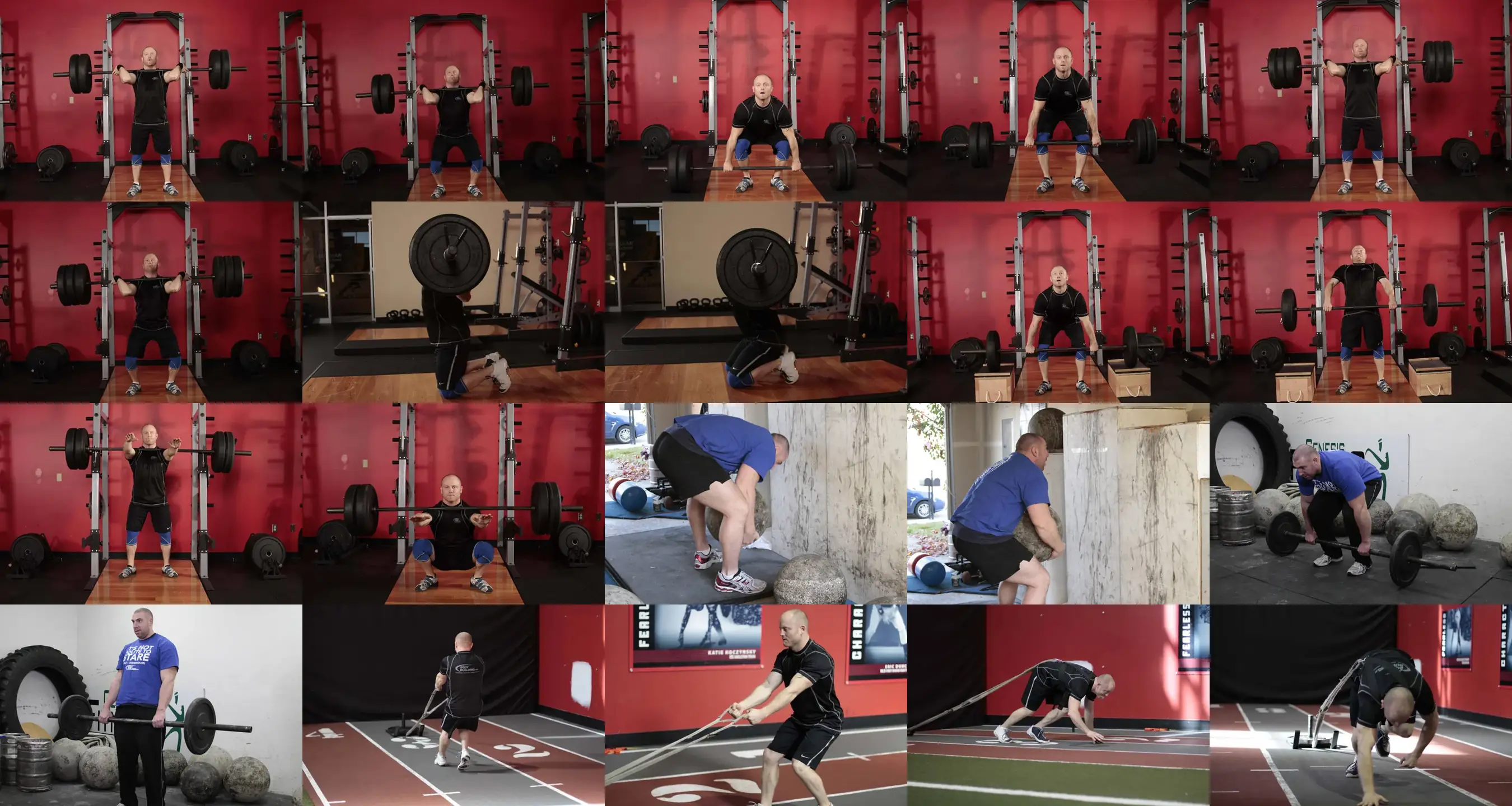
How to do the bear crawl sled drag step by step
- Put on the belt or harness with the sled strap behind you and snug it around your hips.
- Get on all fours with hands under shoulders and knees under hips, hovering a few inches off the floor.
- Brace your abs, keep your back flat and head neutral, as if balancing a glass of water on your lower back.
- Crawl forward moving opposite hand and foot together in short steps, pushing the floor with your legs.
- Breathe in short, steady breaths without losing your brace or letting your hips sway.
- Finish the distance, lower your knees under control, and unclip the harness.
Form cues
- Knees hover a few inches off the floor
- Keep your back flat like a stable table
- Move opposite hand and foot together
- Short steps with quiet, steady hips
Common mistakes
- Hips too high: the work shifts to your shoulders; lower them until your back is flat.
- Knees touching the floor: you lose tension; keep them hovering.
- Hips swaying side to side: the core is not stabilizing; shorten your steps.
- Sagging lower back: it strains the spine; brace and tuck your pelvis slightly.
How to make it easier or harder
To make it easier, practice bear crawls without a sled or isometric bear holds. To progress, add sled weight, extend the distance, or combine it with forward and backward drags in a circuit.
Sets and reps for your goal
Max Strength
4-5 x 3-6 · rest 2-3 min3-6 sets of 1-6 reps at 80-90% of your max (1RM). Rest 2 to 5 minutes.
Leave 1-3 reps in reserve. If your technique breaks down, lower the weight: strength is built with good reps.
Endurance
2-4 x 15-25 or 30-60 s2-4 sets of 15-30 reps or 30-60 seconds at 40-60% of your max. Rest 30 to 60 seconds.
Steady pace and clean technique to the end. Circuits help you build volume with little rest.
A guide for healthy adults. Adjust the load to your level and see a professional if you have an injury.
Check your form
Film yourself from the side or ask someone to watch, then tick what you get right.
Frequently asked questions
What muscles do bear crawl sled drags work?
They mainly work the quads and glutes, which push on every step, along with the shoulders, abs and hip stabilizers. It is a full body drill that is also very demanding on your conditioning.
Where do you attach the sled for bear crawls?
A dip belt or harness snug around the hips works best, with the strap coming out behind you. That way force comes from your hips and your shoulders stay free to support your torso.