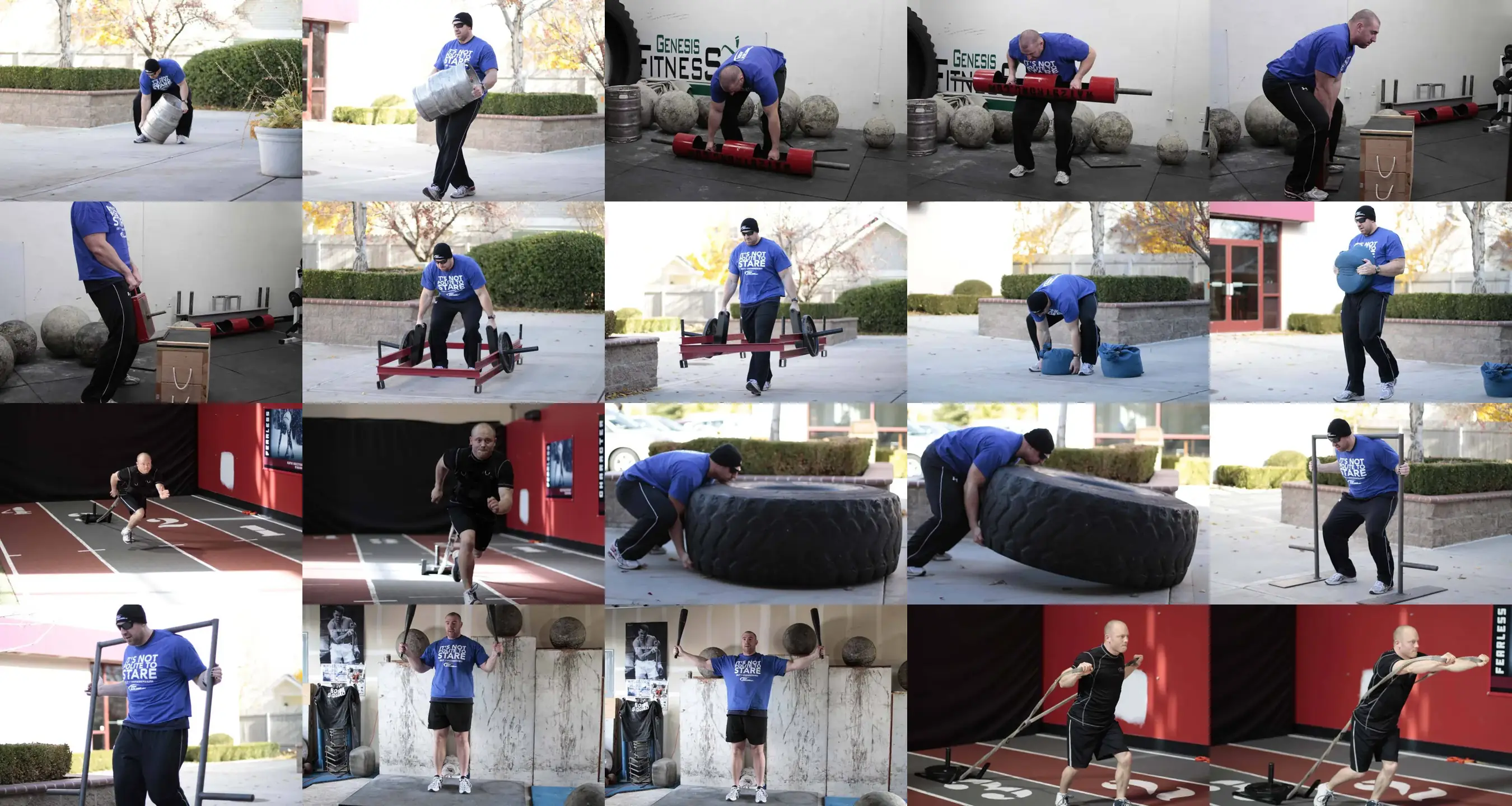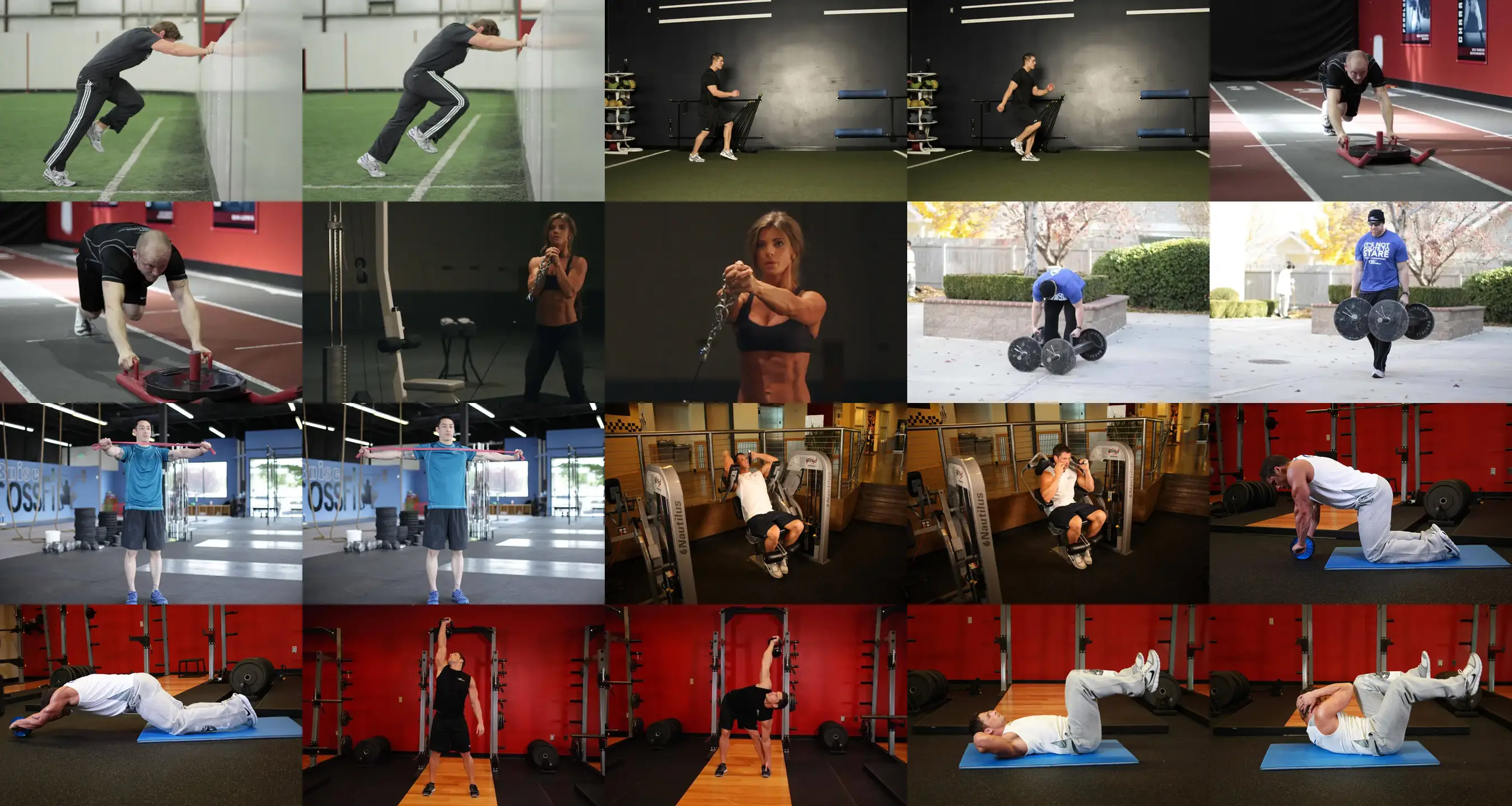
Setup and loading
Place two equal dumbbells or kettlebells beside your feet and clear a path of 50 to 100 feet. Start with a total load around half your bodyweight and add weight once you can cover the distance without losing posture or dropping the weights.
How to do the farmer's walk step by step
- Stand between the weights, hinge at your hips and knees with a neutral spine, and grip them hard.
- Take a breath, brace your abs, and stand up by pushing the floor away, like a deadlift.
- Once standing, lift your chest, pull your shoulders down away from your ears, and keep arms straight.
- Walk with short, controlled steps, eyes forward and torso upright.
- Breathe in short, steady breaths while keeping your abs braced for the entire walk.
- At the end, stop, hinge at your hips and knees, and set the weights down with a neutral spine.
Form cues
- Crush the handles like you want to break them
- Shoulders down and chest up
- Short, quick steps with no swinging
- Torso upright, no leaning to one side
Common mistakes
- Picking up the weights with a rounded back: it loads your lower back; use deadlift form.
- Shrugging your shoulders: it strains your neck; keep them down with your chest up.
- Long, slow strides: the weights swing; take short, steady steps.
- Leaning to one side: your core isn't stabilizing; use equal weights and stay upright.
How to make it easier or harder
To make it easier, use lighter weights or shorter distances. To progress, increase weight or distance, try a one-handed suitcase carry, hold kettlebells in the front rack position, or use farmer's walk handles.
Sets and reps for your goal
Endurance
4 x 40 m2-4 sets of 15-30 reps or 30-60 seconds at 40-60% of your max. Rest 30 to 60 seconds.
Steady pace and clean technique to the end. Circuits help you build volume with little rest.
Core & Stability
3 x 30-40 m with your torso upright · rest 60 s3-4 sets of 20-45 seconds or 8-12 slow reps. Rest 45 to 60 seconds.
Neutral spine, tight abs and controlled breathing. Progress in time or leverage before adding weight.
Max Strength
5 x 15-20 m very heavy3-6 sets of 1-6 reps at 80-90% of your max (1RM). Rest 2 to 5 minutes.
Leave 1-3 reps in reserve. If your technique breaks down, lower the weight: strength is built with good reps.
A guide for healthy adults. Adjust the load to your level and see a professional if you have an injury.
Check your form
Film yourself from the side or ask someone to watch, then tick what you get right.
Frequently asked questions
How much weight should I use for farmer's walks?
A good starting point is carrying half your bodyweight in total, split between both hands, for 60 to 100 feet. With practice, many people work up to carrying their full bodyweight while keeping good posture.
What muscles does the farmer's walk work?
It mainly builds grip, forearms, and traps, but your abs, obliques, and legs also work to stabilize you as you walk. It also improves overall conditioning and your posture under load.
Sports it suits
Gear for this exercise
- Adjustable dumbbellsSave space and replace a whole dumbbell rack at home.
- KettlebellStart with 12-16 kg (26-35 lb) for women or 16-24 kg (35-53 lb) for men.
As an Amazon Associate, Muscle Atlas earns from qualifying purchases.