Setup and loading
Kneel or sit beside a flat bench and rest your forearms on it with your wrists hanging past the edge, palms down. Use very light dumbbells, since the extensors are weaker than the flexors, and aim for 15 to 20 reps.
How to do the dumbbell reverse wrist curl step by step
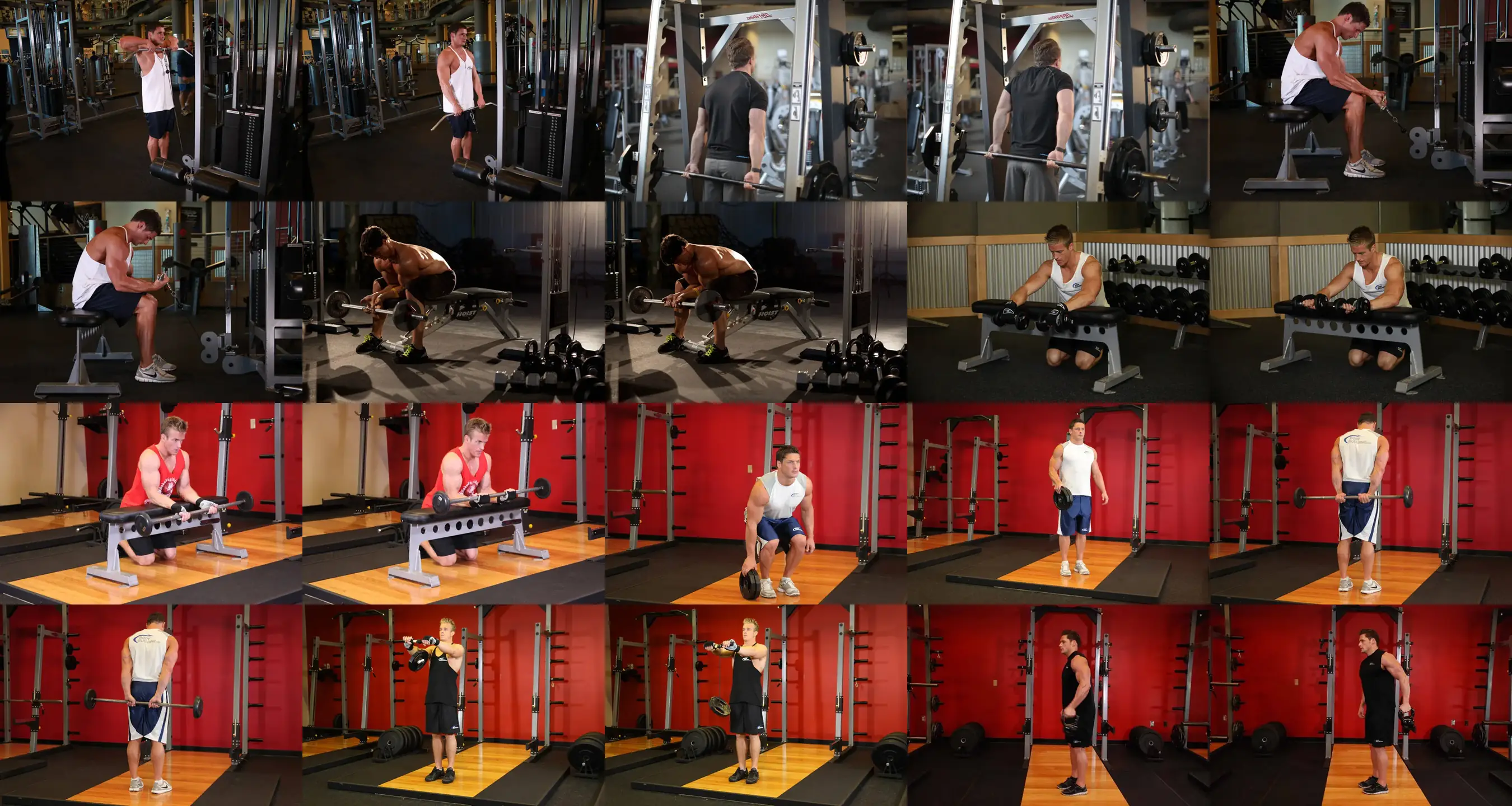
- Kneel in front of a flat bench and rest your forearms on it with your hands hanging over the edge.
- Hold a light dumbbell in each hand with palms facing the floor and forearms pressed into the bench.
- Let your hands lower slowly until you feel a light stretch along the top of your forearms.
- Exhale and lift the backs of your hands as high as possible without lifting your forearms.
- Hold for one second at the top, squeezing the extensors with your fingers wrapped firmly around the dumbbell.
- Inhale and lower slowly back to the stretched position before starting the next rep.
Form cues
- Palms down with forearms fixed to the bench
- Lift only the backs of your hands
- Light weight and slow movement in both directions
- Brief pause at the top of every rep
Common mistakes
- Using heavy dumbbells: the extensors fail and your elbow compensates; go much lighter.
- Lifting your forearms off the bench: other muscles help; keep them planted.
- Partial range: you lose stimulus; lower to a stretch and lift fully.
- Loosening your grip at the top: you could drop the weight; keep fingers closed.
How to make it easier or harder
To make it easier, do it without weight or with a light band anchored under your foot. To progress, add load gradually, use a barbell with an overhand grip or try a wrist roller with a rope.
Sets and reps for your goal
Hypertrophy
3 x 10-15 · rest 60 s3-4 sets of 6-12 reps (up to 15-20 on isolation exercises) at 65-80% of your max. Rest 1 to 2 minutes.
Get close to failure (0-3 reps in reserve) and control the lowering for 2-3 seconds. Accumulate 10-20 sets per muscle per week.
A guide for healthy adults. Adjust the load to your level and see a professional if you have an injury.
Check your form
Film yourself from the side or ask someone to watch, then tick what you get right.
Frequently asked questions
What are reverse wrist curls good for?
They strengthen the forearm extensors, which stabilize your wrist when gripping and balance the flexors. They are useful for racket sports and for anyone doing lots of grip-heavy lifting.
Why should I use such light weight for reverse wrist curls?
The extensors are small muscles and weaker than the flexors. Going heavy shortens the range and lets your elbow or shoulder take over. Start with 2 to 8 lb and progress slowly.
Sports it suits
Gear for this exercise
- Adjustable dumbbellsSave space and replace a whole dumbbell rack at home.
As an Amazon Associate, Muscle Atlas earns from qualifying purchases.