Setup and loading
Hold a dumbbell in each hand with your arms straight at your sides and your shoulders relaxed. Pick a weight that lets you complete 8 to 12 clean reps per leg; if your balance breaks down, drop the weight before you cut your range of motion.
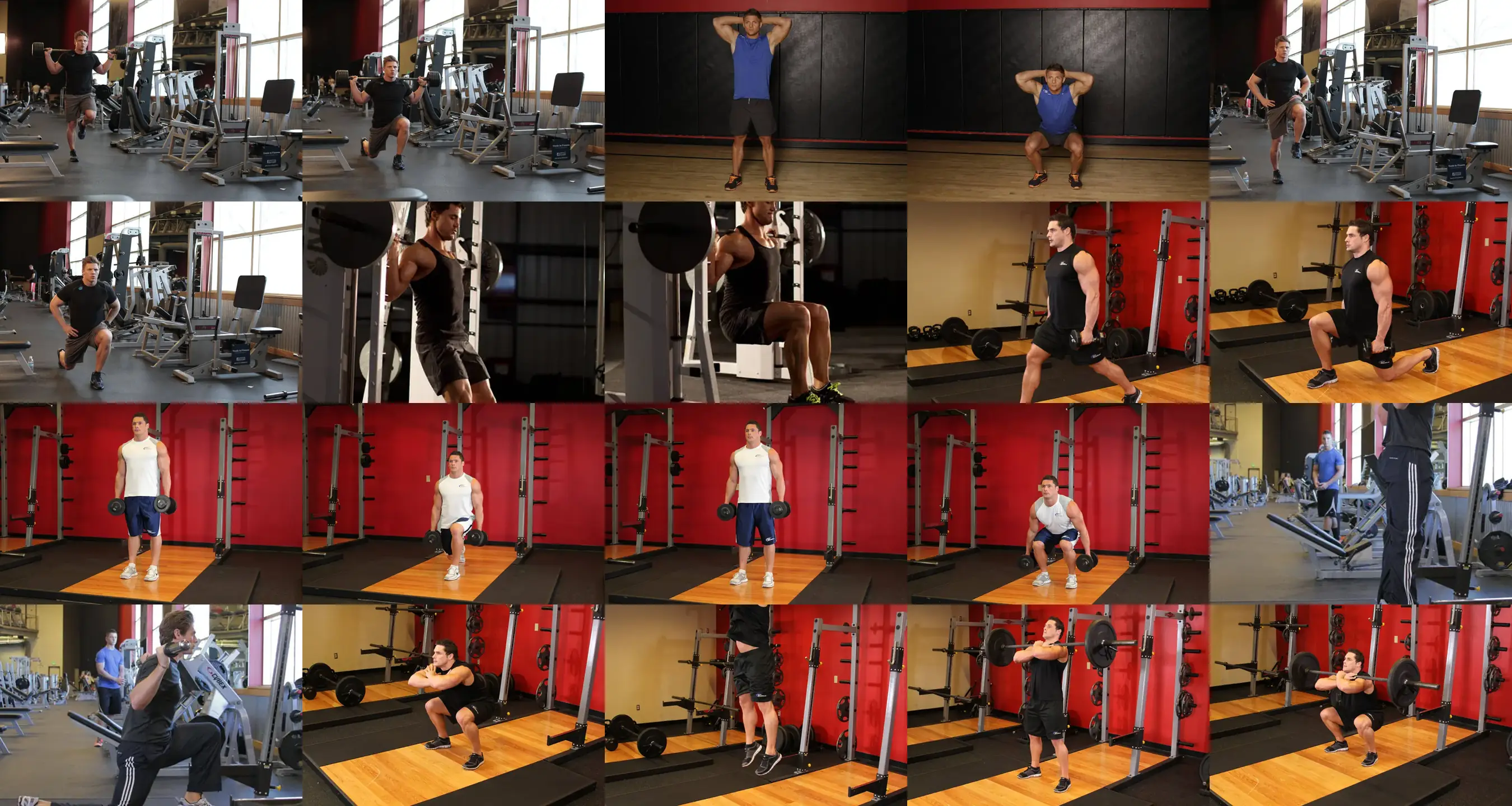
How to do the dumbbell lunge step by step
- Stand with your feet hip-width apart, holding a dumbbell in each hand with your palms facing your body.
- Breathe in, brace your abs, and take a long step forward with one leg, landing heel first.
- Lower straight down by bending both knees until your back knee hovers a few inches above the floor.
- Keep your torso upright and your front knee tracking over your toes instead of caving inward.
- Drive hard through your whole front foot, especially the heel, and exhale as you return to standing.
- Bring your feet together, reset, and repeat on the other leg, or finish all reps on one side first.
Form cues
- Torso tall, chest up, shoulders down
- Drop straight down like an elevator
- Front knee tracks in line with your toes
- Push back through your front heel
Common mistakes
- Pushing with your back leg: it takes load off the front quad; drive mainly through the front foot.
- Stepping too short: your knee shoots far forward and stresses the joint; lengthen your stride.
- Knee caving in: it strains the knee; press the knee out in line with your foot.
- Stepping on a tightrope: you lose balance; keep your feet hip-width apart.
How to make it easier or harder
To make it easier, start with a bodyweight split squat or a reverse lunge, which is more stable. To progress, try walking lunges, deficit lunges from a plate, or the dumbbell Bulgarian split squat.
Sets and reps for your goal
Hypertrophy
3-4 x 8-12 · rest 60-90 s3-4 sets of 6-12 reps (up to 15-20 on isolation exercises) at 65-80% of your max. Rest 1 to 2 minutes.
Get close to failure (0-3 reps in reserve) and control the lowering for 2-3 seconds. Accumulate 10-20 sets per muscle per week.
Max Strength
4-5 x 3-6 · rest 2-3 min3-6 sets of 1-6 reps at 80-90% of your max (1RM). Rest 2 to 5 minutes.
Leave 1-3 reps in reserve. If your technique breaks down, lower the weight: strength is built with good reps.
A guide for healthy adults. Adjust the load to your level and see a professional if you have an injury.
Check your form
Film yourself from the side or ask someone to watch, then tick what you get right.
Frequently asked questions
Are forward or reverse lunges better?
Forward lunges demand more braking and knee control, so they hit the quads hard. Reverse lunges are more stable and easier on the knees. Both are useful, so start with whichever feels better and add the other later.
How heavy should my dumbbells be for lunges?
Start light, around 10 to 20 pounds per hand, and focus on balance. Once you can do 12 controlled reps per leg, add a little weight. Your grip often gives out before your legs, so lifting straps can help.
Sports it suits
Gear for this exercise
- Adjustable dumbbellsSave space and replace a whole dumbbell rack at home.
As an Amazon Associate, Muscle Atlas earns from qualifying purchases.