Setup and loading
Attach the rope to the low pulley and stand about a foot from the machine so the cable runs nearly straight up. Pick a weight you can curl for 10 to 15 slow reps without swinging; if you have to lean back, it is too heavy.
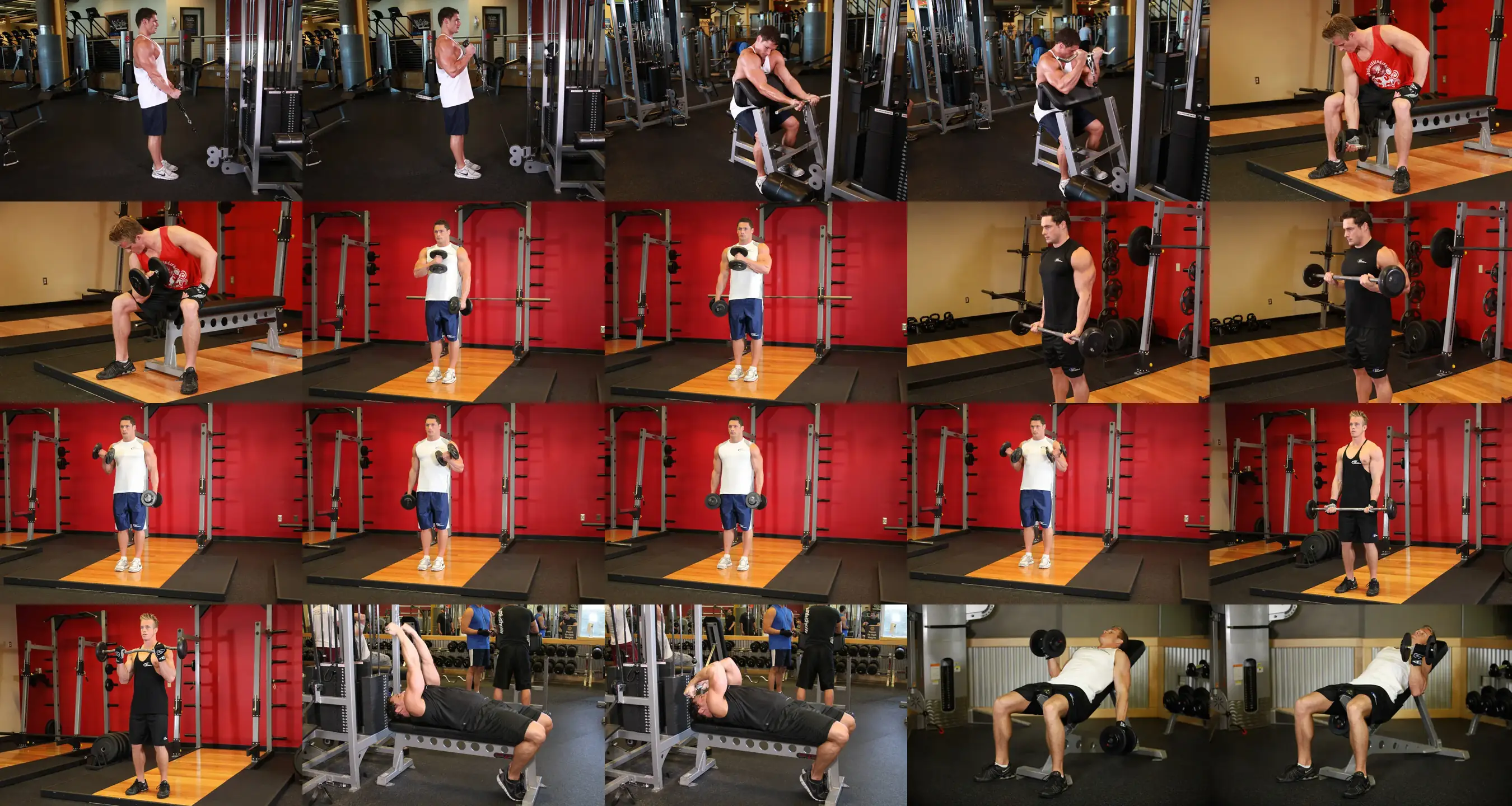
How to do the cable rope hammer curl step by step
- Clip the rope to the low pulley and grab it with your palms facing each other, one hand on each side of the knot.
- Stand tall with your feet hip-width apart, knees soft, and your abs braced.
- Pin your elbows to your sides with your arms straight, feeling tension in the cable already.
- Exhale and curl the rope by bending your elbows until your hands come close to your shoulders.
- Pull the rope ends slightly apart at the top and squeeze for one second without letting your elbows drift forward.
- Inhale and lower over two to three seconds until your arms are nearly straight, keeping tension on the cable.
Form cues
- Elbows locked at your sides
- Thumbs up, wrists neutral
- Spread the rope slightly at the top
- Lower slowly, never let the stack drop
Common mistakes
- Leaning back: momentum does the work; drop the weight and keep your torso still.
- Letting your elbows drift forward: your shoulders take over; keep elbows pinned to your sides.
- Bending your wrists: it takes load off the brachioradialis; keep wrists straight and firm.
- Cutting the bottom short: you lose stimulus; nearly straighten your arms every rep.
How to make it easier or harder
To make it easier, do it one arm at a time with a single handle in a neutral grip, or shorten the range while you learn. To progress, try cross-body hammer curls, incline dumbbell hammer curls, or add two-second pauses at the top.
Sets and reps for your goal
Hypertrophy
3 x 10-15 · rest 60 s3-4 sets of 6-12 reps (up to 15-20 on isolation exercises) at 65-80% of your max. Rest 1 to 2 minutes.
Get close to failure (0-3 reps in reserve) and control the lowering for 2-3 seconds. Accumulate 10-20 sets per muscle per week.
A guide for healthy adults. Adjust the load to your level and see a professional if you have an injury.
Check your form
Film yourself from the side or ask someone to watch, then tick what you get right.
Frequently asked questions
What is the difference between hammer curls and regular curls?
Hammer curls use a palms-in grip, which shifts more work to the brachialis and brachioradialis. Regular curls use a palms-up grip that emphasizes the biceps. Doing both builds fuller, more complete arms.
Are cable or dumbbell hammer curls better?
Cables keep tension through the full range, including the bottom where dumbbells barely load you. Dumbbells let you train each arm alone and often handle more weight. Both work, and alternating them is a good idea.