Setup and loading
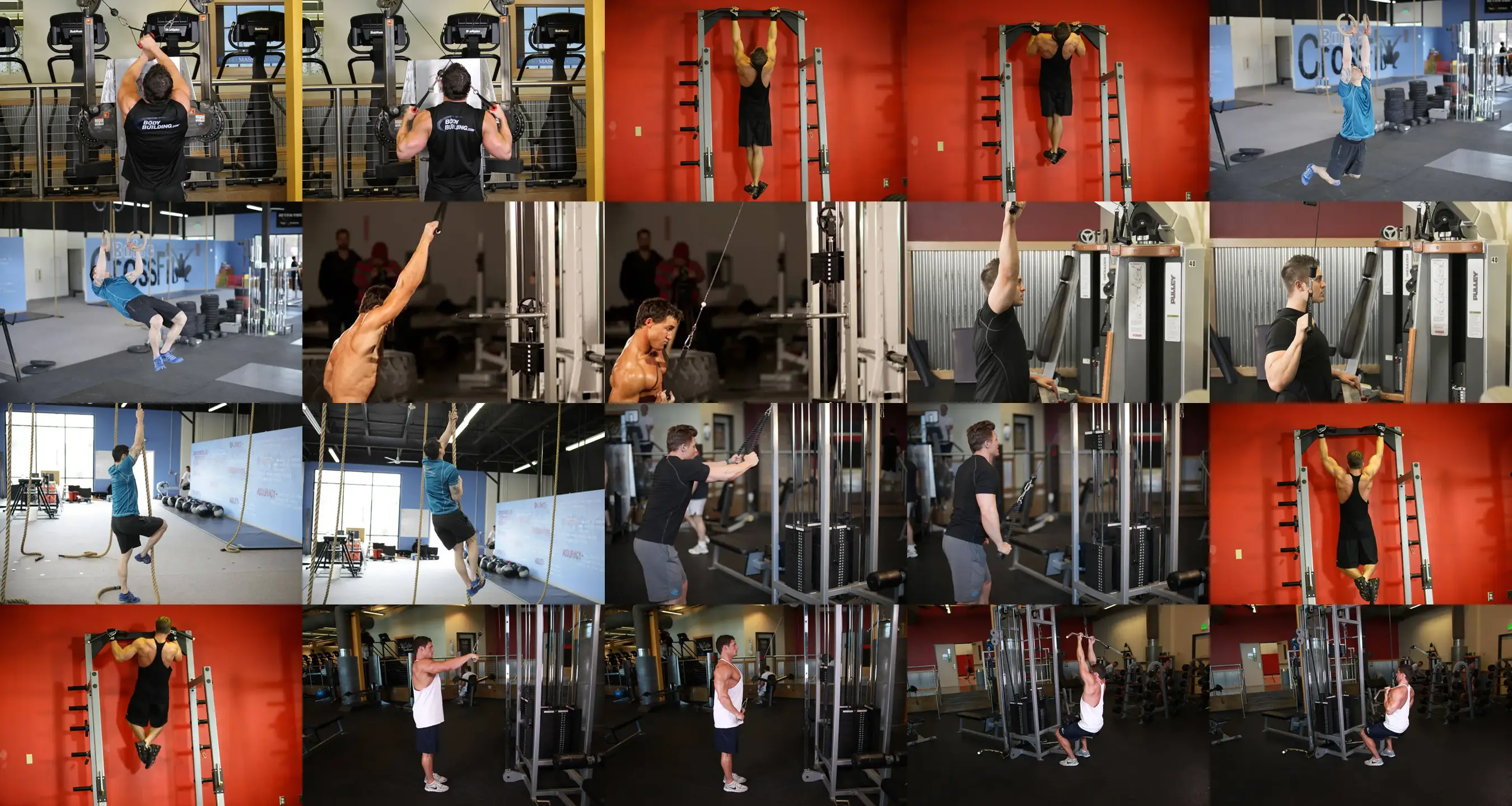
Attach a straight bar or rope to the high pulley and take an overhand grip at shoulder width or slightly wider. Choose a weight you can handle for 10 to 15 reps with your elbows locked in place; if you have to bend them or swing, lower the load.
How to do the straight-arm pulldown step by step
- Grab the high pulley bar with an overhand grip slightly wider than your shoulders and take two steps back.
- Set your feet hip-width apart, bend your knees slightly, and lean your torso forward about 30 degrees.
- Reach your arms up toward the pulley with a slight fixed bend in the elbows and feel your lats stretch.
- Exhale and sweep the bar in an arc down to your thighs, pressing with straight arms and pulling your shoulders down.
- Squeeze your lats for a second when the bar touches your thighs, without rounding your back.
- Inhale and let the bar rise slowly along the same arc until your arms are back overhead.
Form cues
- Elbows locked with a slight bend
- Shoulders away from your ears
- Sweep the bar in an arc to your thighs
- Torso still the whole set
Common mistakes
- Bending your elbows: it turns into a pulldown and your arms take over; lock the elbow angle.
- Swinging your torso: momentum does the work; hold your lean and reduce the weight.
- Shrugging your shoulders: your traps work instead of your lats; pull them down before you start.
- Letting the bar fly up: you lose the lowering phase; control the return for two to three seconds.
How to make it easier or harder
For an easier version, use a rope or a resistance band anchored high with lighter tension. To progress, try a dumbbell pullover on a bench, do it one arm at a time to fix imbalances, or use it as a pre-exhaust before pull-ups.
Sets and reps for your goal
Hypertrophy
3 x 10-15 · rest 60 s3-4 sets of 6-12 reps (up to 15-20 on isolation exercises) at 65-80% of your max. Rest 1 to 2 minutes.
Get close to failure (0-3 reps in reserve) and control the lowering for 2-3 seconds. Accumulate 10-20 sets per muscle per week.
A guide for healthy adults. Adjust the load to your level and see a professional if you have an injury.
Check your form
Film yourself from the side or ask someone to watch, then tick what you get right.
Frequently asked questions
What is the difference between a straight-arm pulldown and a lat pulldown?
In a lat pulldown you bend your elbows, so your biceps and other muscles help and you can lift more. Straight arms isolate the lats through shoulder extension, which is ideal for mind-muscle connection and as an accessory.
Should I use a bar or a rope for straight-arm pulldowns?
A straight bar gives a stable, easy-to-control grip. A rope allows a longer finish with your hands beside your hips and often feels better on the wrists. Try both and see which you feel most.