Setup and loading
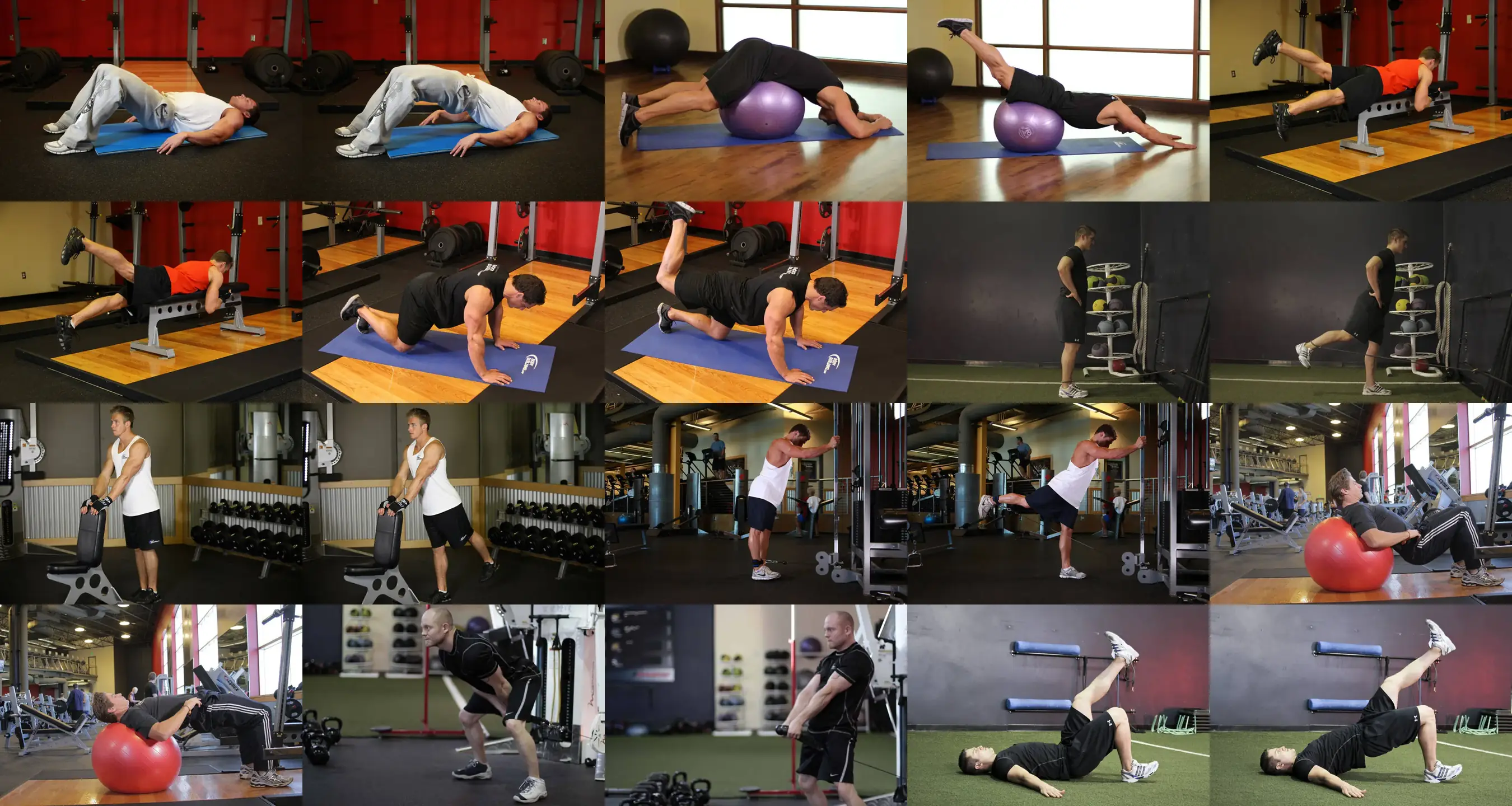
Lie on your back on a mat with knees bent and feet flat, hip width apart, close to your glutes. Make it harder with longer top holds, a band above your knees, or a plate across your hips.
How to do the pelvic tilt into glute bridge step by step
- Lie on your back with knees bent, feet close to your glutes, and arms at your sides, palms down.
- Exhale and tilt your pelvis back, pressing your lower back into the floor and lightly bracing your abs.
- Keep exhaling and lift your hips, peeling your spine off the floor one vertebra at a time from tailbone to shoulder blades.
- At the top, squeeze your glutes hard to form a line from shoulders to hips to knees without arching.
- Hold 2 seconds or as prescribed, breathing while keeping the tilt.
- Inhale and lower in reverse order, upper back first and tailbone last; repeat 10 to 15 times.
Form cues
- Tuck the pelvis before you lift
- One vertebra at a time, like a chain
- Glutes tight at the top, ribs down
- Drive through your heels
Common mistakes
- Arching the lower back at the top: loads your back instead of your glutes; keep the pelvis tucked.
- Lifting in one fast block: loses segmental control; peel your spine up gradually.
- Knees caving or flaring: misaligns the hips; keep them in line with your feet.
- Feeling only your hamstrings: feet are too far away; bring them closer to your glutes.
How to make it easier or harder
To regress, practice just the pelvic tilt on the floor or a regular bridge without the segmental roll. To progress, add a band above your knees, a plate or dumbbell on your hips, or move to single-leg bridges and hip thrusts.
Sets and reps for your goal
Injury Prevention
2-3 x 10-12 or 30 s at the top2-3 sets of 10-15 slow reps with a light or moderate load, 2-3 times per week.
Control the lowering (about 3 seconds). This is quality work, not fatigue work: finish every set feeling good.
Core & Stability
3 x 30 s3-4 sets of 20-45 seconds or 8-12 slow reps. Rest 45 to 60 seconds.
Neutral spine, tight abs and controlled breathing. Progress in time or leverage before adding weight.
A guide for healthy adults. Adjust the load to your level and see a professional if you have an injury.
Check your form
Film yourself from the side or ask someone to watch, then tick what you get right.
Frequently asked questions
Why do a pelvic tilt before a glute bridge?
It makes the extension come from your hips rather than your lower back. Your glutes work harder and your back arches less. It also builds pelvic control that carries over to squats, deadlifts, and to anyone who tends to overarch.
Why do I feel glute bridges in my hamstrings?
Usually your feet are too far from your glutes or you are pushing through your toes. Bring your feet closer, drive through your heels, and tuck your pelvis before lifting. That shifts the work from hamstrings to glutes.
Sports it suits
Gear for this exercise
- Exercise matThick (8-10 mm) for floor work.
As an Amazon Associate, Muscle Atlas earns from qualifying purchases.