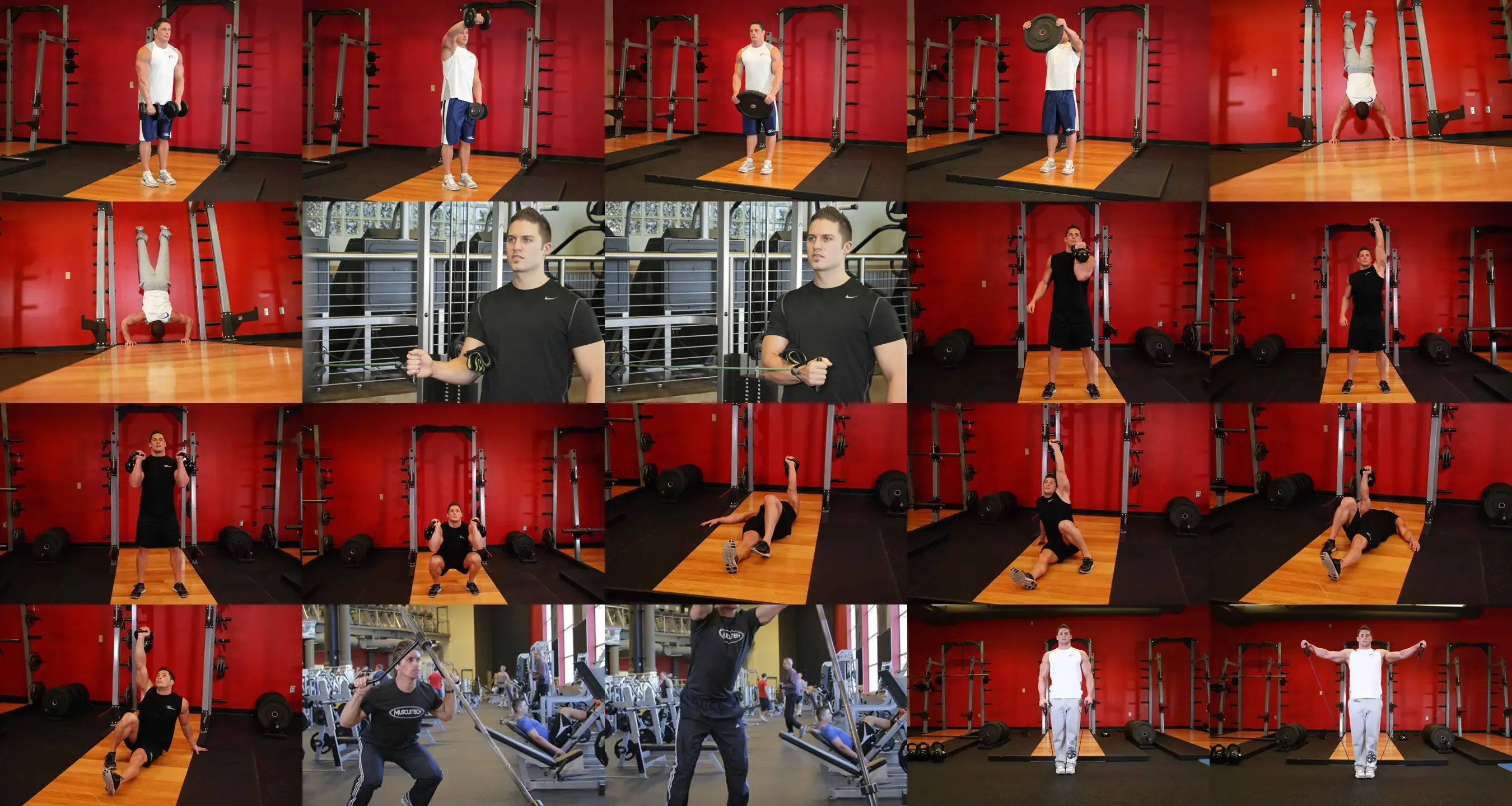
Setup and loading
Bring the kettlebell to the rack position, elbow close to your ribs, handle diagonal across your palm, and bell resting on your forearm. You can use somewhat more weight than your strict press, but choose a load you can lock out with a fully straight arm.
How to do the one-arm kettlebell push press step by step
- With the kettlebell racked, stand with feet hip width apart and abs braced.
- Take a breath and dip your knees just a few inches, keeping your torso vertical and heels down.
- Explosively extend your legs and ankles to launch the kettlebell upward.
- Ride the momentum and press with your arm until it locks out overhead, exhaling.
- Hold briefly with biceps by your ear, then lower the bell to the rack, absorbing with your knees.
- Complete your reps on one arm, then switch sides.
Form cues
- Short dip, fast drive
- Torso vertical in the dip
- Legs start it, arm finishes it
- Lock out with a straight arm
Common mistakes
- Dipping too deep: it becomes a squat; a few inches is enough.
- Leaning forward in the dip: the drive goes off line; drop straight down like an elevator.
- Pressing with the arm before the legs: you waste the drive; wait for the extension.
- Arching your back overhead: lower back stress; squeeze your glutes at lockout.
How to make it easier or harder
As a regression, master the strict kettlebell press and practice the dip and drive with no weight or a light bell. To progress, add weight, push press two kettlebells, or move to the jerk, where you drop under the bell.
Sets and reps for your goal
Power
4-6 x 2-5 · full rest3-6 sets of 1-5 reps with light or moderate loads (30-60% of your max on the main lifts), or with a ball or your bodyweight. Rest 2 to 3 minutes.
Every rep at the highest possible speed. As soon as you notice it moving slower (a 10-20% velocity loss), end the set. Train power fresh, never fatigued.
Endurance
2-4 x 15-25 or 30-60 s2-4 sets of 15-30 reps or 30-60 seconds at 40-60% of your max. Rest 30 to 60 seconds.
Steady pace and clean technique to the end. Circuits help you build volume with little rest.
A guide for healthy adults. Adjust the load to your level and see a professional if you have an injury.
Check your form
Film yourself from the side or ask someone to watch, then tick what you get right.
Frequently asked questions
What is the difference between a strict press and a push press?
In a strict press only the shoulders and arms push. In a push press a small dip and drive of the legs launches the weight and the arms finish the movement, allowing more load and training power.
What is the difference between a push press and a jerk?
In a push press the legs drive and the arms press to lockout. In a jerk, after the drive, you dip again to get under the bell and catch it with the arm already locked, which allows even more weight.
Sports it suits
Gear for this exercise
- KettlebellStart with 12-16 kg (26-35 lb) for women or 16-24 kg (35-53 lb) for men.
As an Amazon Associate, Muscle Atlas earns from qualifying purchases.