Setup and loading
Set the resistance and, if your machine has it, the ramp incline before you start; a steeper incline shifts more work to the glutes. Pick a level that lets you hold your cadence for the whole block while still speaking in short sentences at a moderate pace.
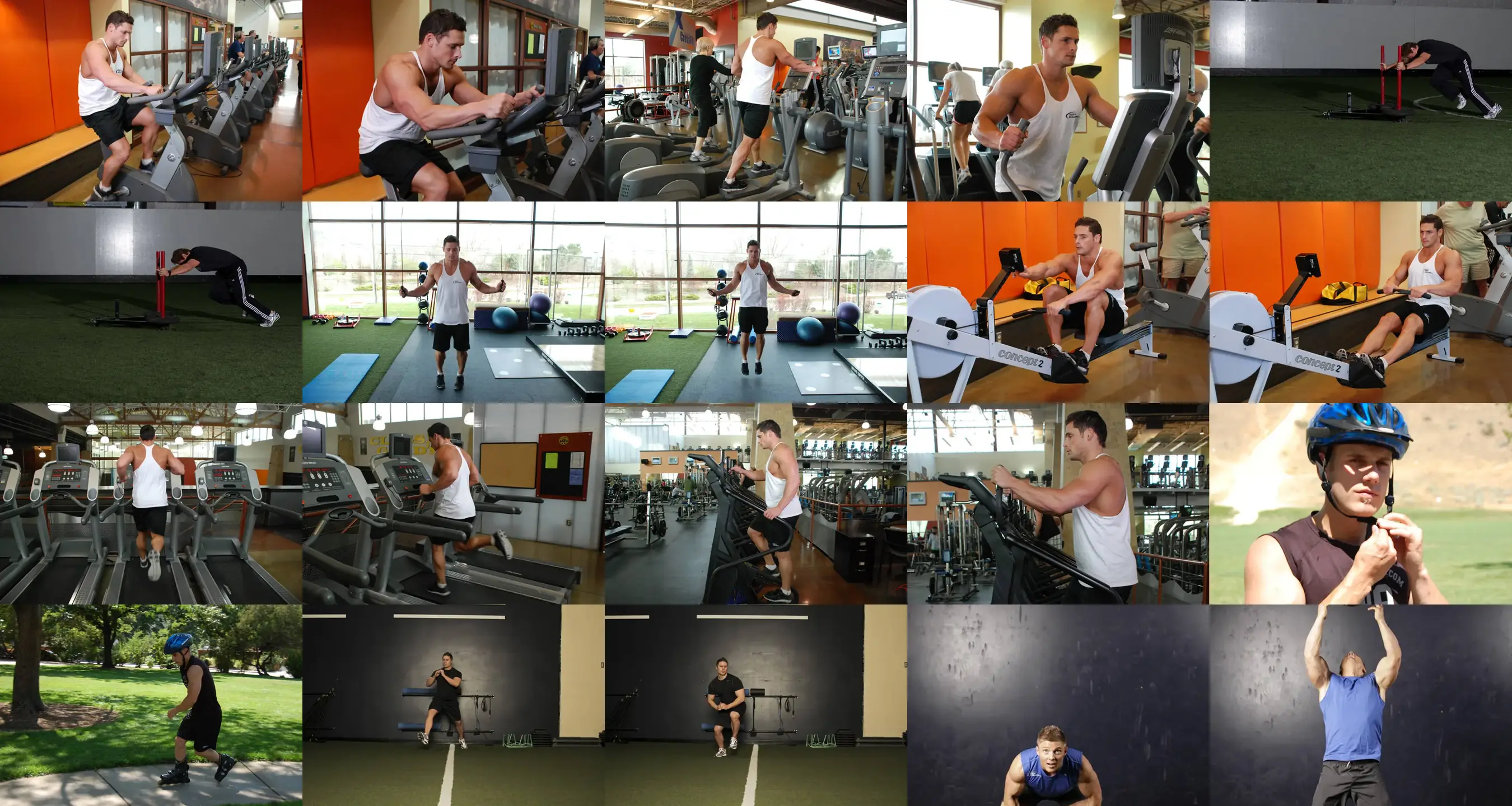
How to do the elliptical trainer step by step
- Step on while holding the fixed handles, center each whole foot on its pedal, and choose a program or manual mode.
- Pedal slowly for two or three minutes to warm up, keeping your torso tall and your eyes forward.
- Grab the moving handles and coordinate: as one leg pushes forward, the opposite arm pulls back toward you.
- Drive each pedal through your heel and midfoot rather than your toes, feeling the glutes and quads share the work.
- Hold a steady cadence while breathing rhythmically, and raise the resistance instead of spinning faster without control.
- Finish with three to five easy minutes at low resistance to bring your heart rate down before stepping off.
Form cues
- Stand tall and keep your weight off the handles
- Press through your heels to recruit more glute
- Arms push and pull, they do not just ride along
- Keep your knees tracking over your toes
Common mistakes
- Leaning on the handles or console: it unloads your legs; keep your bodyweight over the pedals.
- Riding on your toes: it overloads the calves and numbs your feet; keep the whole foot down.
- Spinning fast with no resistance: momentum does the work; add resistance until each stroke feels controlled.
- Hunching over the screen: it strains your neck and lower back; lift your chest and look ahead.
How to make it easier or harder
If you are new, use only your legs with your hands on the fixed handles at low resistance for 10 minute blocks. To progress, extend the session, raise the incline, or run intervals of 30 hard seconds with 90 easy seconds; pedaling backward also loads the quads more.
Sets and reps for your goal
Endurance
20-45 min easy or intervals 6-10 x 1 min2-4 sets of 15-30 reps or 30-60 seconds at 40-60% of your max. Rest 30 to 60 seconds.
Steady pace and clean technique to the end. Circuits help you build volume with little rest.
A guide for healthy adults. Adjust the load to your level and see a professional if you have an injury.
Check your form
Film yourself from the side or ask someone to watch, then tick what you get right.
Frequently asked questions
Is the elliptical better than the treadmill for your knees?
It usually creates less impact because your feet never leave the pedals, so many people with cranky knees tolerate it better. The treadmill still builds the impact tolerance runners need, so the two machines work well together in a program.
How long should you do the elliptical?
For general cardiovascular health, 20 to 45 minutes at a moderate pace several times a week is a solid base. If you want intensity, 15 to 20 minutes of well executed intervals also works, as long as your form holds up.