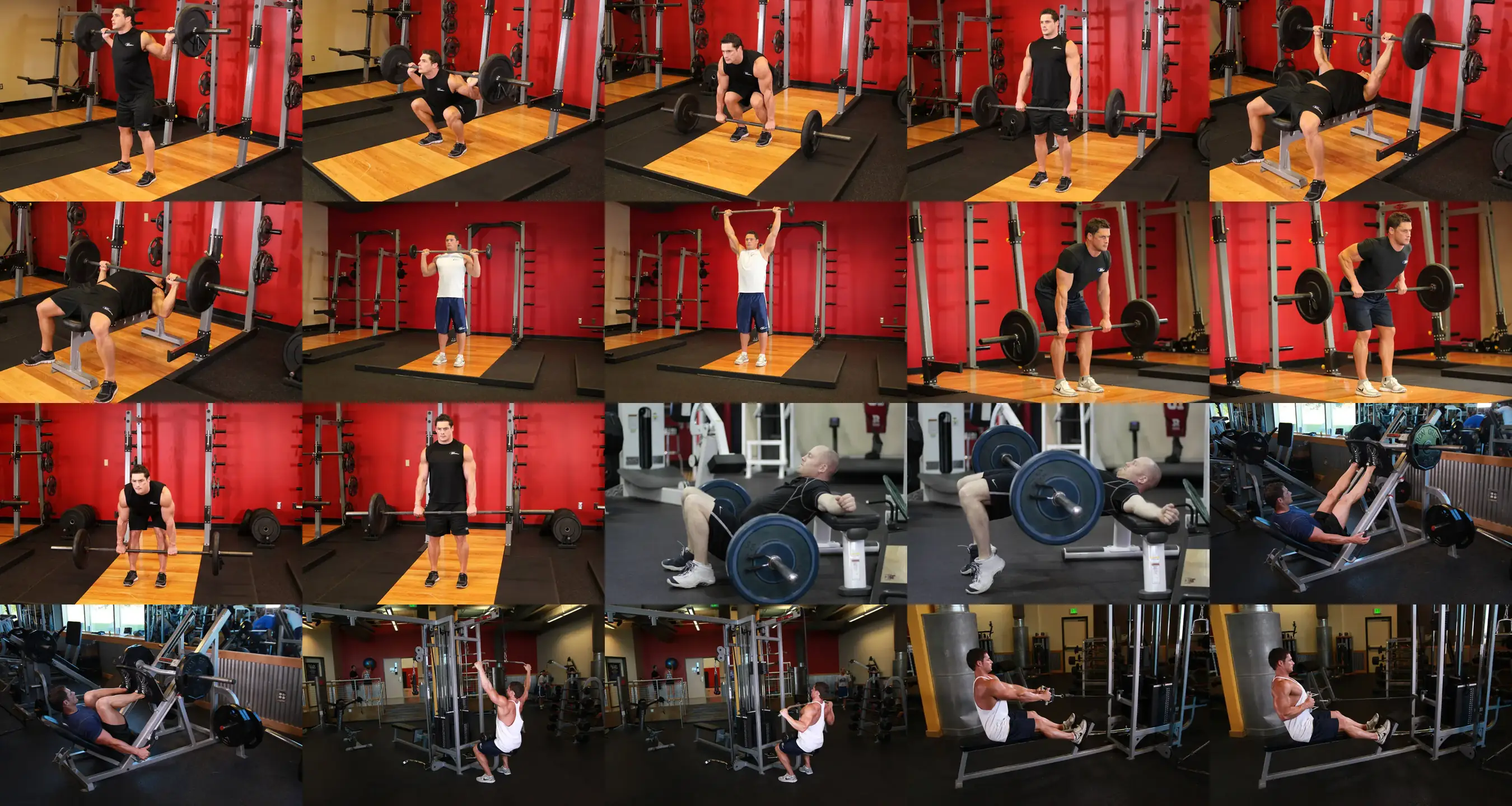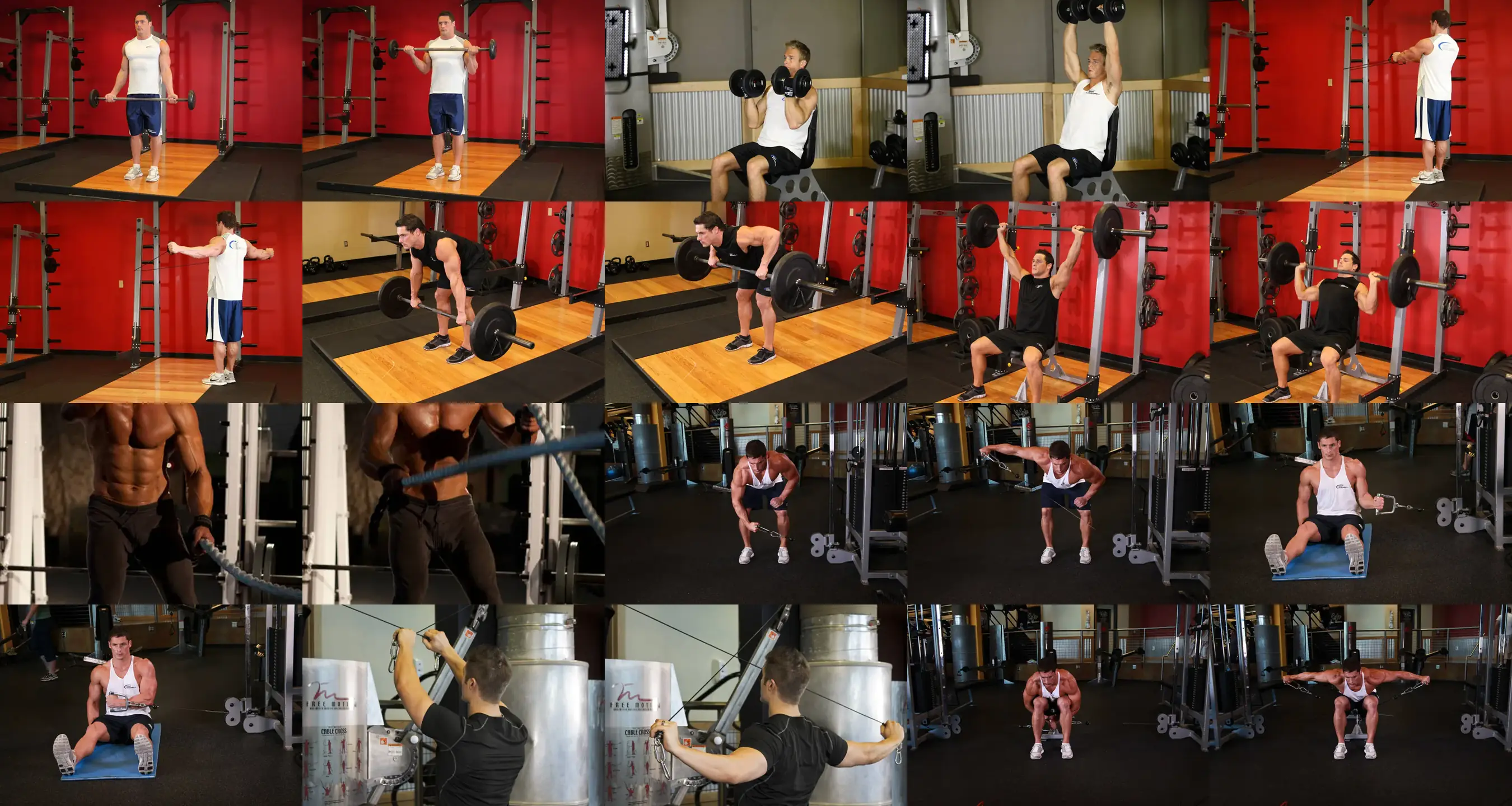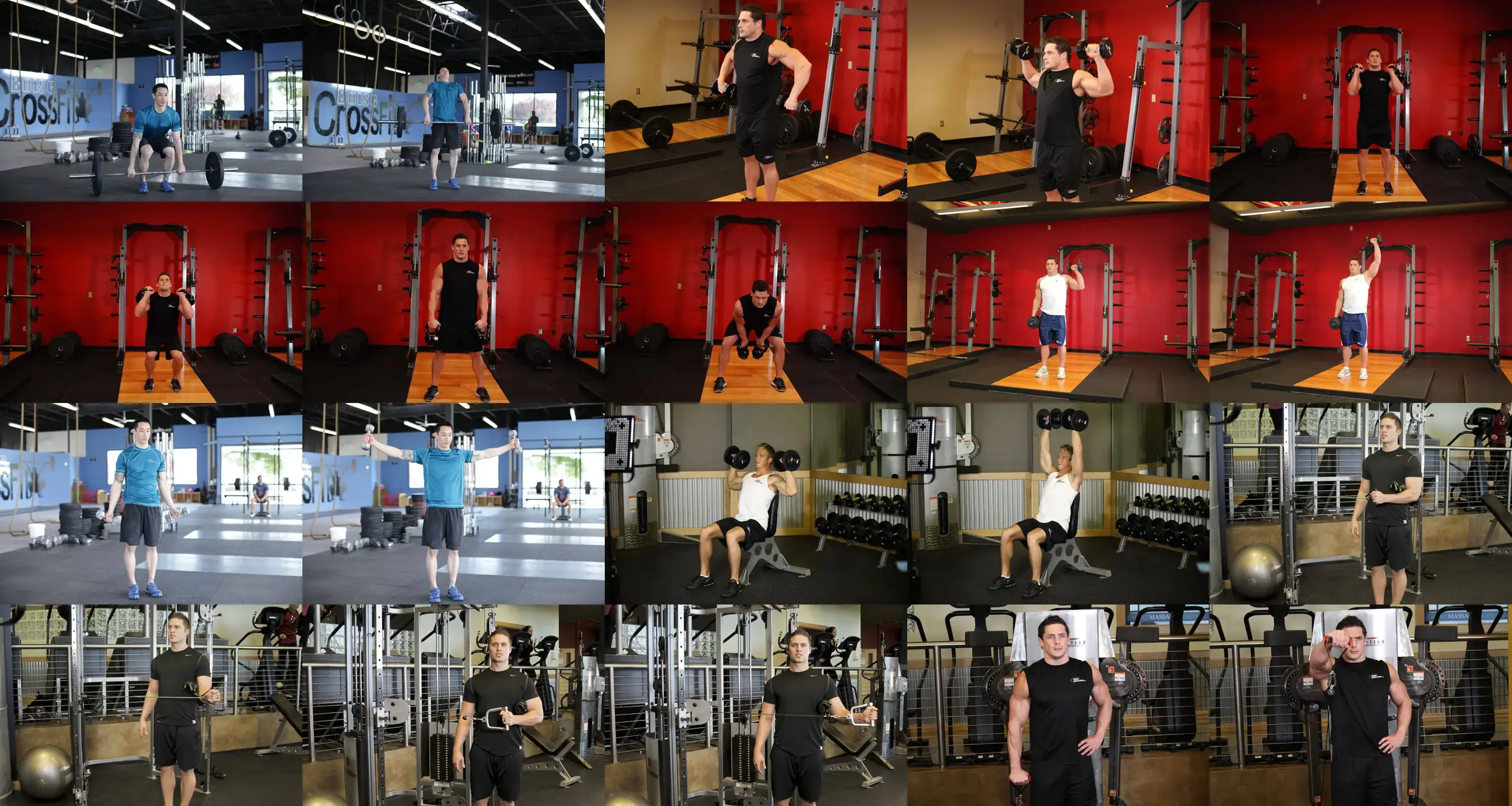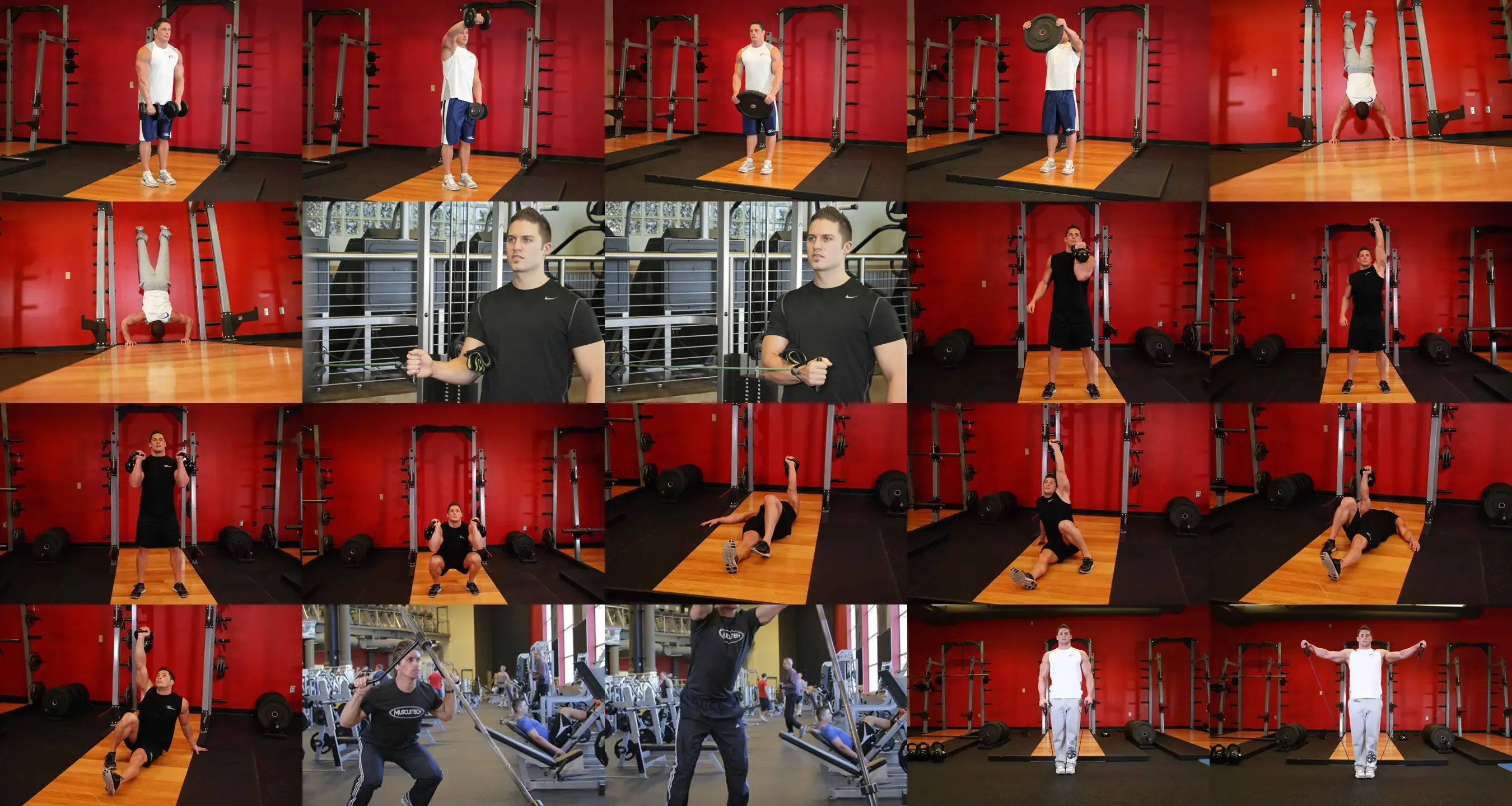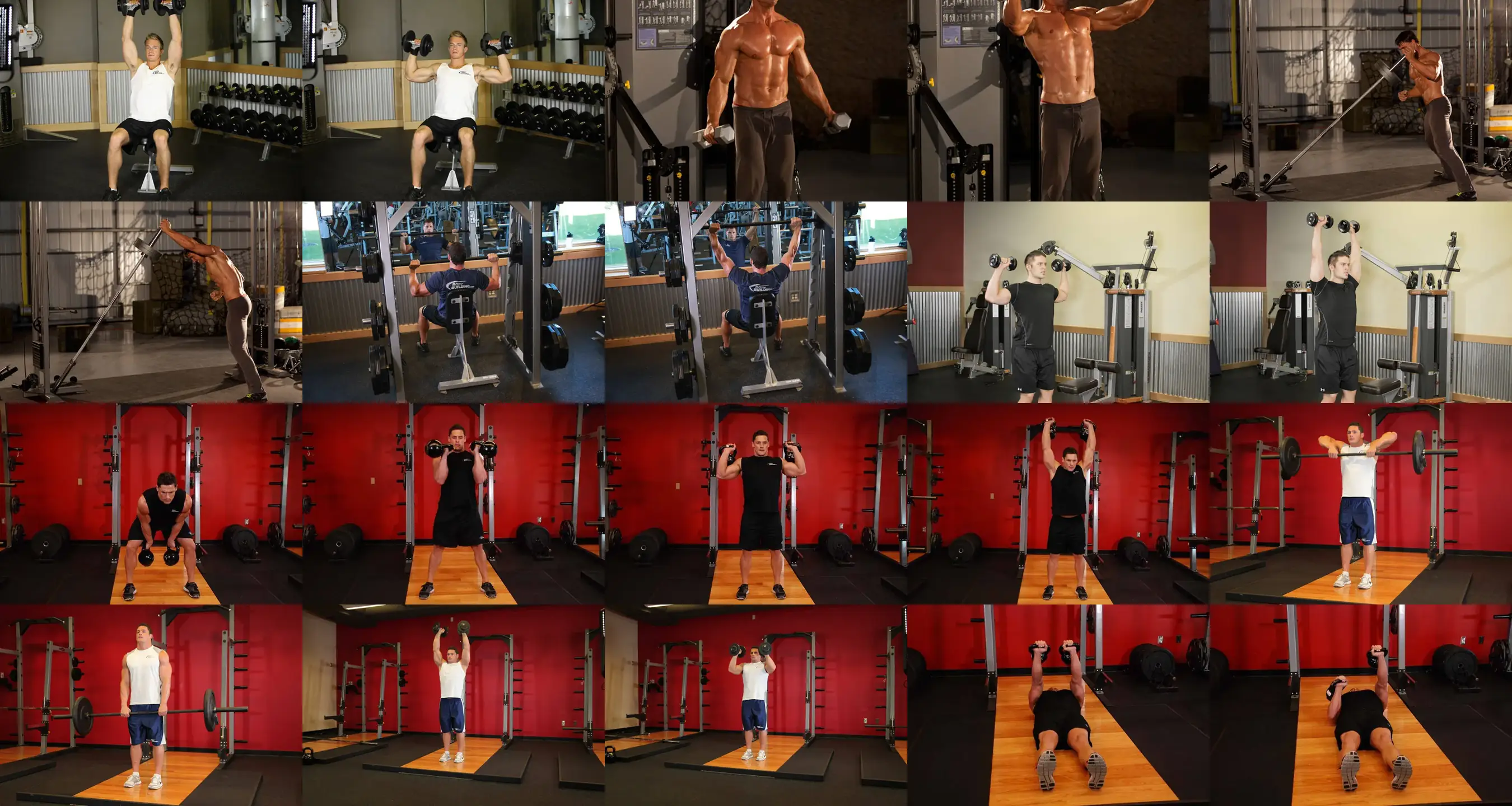
Setup and loading
Clean the bells into the rack and stand with feet hip width apart. Choose a pair you can press for 5 to 8 strict reps without any leg drive.
How to do the double kettlebell military press step by step
- Clean both kettlebells into the rack, bells resting on your forearms and elbows close to your ribs.
- Squeeze your glutes, quads and abs like a standing plank, then take a breath before you press.
- Press the bells up and slightly out, letting your palms rotate naturally to face forward.
- Lock out your elbows with the bells over your shoulders and biceps by your ears, exhaling at the top.
- Pull the bells back down slowly along the same path using your lats until they return to the rack.
- After the set, drop the bells between your legs under control and hinge to set them on the floor.
Form cues
- Brace your whole body like a standing plank
- Keep forearms vertical under each kettlebell
- Pull the bells down with your lats
- Biceps right next to your ears at lockout
Common mistakes
- Arching to get the bells up: it loads your lower back, so squeeze glutes and drop ribs.
- Wrists bent back: you lose strength and it aches, so keep a straight wrist and diagonal handle.
- Using leg drive: it stops being a strict press, so keep your knees locked.
- Soft lockout at the top: the shoulder stays unstable, so finish fully with the bells overhead.
How to make it easier or harder
To regress, press one kettlebell at a time, alternating arms, or use seated dumbbell presses. To progress, go heavier, run rep ladders, add a mid-range pause or move on to the double kettlebell jerk.
Sets and reps for your goal
Hypertrophy
3-4 x 8-12 · rest 60-90 s3-4 sets of 6-12 reps (up to 15-20 on isolation exercises) at 65-80% of your max. Rest 1 to 2 minutes.
Get close to failure (0-3 reps in reserve) and control the lowering for 2-3 seconds. Accumulate 10-20 sets per muscle per week.
Max Strength
4-5 x 3-6 · rest 2-3 min3-6 sets of 1-6 reps at 80-90% of your max (1RM). Rest 2 to 5 minutes.
Leave 1-3 reps in reserve. If your technique breaks down, lower the weight: strength is built with good reps.
A guide for healthy adults. Adjust the load to your level and see a professional if you have an injury.
Check your form
Film yourself from the side or ask someone to watch, then tick what you get right.
Frequently asked questions
Why does a kettlebell press feel harder than a dumbbell press?
With a kettlebell the weight sits behind your hand, which creates a different lever and demands more wrist and shoulder stability. That is why the same weight usually feels heavier than with a dumbbell.
How many sets of double kettlebell presses should I do?
For strength, 3 to 5 sets of 3 to 6 reps with generous rest work well. Ladder schemes, such as 1, 2 and 3 reps repeated several times, are a classic way to build quality volume.
Sports it suits
Gear for this exercise
- KettlebellStart with 12-16 kg (26-35 lb) for women or 16-24 kg (35-53 lb) for men.
As an Amazon Associate, Muscle Atlas earns from qualifying purchases.