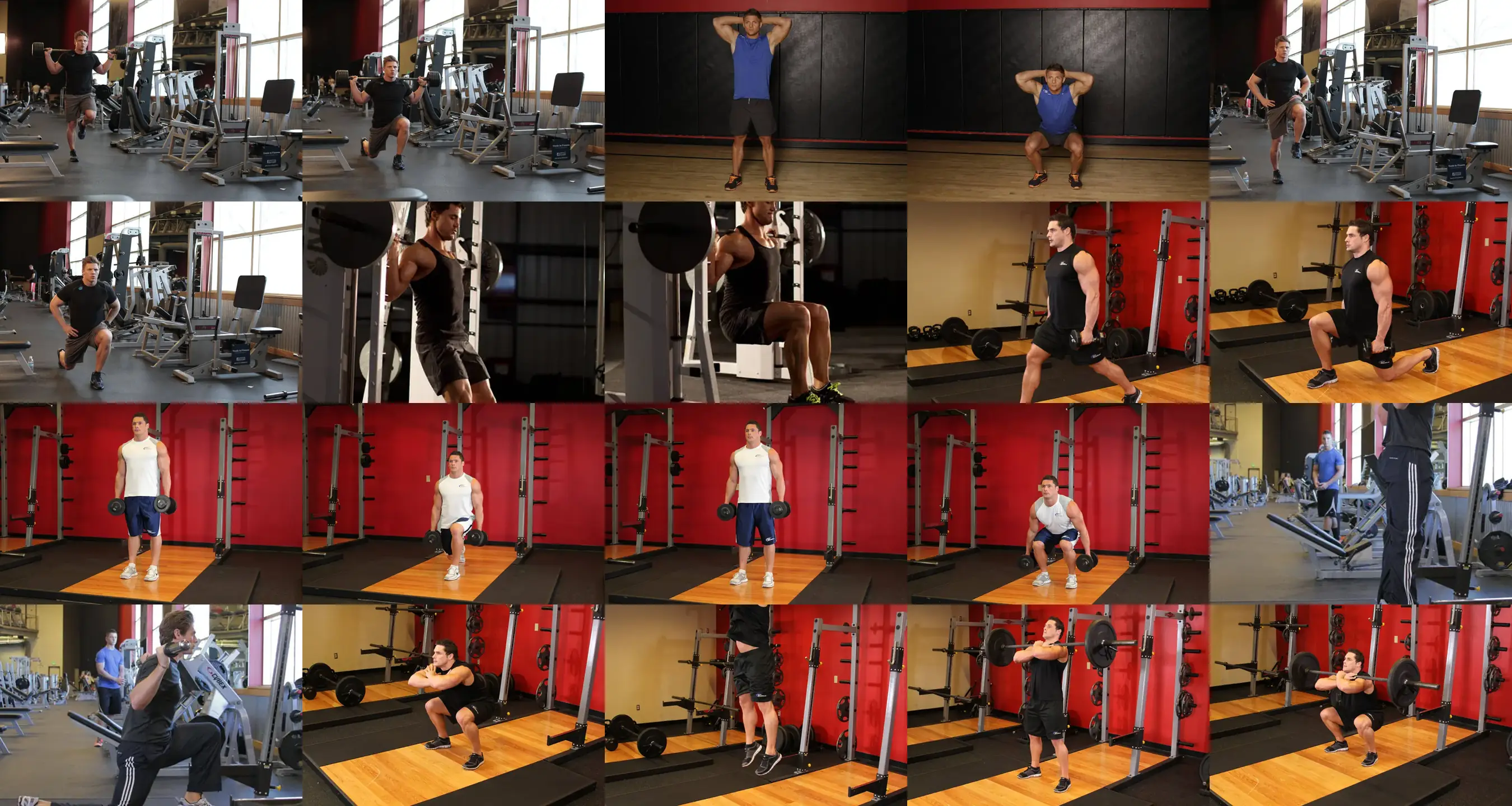
Setup and loading
Find a clear walkway of at least 30 feet and rest the bar on your traps. Start with the empty bar or a light load, since accumulated fatigue hurts your balance on the last steps.
How to do the barbell walking lunge step by step
- Unrack the bar on your traps and stand at the start of a clear space.
- Inhale, brace your core, and take a long step forward with your right leg.
- Lower until your left knee is an inch or two above the floor with your torso tall.
- Exhale and drive through your right heel to rise, bringing your left leg forward.
- Without pausing, plant your left leg in a long step and lower again.
- Keep alternating legs until you cover the distance or reps, then rerack the bar.
Form cues
- Long steps on two separate tracks
- Torso tall and eyes forward
- Drive through the front heel to travel
- Back knee nearly brushes the floor
Common mistakes
- Short, rushed steps: the knee travels too far forward; lengthen each step.
- Losing balance: your feet are on one line; keep them hip width apart.
- Banging your knee on the floor: it can hurt; control the descent.
- Hunching as you tire: the bar pulls you forward; lower the load and keep your chest up.
How to make it easier or harder
To make it easier, do it with body weight or dumbbells at your sides. To progress, add load, increase the distance, or try front-rack barbell walking lunges.
Sets and reps for your goal
Hypertrophy
3-4 x 8-12 · rest 60-90 s3-4 sets of 6-12 reps (up to 15-20 on isolation exercises) at 65-80% of your max. Rest 1 to 2 minutes.
Get close to failure (0-3 reps in reserve) and control the lowering for 2-3 seconds. Accumulate 10-20 sets per muscle per week.
Max Strength
4-5 x 3-6 · rest 2-3 min3-6 sets of 1-6 reps at 80-90% of your max (1RM). Rest 2 to 5 minutes.
Leave 1-3 reps in reserve. If your technique breaks down, lower the weight: strength is built with good reps.
Endurance
4 x 30-40 m2-4 sets of 15-30 reps or 30-60 seconds at 40-60% of your max. Rest 30 to 60 seconds.
Steady pace and clean technique to the end. Circuits help you build volume with little rest.
A guide for healthy adults. Adjust the load to your level and see a professional if you have an injury.
Check your form
Film yourself from the side or ask someone to watch, then tick what you get right.
Frequently asked questions
What is the difference between walking lunges and stationary lunges?
With walking lunges you travel forward without returning to the start, so each step requires drive and control into the next leg. They challenge balance and endurance more, while stationary lunges let you load with more control.
How many steps should I do for barbell walking lunges?
Most people do 8 to 12 steps per leg or cover about 30 to 60 feet per set. Choose a load that lets you keep good technique through the last step without losing balance.
Sports it suits
Gear for this exercise
- Olympic barbell and platesTo keep progressing on the big lifts with heavy loads.
As an Amazon Associate, Muscle Atlas earns from qualifying purchases.